Games
Crusader Kings III 1.20.0.4 Native
GamesUpdated
| Requirement | On file |
|---|---|
| macOS | See the sheet |
| CPU | Apple Silicon, Intel 64-bit |
| Download | 9.4 GB |
| Tested on | macOS Golden Gate, Mac mini 2024 M4 |
Version 1.19.0.6 dials lethality back up where it belongs — epidemics and natural disasters now remove characters at the rate the design intends, and agent invitations to schemes work again instead of blocking manual invites.
Grand strategy — The map layer: realm borders, casus belli, levies, and the slow machinery of medieval warfare. You command a territory, but you do not micromanage individual battles.
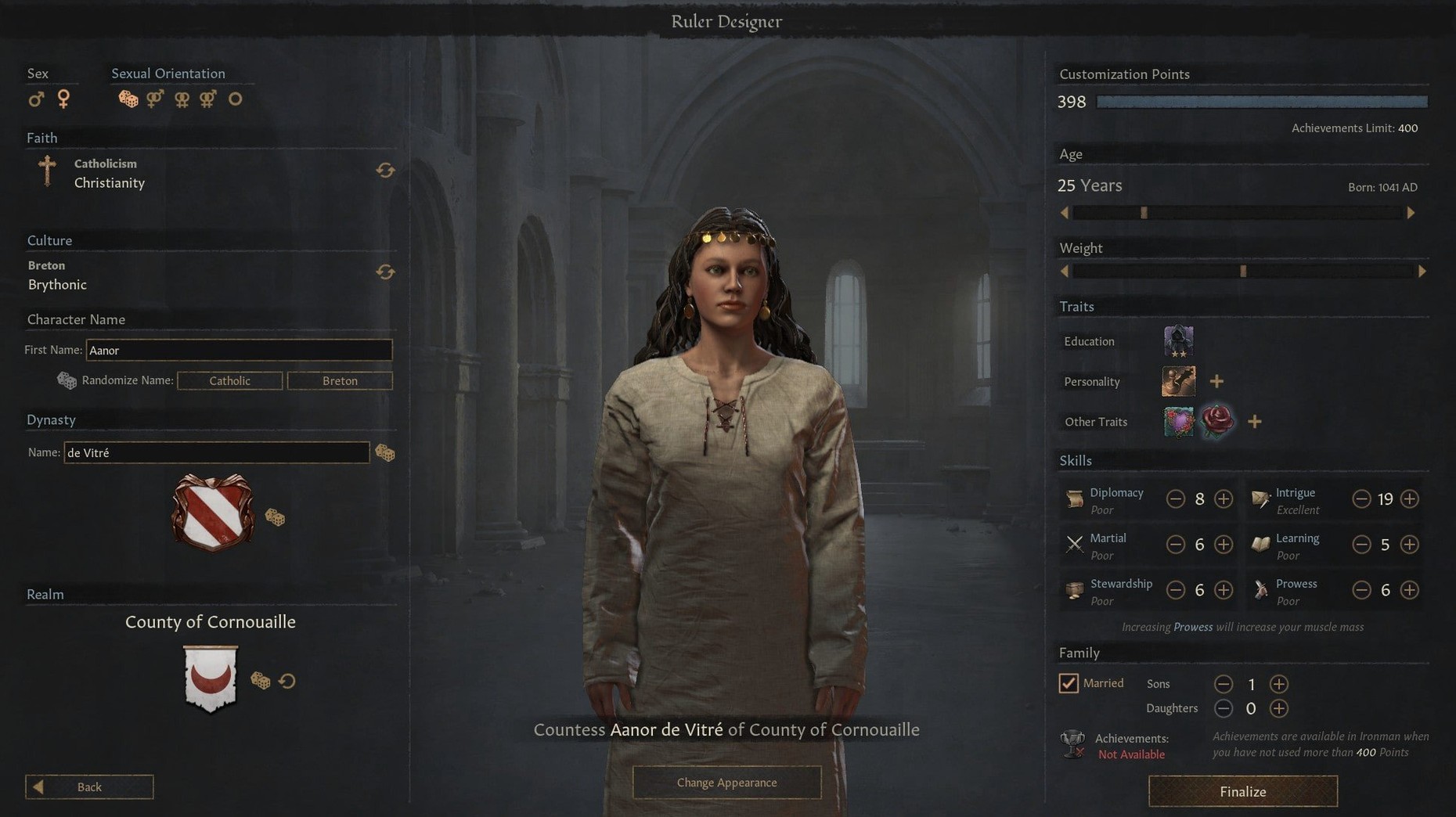
Role-playing — The character layer: traits, stress, relationships, secrets, and schemes. Every ruler has a personality that constrains your choices. A shy, compassionate king cannot comfortably plot murder.
Dynasty — The long game: you are not playing a single ruler. When your current character dies, you continue as their heir. The win condition is legacy, not conquest. Bloodlines, renown, and genetic traits compound over centuries.
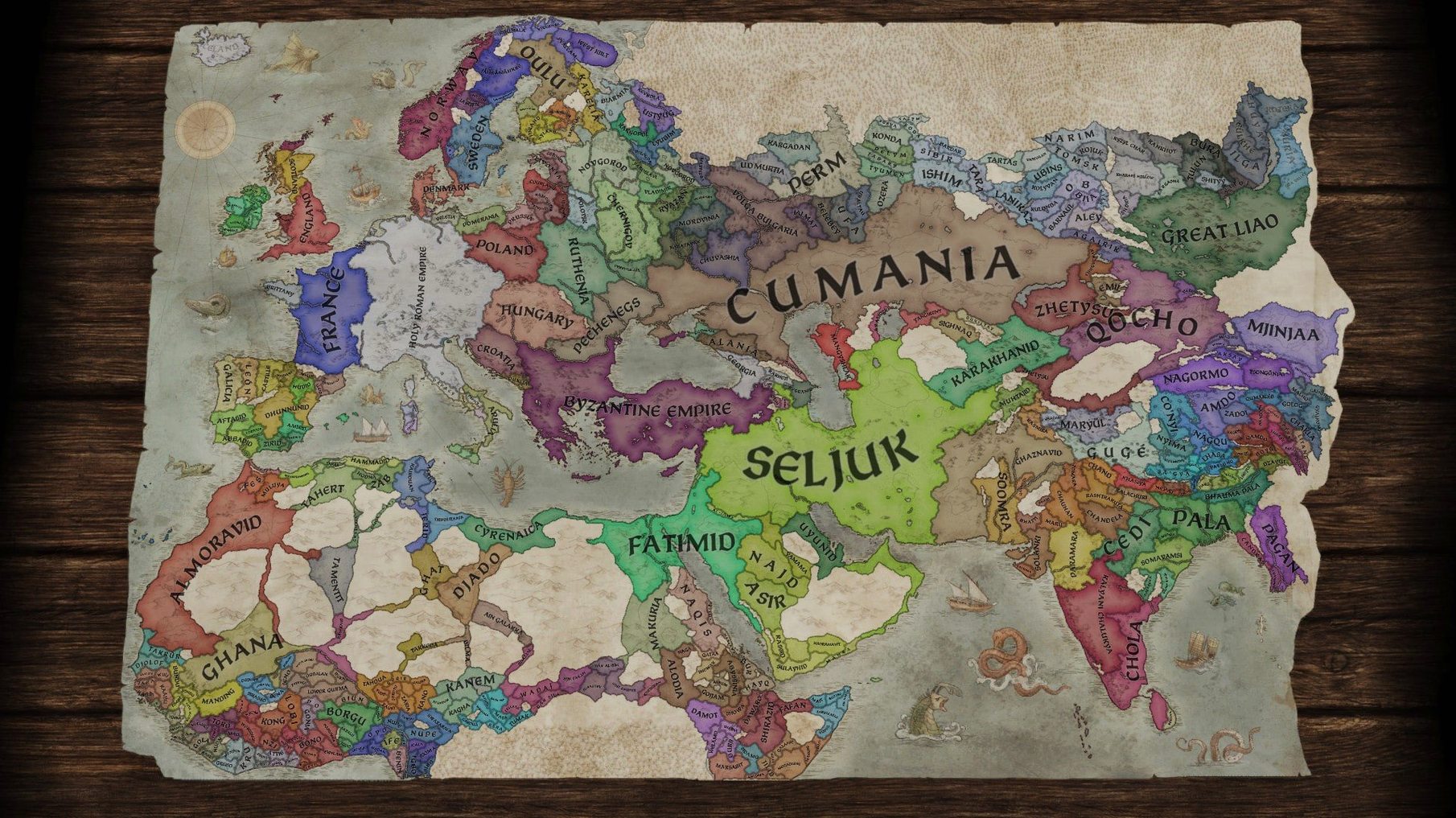
This is a Paradox grand strategy title. That means systems depth, a steep first few hours, and an expectation that you will read tooltips. War is one way to gain power, but inheritance, marriage, and a well-timed scheme often achieve more than a stack of levies. The setting is medieval — Europe, North Africa, and parts of Asia on a detailed map that runs from 867 to 1453.
The game suits players who enjoy emergent storytelling and can tolerate failure as narrative. It will frustrate anyone looking for a fast pace, a clear objective, or a combat-focused loop. You set your own goals. The simulation does not care if you meet them.
Marriage Range and Exclave Rules to Set Before Unpausing
Open the game rules before starting a campaign. Two settings deserve immediate attention. Set Diplomatic Range to Restricted unless you enjoy marriage proposals from Bengal when ruling in Brittany. Turn Exclave Independence to Total — the default lets disconnected counties linger for generations, which produces ugly borders and endless minor wars you cannot be bothered to fight.
Next, open the message settings from the Outliner sidebar. CK3 defaults to flooding you with low-value notifications while burying events that matter. Disable alerts for minor courtiers dying of old age. Enable pause-on-event for scheme discoveries and faction ultimatums. A single missed ultimatum can undo three decades of realm consolidation.
Spend ten minutes reading the culture innovation tree for your starting culture. The early game hinges on unlocking Plenary Assemblies (tribal) or Hereditary Rule (feudal) as fast as research permits. Knowing the prerequisite innovations before you click anything stops you from wasting the cultural fascination bonus on a dead-end tech.
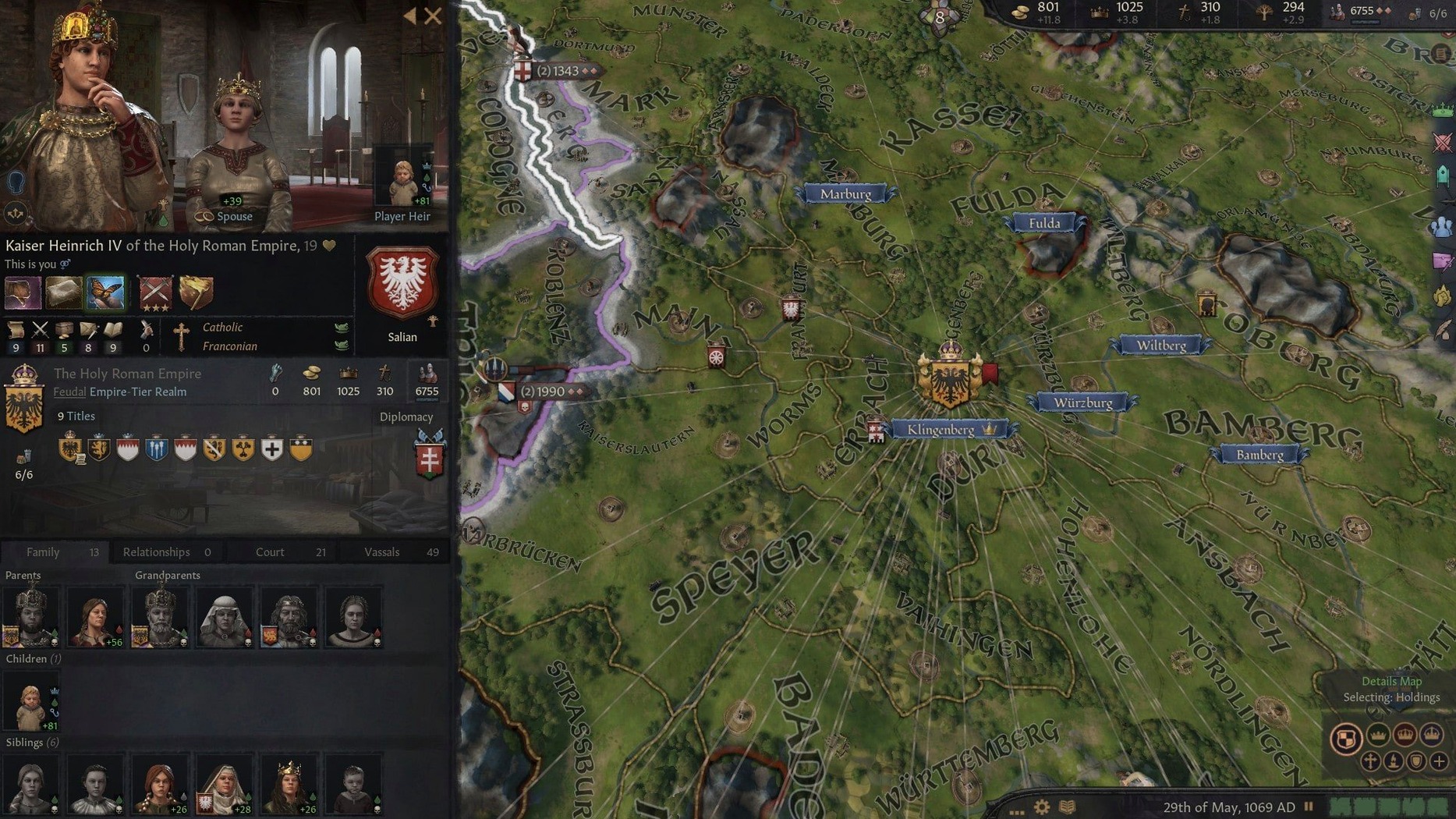
Finally, pin three character panels: your heir, your spymaster, and the most dangerous vassal near your border. Pinning puts their portraits on the right edge of the screen and lets you track opinion shifts and scheme progress without diving into menus every few minutes. The spymaster's opinion matters above all others — a disloyal spymaster makes every scheme against you harder to detect.
A Byzantine count: the early game in practice
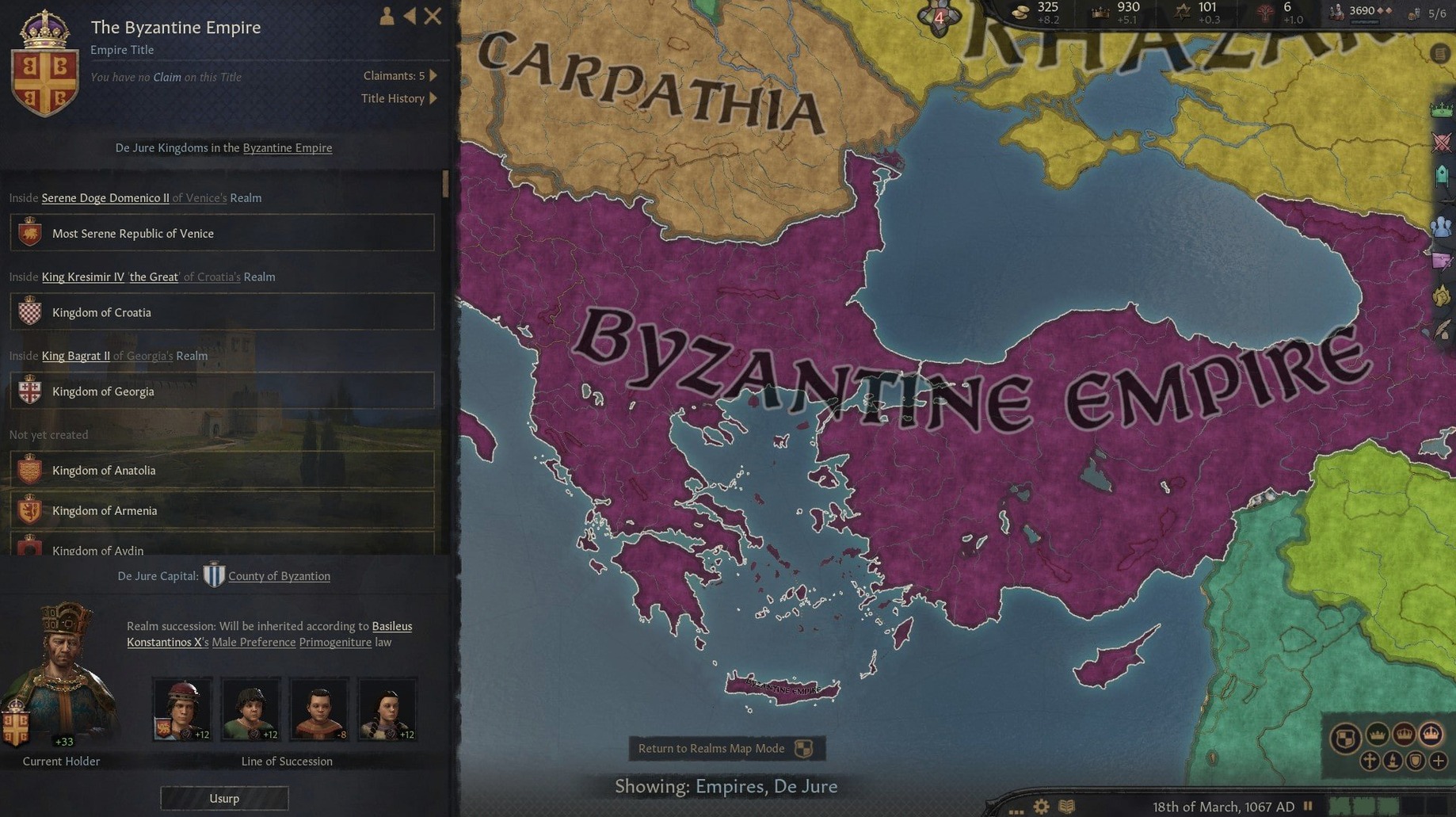
Consider someone playing for the first time as a count in the Byzantine Empire, 867 start. The empire is intact, which means external threats are minimal, but internal politics are a pressure cooker. The player's immediate concern is not expansion — the theme system prevents intra-realm wars unless a hook is available — but survival. The count's liege is a duke who covets the player's single county.
Month one: the player opens the council screen, assigns the best available steward to increase county development, and marries a lowborn courtier with the Genius trait. The children from this marriage will inherit congenital intelligence bonuses that compound for the rest of the run. The prestige hit from a lowborn marriage is irrelevant at this tier.
Month six: the duke revokes a minor title. The player checks the faction screen, sees a liberty faction sitting at 80% strength, and joins it. The faction fires eight months later, the duke concedes, and the player's council rights are now protected — a permanent bulwark against title revocation.
Year three: the player's character develops a rival in the duke's court. The spymaster reports the rival is fabricating a hook. The player starts a murder scheme in response, manually inviting three agents using the now-functioning invite system — one of them the rival's spymaster. The scheme succeeds at 95% success chance, and the player's character gains the Cynical trait from the stress of acting against a Just personality. This is the game working as intended: systems interacting, constraints shaping behaviour, no scripted outcome.
Performance on a recent Mac
On the tested setup — macOS Tahoe, Mac mini 2024 M4, x86 translation layer — the game runs smoothly through the first two centuries. Tick speed at 5× stays responsive until roughly 1100 AD, after which court positions, wandering characters, and the sheer volume of minor courts begin to drag. This is a known characteristic of the engine, not a defect of the 1.19.0.6 build. The Mac mini's fans remain inaudible throughout, and memory usage stabilises around 4.8 GB after the initial map initialisation. Saving to an external SSD adds roughly two seconds per autosave compared to the internal drive; if you play on Ironman with monthly autosaves, store the save file locally.
Late-game stability on the M4 is unremarkable in the best sense — no crashes during a six-hour session across three generations. The only reproducible hitch comes when opening the character finder with all filters cleared in a world containing 40,000-plus living characters. Applying a single filter (diplomacy range, for instance) before opening the window avoids the two-second freeze entirely. This is a Paradox finder issue that predates CK3 and persists across every Clausewitz-engine title.
A full scheme workflow, step by step
Task: fabricate a claim on a neighbouring duchy, press it in a war, and install a dynasty member as the new duke — all within one character's lifetime. The player is a king with medium crown authority and a small but stable realm.
- Open the council and set the realm priest to Fabricate Claim on the target duchy capital. Check the priest's Learning score — 15 or above gives a reasonable chance of completing the task within 30 months. Lower than 10 means years of waiting.
- While the claim fabricates, open the Find Character window. Filter by dynasty, adult, not a ruler, not imprisoned. Sort by Martial. Pick a nephew or cousin with 12-plus Martial and the Organizer trait for faster movement speed on the map.
- Grant the chosen dynasty member a spare county from your domain. This makes them a landed vassal and eligible to receive the duchy title later. Avoid giving them a county inside the target duchy — that creates de jure complications.
- When the claim notification fires, check the target's alliances. Open the target ruler's character panel, click the alliance tab, and note every ally with meaningful troop numbers. Hover over their levy count to see if they are currently at war — an ally distracted by a separate conflict will not honour a defensive call.
- Set a rally point three counties away from the target border and raise all men-at-arms. Do not raise levies unless the ally comparison shows a deficit. Men-at-arms regiments with full counters — heavy infantry against the target's archers, for example — will crush levy stacks twice their size.
- Declare war using the fabricated claim. The war goal is the duchy capital. March directly to it, siege it with the men-at-arms stack, and ignore enemy armies unless they threaten the siege. A captured capital plus a single won battle against the main stack is typically enough for 100% war score in a single-county claim war.
- Enforce demands. Pause the game. Open the target duke's character panel, select Grant Title, and hand the newly acquired duchy to your landed dynasty member. The dynasty renown ticks upward from the moment the grant completes. Unpause.
The whole sequence, from council assignment to title grant, takes roughly 45 minutes of play at 3× speed with occasional pauses. The difference between a smooth run and a disaster is almost always alliance checking — the player who skips step four walks into a defensive pact they did not see coming and loses the war, the claim, and a chunk of prestige.
- Architecture: Apple Silicon native, Intel 64-bit
Questions on file
Does Crusader Kings III run on Apple Silicon Macs?
The current build is x86 64-bit and runs on Intel Macs. Apple Silicon Macs can run it through Rosetta 2 translation.
What languages is Crusader Kings III available in?
Interface text supports Russian, English, German, Spanish, Simplified Chinese, Korean, and French. English is the only voice language listed.
What kind of game is Crusader Kings III?
It is a medieval grand strategy and role-playing hybrid where you guide a dynasty across centuries, managing realms, characters, and family legacies.
Sign in · Create an account to add a field note.
No field notes yet. A measurement, a version, a machine — they appear after moderation.