
Games
Big Ambitions 1.0.3682
GamesUpdated


| Requirement | On file |
|---|---|
| macOS | See the sheet |
| CPU | Apple Silicon, Intel 64-bit |
| Download | 2.3 GB |
| Tested on | macOS Tahoe, Mac mini 2024 M4 |
That first headache hits when the souvenir shop's shelves are full but the register is empty. You check the foot traffic report and realise the pricing is all wrong — the markup on those 'I Heart NY' mugs is scaring off tourists who just want a cheap keepsake. That is the minute-to-minute rhythm of Big Ambitions: a constant loop of spotting a problem, tweaking a variable, and watching the numbers move.
What you actually manage
- Real estate — leasing retail spaces across the city grid, paying rent, and later buying whole buildings.
- Staffing — hiring cashiers, cleaners and lawyers, then setting their wages and schedules so the lights stay on.
- Logistics — driving a van to wholesalers for stock runs because delivery fees eat into margins when you are small.
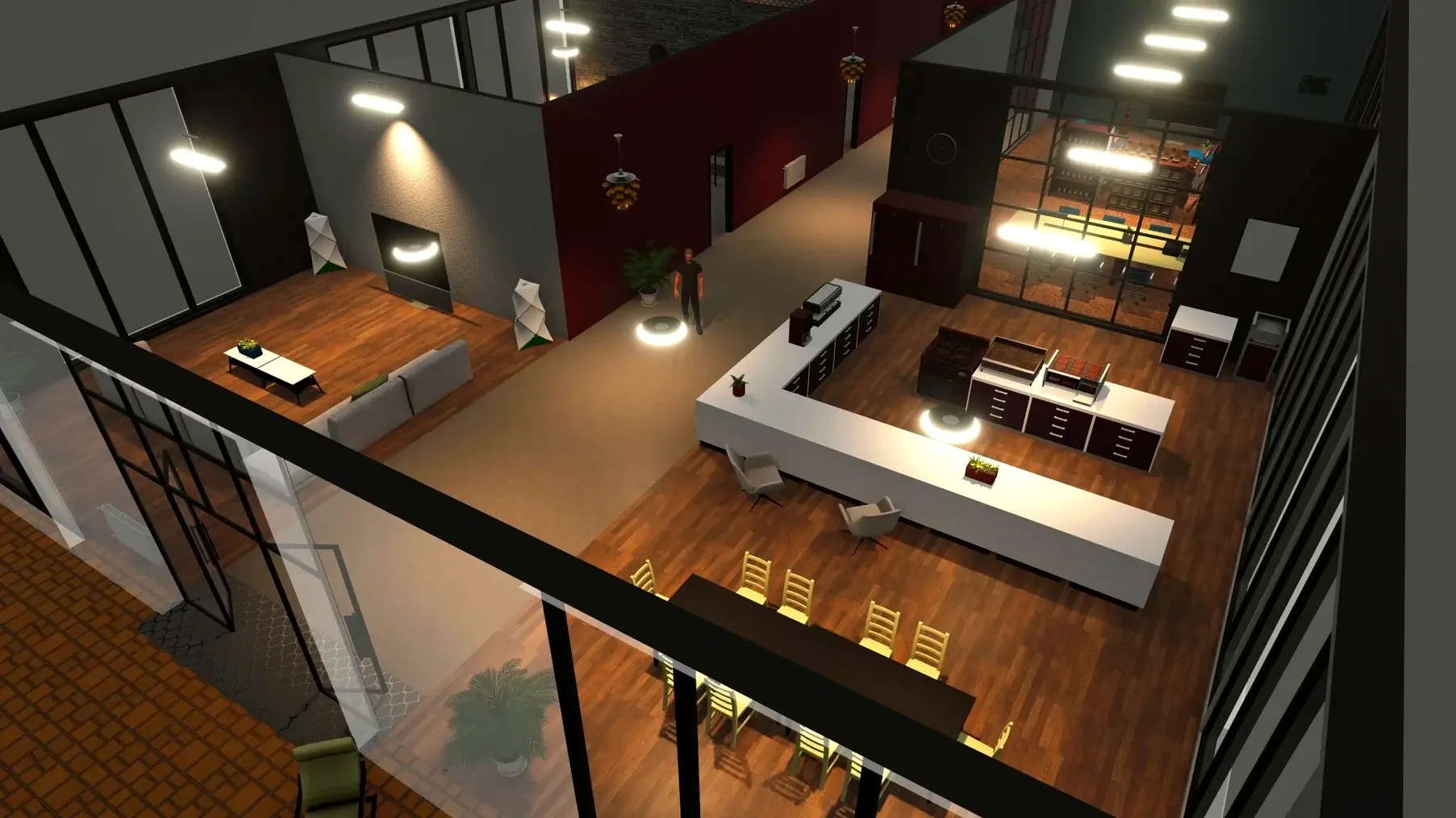
- Store layouts — placing shelves, fridges and decor on a grid to hit a customer satisfaction target.
- Personal needs — your character needs food, sleep and furniture in their apartment, which costs money like everything else.
Where it goes
A single souvenir shop turns into a supermarket, then a law firm down the block and a wine store in a better postcode. Each business type — coffee shops, clothing stores, flower shops among them — runs on the same financial logic but demands a different layout and customer profile. The map is New York City, and the scale creeps up slowly: one van becomes a fleet, one employee becomes a payroll, and a small bank loan becomes a corporate credit line you genuinely do not want to miss a payment on.
A workflow: building your first supermarket from scratch
Most players start with a souvenir shop because the uncle's help nudges you there. A better test of the systems comes when you branch into groceries. Here is the chain from idea to first profitable day.
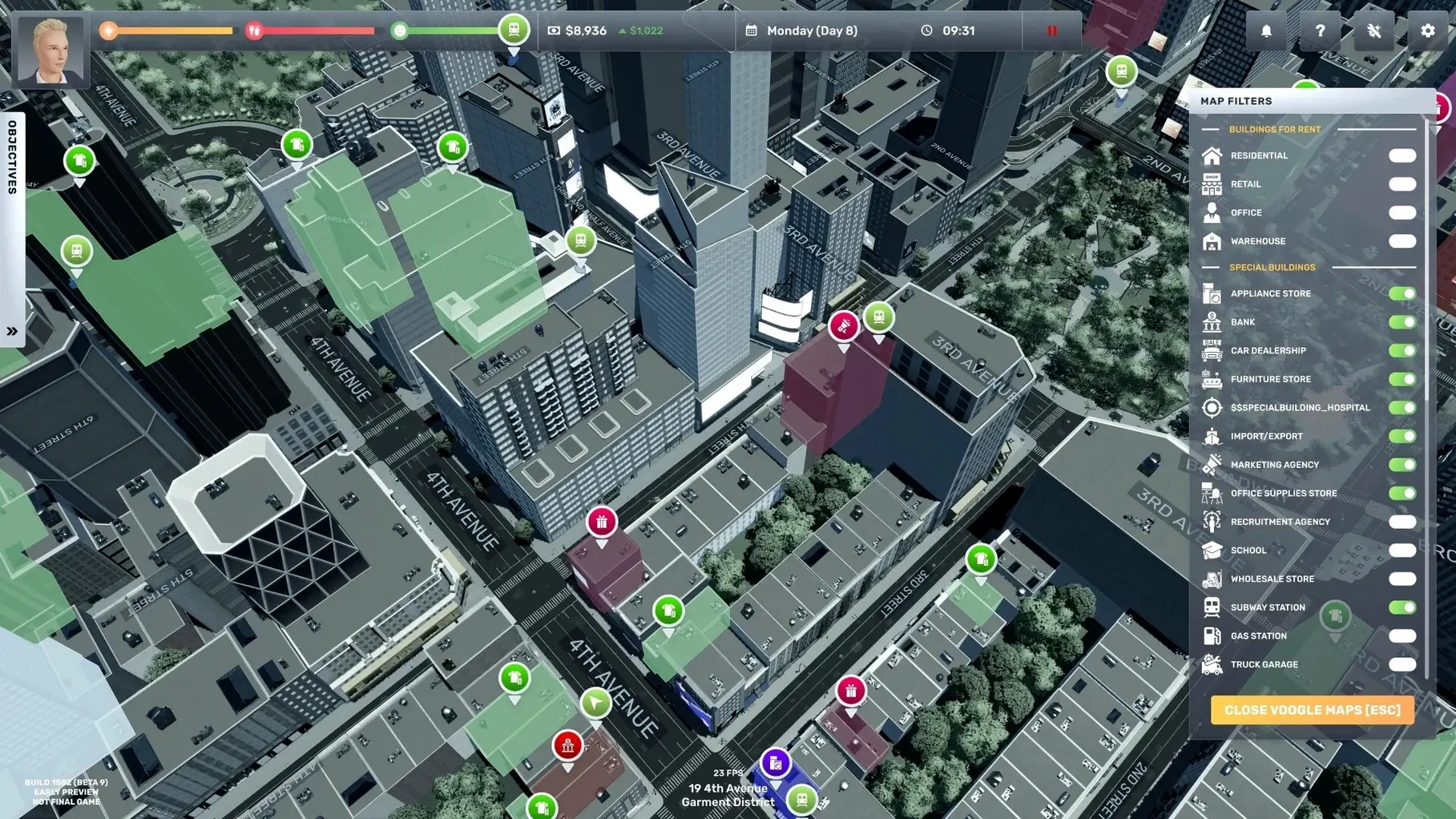
- Scout a district. Open the city map and look for a block with high residential density and no competing supermarket within a six‑block radius. The foot-traffic overlay — green to red — tells you more than rent prices do.
- Sign the lease. A smaller footprint keeps the initial fit‑out cost under $8,000. You can expand later by leasing the unit next door.
- Design the layout. Grocery stores need three zones: refrigerated units along the back wall, dry‑goods shelves in the centre, and a checkout lane by the door. The customer path should run past impulse items — chocolate bars, magazines — before they reach the register.
- Source inventory. Take the van to a food wholesaler. Buy 40 units each of bread, milk, eggs and pasta as a starter range. The receipt shows unit cost; set your retail price at 1.4× to 1.6× that, depending on what the demand overlay suggests for that postcode.
- Hire a cashier. One full‑time employee, 9 am to 5 pm, at $14 per hour. The wage needs to be high enough that they show up, low enough that the store still turns a profit on weekdays.
- Open the doors. Watch the first day's sales tick in. If the milk sells out by 2 pm, increase the restock quantity. If foot traffic is strong but basket size is small, try bundling bread and eggs with a 10% discount sign near the entrance.
Within three in‑game days you will know whether the location works. A store that breaks even in week one is a keeper; one that bleeds cash needs either a price adjustment or a move to a cheaper unit across the street.
A typical session, hour by hour
8 pm on a Tuesday. The game loads to the interior of your apartment in Brooklyn. The character's sleep bar is at 32% and hunger is at 18%, so the first fifteen minutes are not about business at all — they are about buying a sandwich from the deli downstairs and getting to bed before midnight. Neglect either stat and the movement speed penalty makes every errand feel like wading through treacle.
Morning comes at 7 am. You check the overnight reports: the wine store in Manhattan turned a $620 profit, but the flower shop in Queens lost $140 because the cooler broke and half the roses wilted. A maintenance request goes to the building owner; in the meantime you redirect stock to the souvenir shop where margins are fatter anyway.
By 10 am you are behind the wheel of a delivery truck, making the wholesale run. The van's cargo capacity is 800 units and you have three stores to supply. Loading 200 units of coffee beans, 300 souvenir mugs and 100 bottles of red wine takes careful math — overbuying means money sitting on a shelf, underbuying means empty shelves and a customer satisfaction drop you will feel in tomorrow's revenue.
Lunch is a burger at a diner, paid from the character's personal wallet which is separate from the business accounts. That separation is quietly brilliant: it forces you to pay yourself a salary from the company before you can eat, which in turn forces you to run the numbers properly instead of treating the business like a bottomless ATM.
The afternoon block goes to expansion planning. A clothing store location opened up two blocks from Central Park and the rent is steep — $4,200 a month — but the foot traffic overlay is solid green. You spend 40 minutes comparing loan offers from three banks, settling on a 24‑month term at 6.2% because the early repayment penalty is low and you expect to clear it in 18 months if the store hits its projections.
Evening is for firefighting. A cashier at the supermarket quit without notice, so you cover the register yourself until closing. Sales are slow after 8 pm, which gives you time to redesign the shelving layout — moving the pasta closer to the door lifted basket size by 12% in the first hour. Small wins, but they compound.
Midnight. Save and quit. Five businesses are running, the loan payments are on schedule, and the character's stress level is low enough that tomorrow won't start with a penalty. A good session.
Software Inc. digs deeper on products, but Big Ambitions adds city life
There is nothing quite like Big Ambitions on macOS, but three games brush against its territory.
Against Software Inc. — Software Inc. is deeper on product design and employee skill trees, letting you craft operating systems and office layouts over decades. Big Ambitions is wider: instead of one industry, you juggle six or seven retail types plus logistics and personal survival. Software Inc. rewards systems thinking; Big Ambitions rewards multitasking under pressure. If you want to obsess over chair placement and team leads, pick the former. If you want to wonder whether your truck has enough diesel to reach the wholesaler before it closes, pick Big Ambitions.
Against Gas Station Simulator — Gas Station Simulator is first‑person and physical: you scrub floors, stock shelves manually, and serve customers at the counter. Big Ambitions pulls the camera back to a top‑down view and gives you menus instead of mops. The emotional texture is different — Gas Station Simulator feels like manual labour with a business skin, while Big Ambitions feels like a spreadsheet that happens to have loading docks you can drive to.
Against Two Point Museum — Two Point Museum shares the zoning, staff management and customer flow logic, but wraps it in cartoon humour and curated scenarios. Big Ambitions strips out the jokes and the guardrails. There is no campaign mission telling you to reach $10,000 in monthly revenue; you either want it or you do not. The open‑endedness appeals to players who bounced off Two Point's structured objectives.
80‑hour players thrive on spreadsheets, loans, and logistics
Big Ambitions rewards a specific mindset. The players who put 80 hours into it share a few traits.
Spreadsheet‑comfortable players. You will spend a lot of time comparing unit costs, rent‑to‑revenue ratios, and loan amortisation schedules. None of it requires advanced math, but you need to enjoy staring at columns of numbers and spotting the one that is out of place. If profit‑and‑loss statements feel like a puzzle rather than homework, the game clicks.
Simulation fans who want stakes. Many life sims sand off the edges — you cannot really fail, just progress more slowly. Big Ambitions lets you go bankrupt, miss loan payments, lose staff and end up sleeping in a cheap apartment with one struggling souvenir shop, exactly where you started. The possibility of failure makes the small wins feel earned in a way that gentler sims cannot match.
Mac users who got tired of waiting. The Mac simulation landscape is thinner than Windows, especially for business sims with this much mechanical density. Big Ambitions runs natively on Apple Silicon and x86 Macs, which puts it in a small club of no‑compromise management games available on the platform without emulation or translation layers. If you have been searching for a big ambitions download that does not ask you to boot into Windows, this is the answer.
Late‑night tinkerers. The game suits short sessions — 45 minutes to fix a pricing problem and run
- Runs on both Intel and Apple Silicon Macs
Sign in · Create an account to add a field note.
No field notes yet. A measurement, a version, a machine — they appear after moderation.