
Games
City Game Studio: Your Game Dev Adventure Begins 1.28.1
GamesUpdated
| Requirement | On file |
|---|---|
| macOS | See the sheet |
| CPU | Apple Silicon, Intel 64-bit |
| Download | 302 MB |
| Tested on | macOS Sequoia, MacBook Air (M1. 2020) |
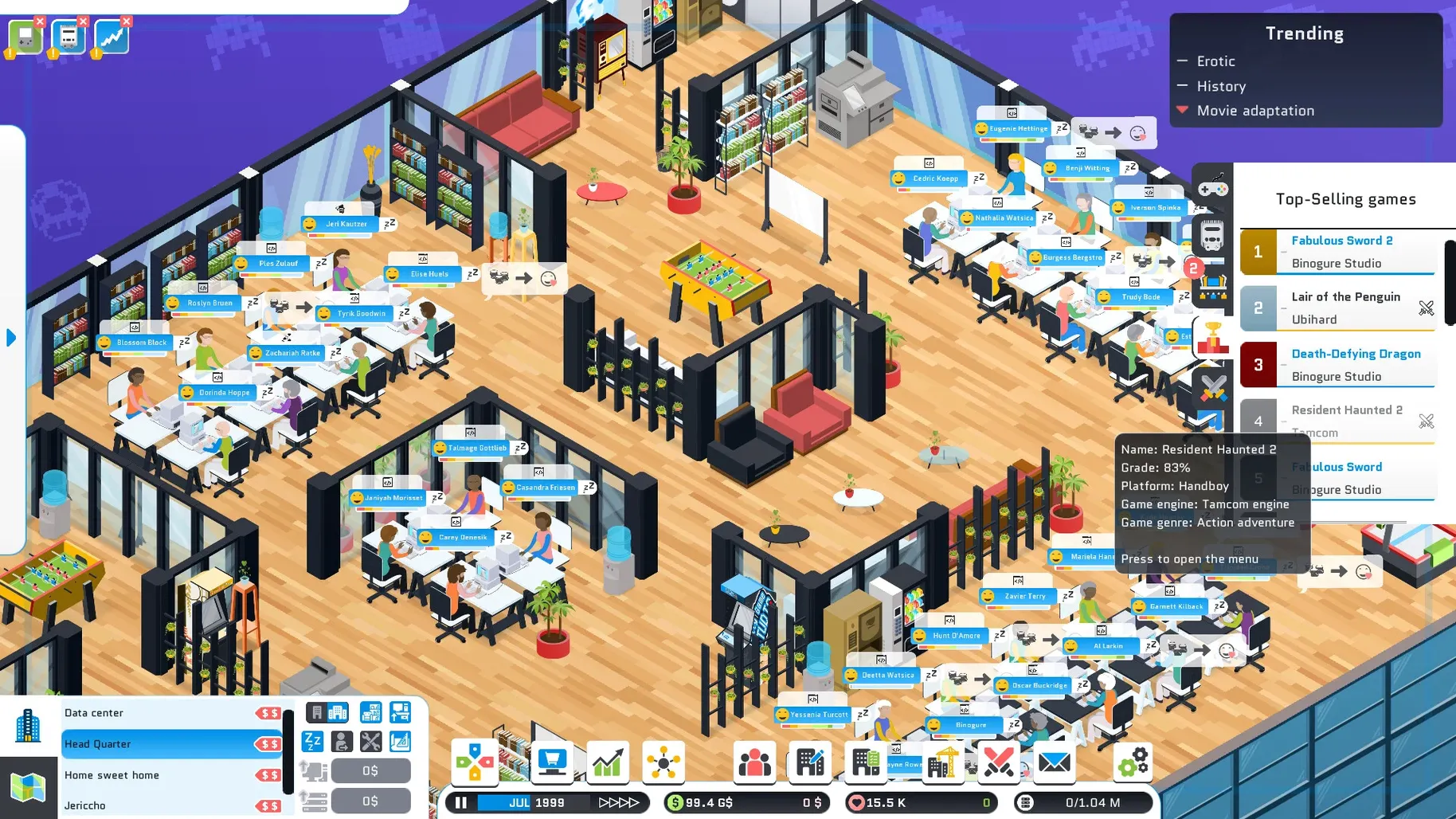
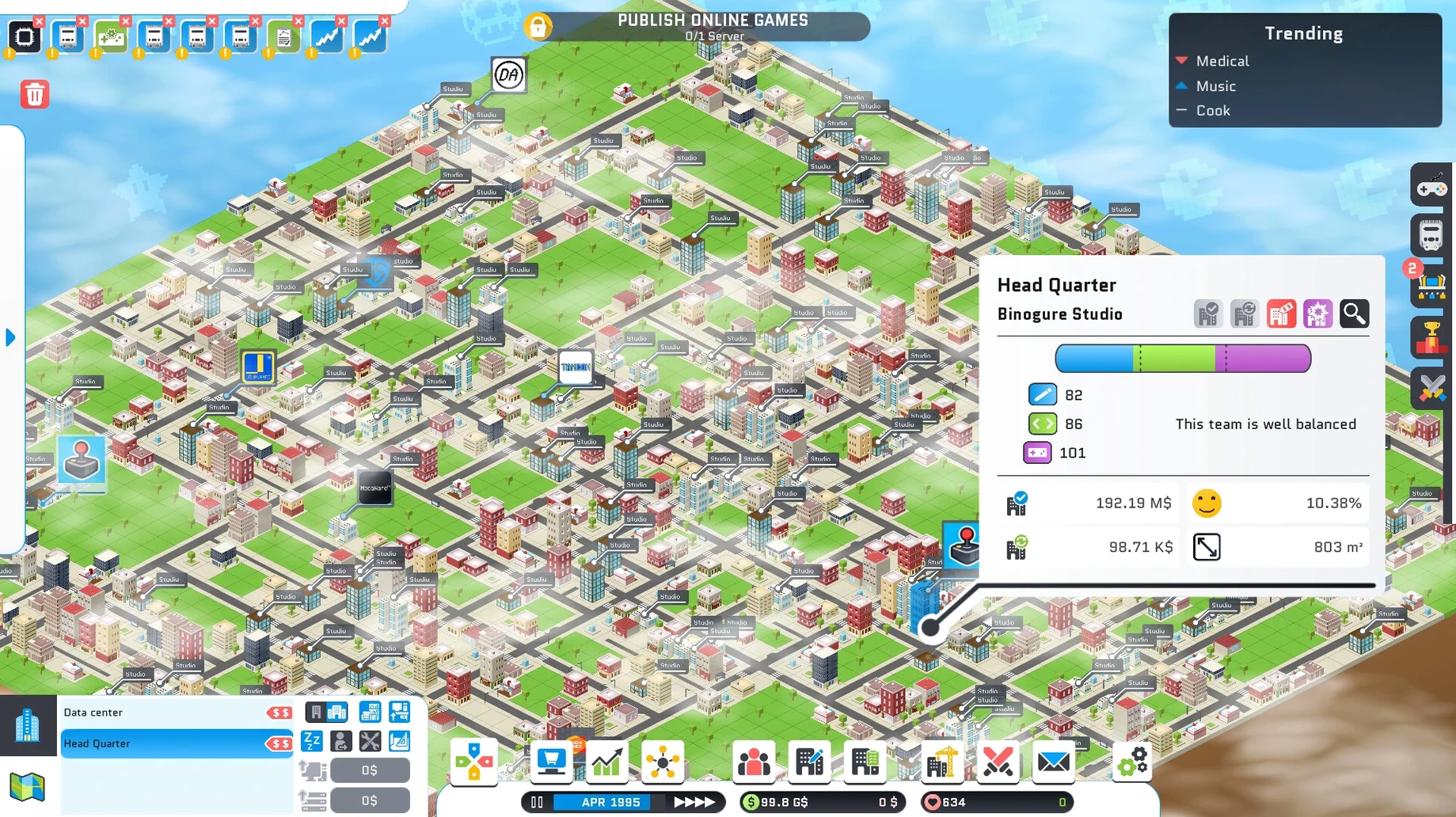
Most management sims hand you a polished factory or a functioning theme park. Binogure Studio’s City Game Studio drops you into a cramped office in January 1976 with nothing but a company registration and a deadline you haven’t set yet. The problem it solves is the cold start: how do you build a game studio when you have no engine, no staff, and a market that doesn’t know you exist?
Studio Toolkit: What You Control
- Game engine strategy — develop a proprietary engine in-house or rent one to cut upfront costs.
- Hiring and team management — recruit employees and assign them to projects that fit their skills.
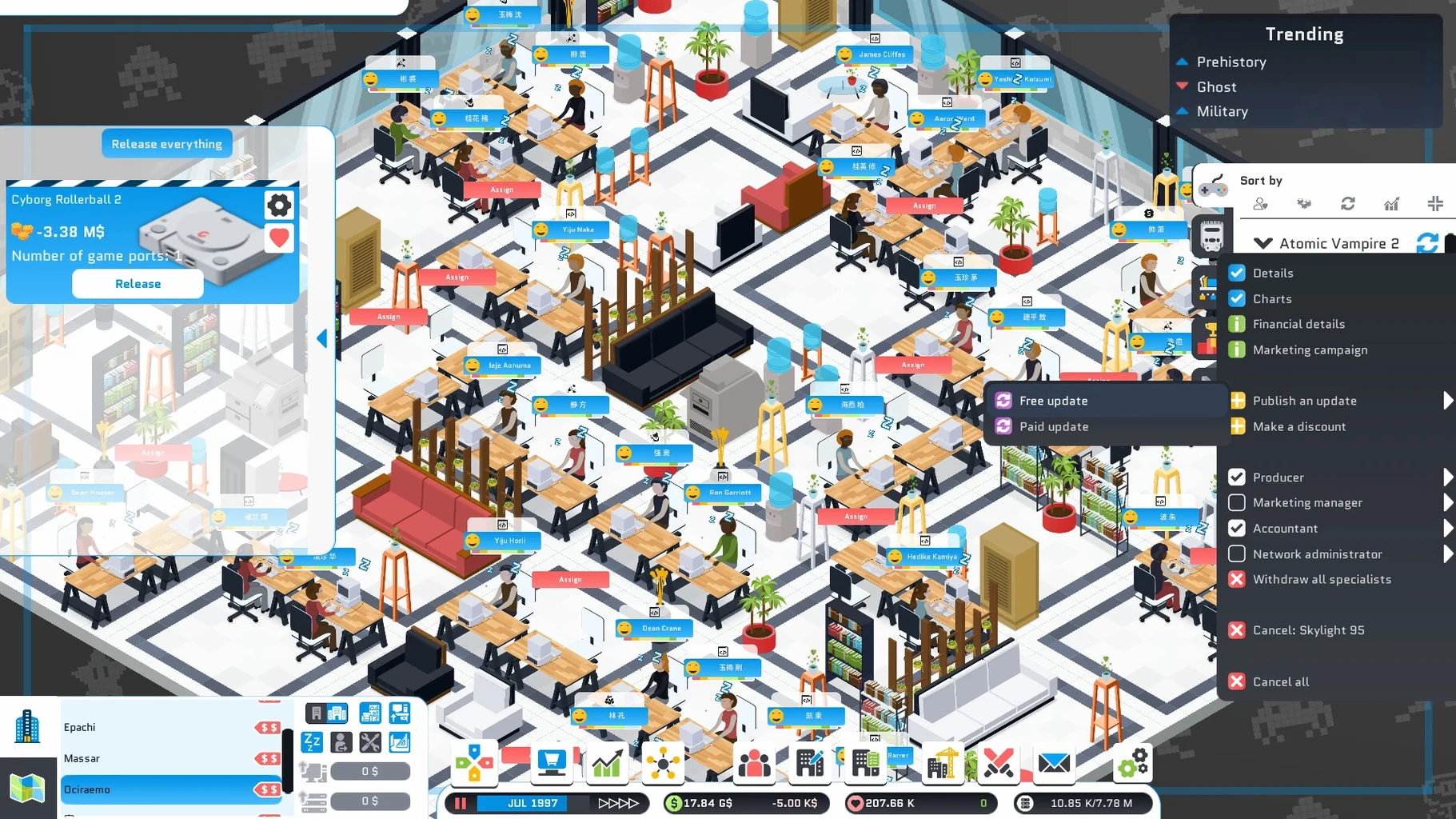
- Marketing campaigns — push a title with targeted promotion to improve launch-day visibility.
- Publishing contracts — publish your own games and offer publishing deals to external developers.
- Competitor intelligence — hack rival studios’ games to analyse their tech and design choices.
- Industry presence — participate in game expos to build reputation and secure better distribution.
Forty Years of Friction
The campaign stretches from the mid-1970s across four decades of platform shifts and market upheavals. Every decision pulls on a thread: a rented engine saves cash early but limits technical ambition, while skipping an expo keeps the team coding but cedes mindshare to a competitor launching in the same window. The build runs on both ARM and 64-bit x86 Macs, and the interface ships in 15 languages including Russian, German, Japanese, and Brazilian Portuguese. Binogure built the game on the Godot Engine, a choice that keeps system requirements modest and the simulation logic transparent — useful when you’re reverse-engineering why your RPG just tanked in the European charts.
Building Your First Hit: A Walkthrough
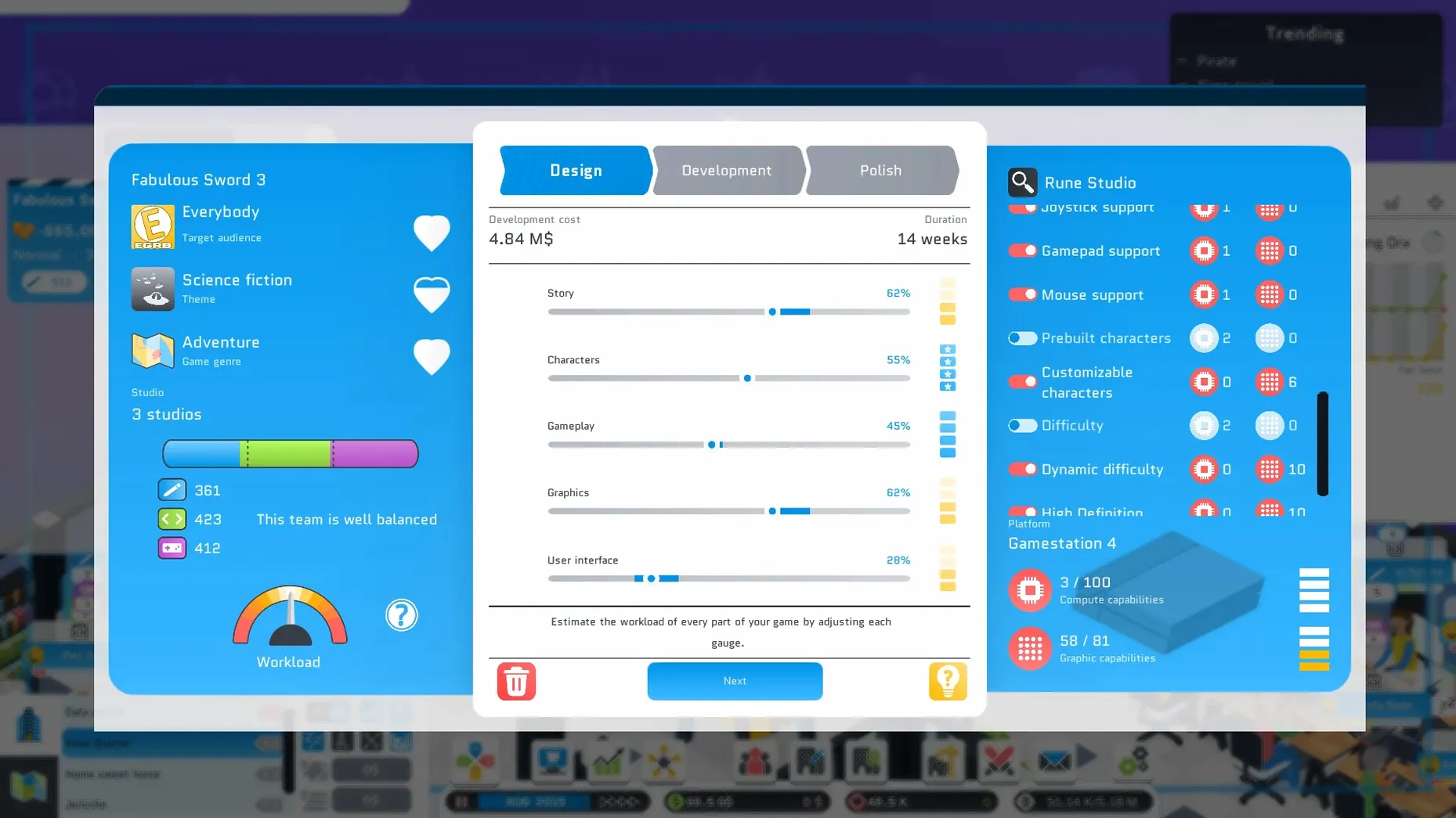
Start in January 1976 with a single empty room and $50,000 in the bank. The first job is scoping a game you can actually finish — a text adventure or a simple arcade clone with a 4-month dev cycle keeps the burn rate low. Skip the proprietary engine for now; rent the cheapest one available and pour the savings into hiring one developer with a decent Programming stat. Set the project to Solo mode so that one hire owns the codebase while you handle design yourself.
While the build ticks along, open the Market Research panel and check which genres are trending. If platformers are hot, your second title should lean that way. Two weeks before launch, book a small magazine ad — the cheapest marketing option — to nudge the awareness needle above zero. Ship the game, pocket the modest profit, and immediately start pre-production on the sequel. Rinse this loop three or four times before you even think about a second office or an artist. The studio survives on discipline, not ambition.
Cash Bleeds and Engine Overreach in Early Years
A few friction points catch players off guard in the first five in-game years. Here’s what tends to go wrong and how to steer around it.
- Cash bleeding from an overbuilt engine. Developing a proprietary engine before you have a steady revenue stream burns $20,000–$40,000 that should be funding two or three small games. Stick to rentals until your catalogue is generating at least $100,000 per quarter.
- Staff sitting idle between projects. If you let a developer or artist go unassigned for more than a week, their salary becomes pure overhead. Queue the next concept before the current game ships so the transition is instant. The scheduling panel shows gaps in coloured blocks — treat grey bars as money leaking.
- Publishers taking too large a cut. Publishing through a third party eats 30–50% of revenue. As soon as your reputation hits the mid-tier threshold, pull your next title under your own publishing arm. The margin swing on a $200,000 game is the difference between breaking even and funding your next hire.
- Console ports that arrive too early. Porting a game to three consoles before the PC version proves itself multiplies dev time and cost. Ship on one platform first, check the sales numbers, then commit to ports. The porting cost scales with engine compatibility, so keep your rented or owned engine close to the platform’s supported feature set.
- Neglecting employee schedules during crunch. Pushing the team into overtime for too many consecutive months tanks morale and triggers resignations. If a deadline slips by more than 30 days, cut a feature rather than burning out your best programmer.
Scenario: The Indie Veteran’s Second Act
Consider a player who’s run a small real-world indie label and now treats City Game Studio as a sandbox for strategies they wish they’d tried. They lease a modest office in 1976, hire two developers and a tester, and spend 1977 building a proprietary 2D engine while funding it with a string of low-budget puzzle games. By 1980 they have a catalogue of eight titles, a staff of twelve, and enough capital to open a second studio focused entirely on RPGs. The twist: instead of selling the RPGs themselves, they sign a publishing deal with a rival studio, taking a 25% cut of a game that moves 300,000 units in Japan. That single contract funds the shift to 3D engine development through 1983, and by the time the industry pivots to 16-bit consoles, their studio is already porting its back catalogue to three platforms simultaneously. The simulation doesn’t script this path — the player stitches it together from the same tools a chaotic newcomer gets. The difference is pacing, and knowing that a publisher’s advance is sometimes better leverage than a hit game. That’s where city game studio your game dev adventure begins mac full version reveals its depth: the systems don’t care about your resume, only the choices you log quarter by quarter.
- macOS (Apple Silicon and Intel 64-bit supported)
Questions on file
Does City Game Studio include a sabotage or espionage system?
Yes, the game allows you to hack competitors' games to gain insight into their technology and design, giving you a strategic edge in your own development.
Sign in · Create an account to add a field note.
No field notes yet. A measurement, a version, a machine — they appear after moderation.