Games
Victoria 1.13.11
GamesUpdated
| Requirement | On file |
|---|---|
| macOS | See the sheet |
| CPU | Apple Silicon, Intel 64-bit |
| Download | 9 GB |
| Tested on | macOS Tahoe, Mac mini 2024 M4 |
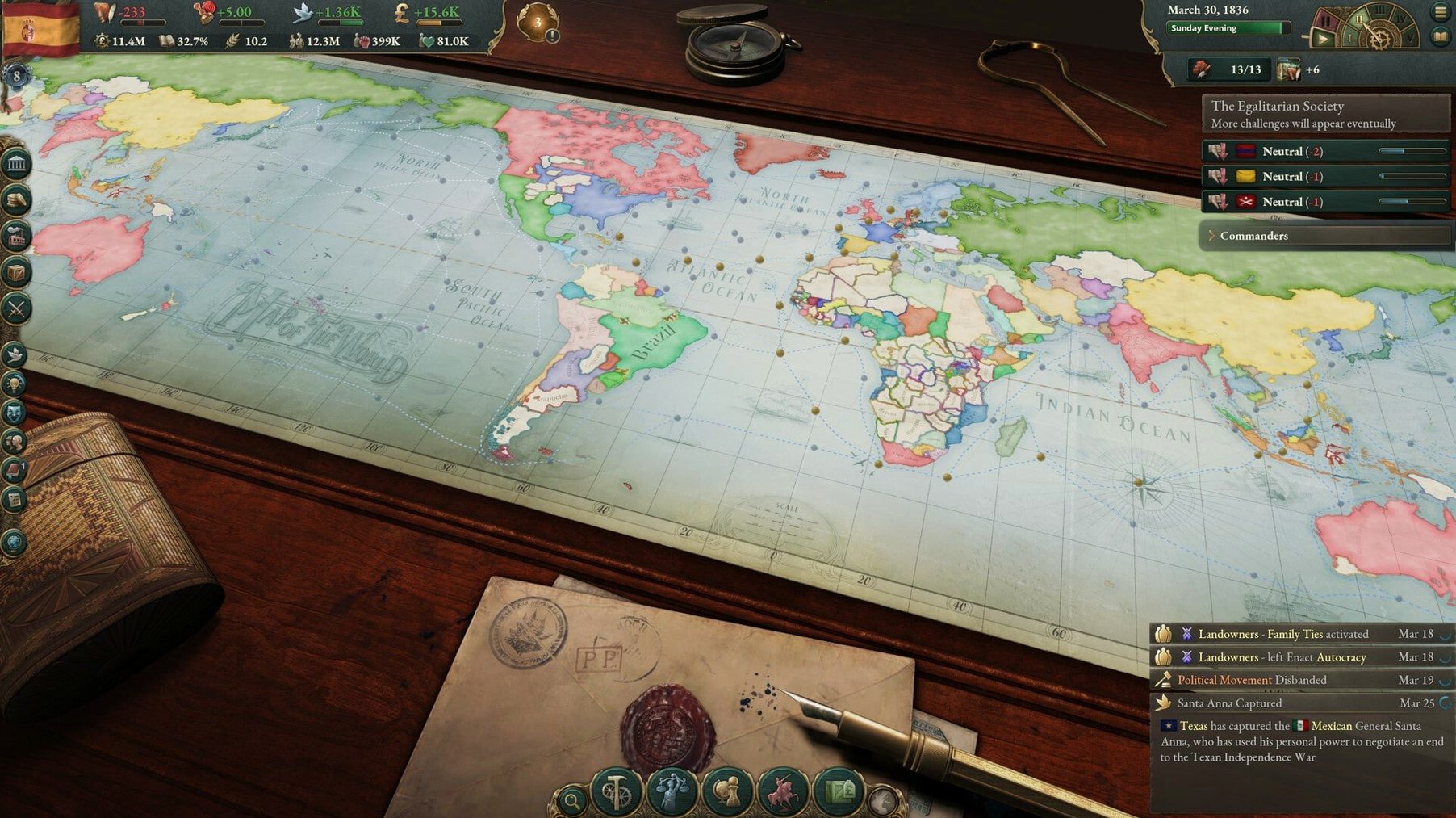
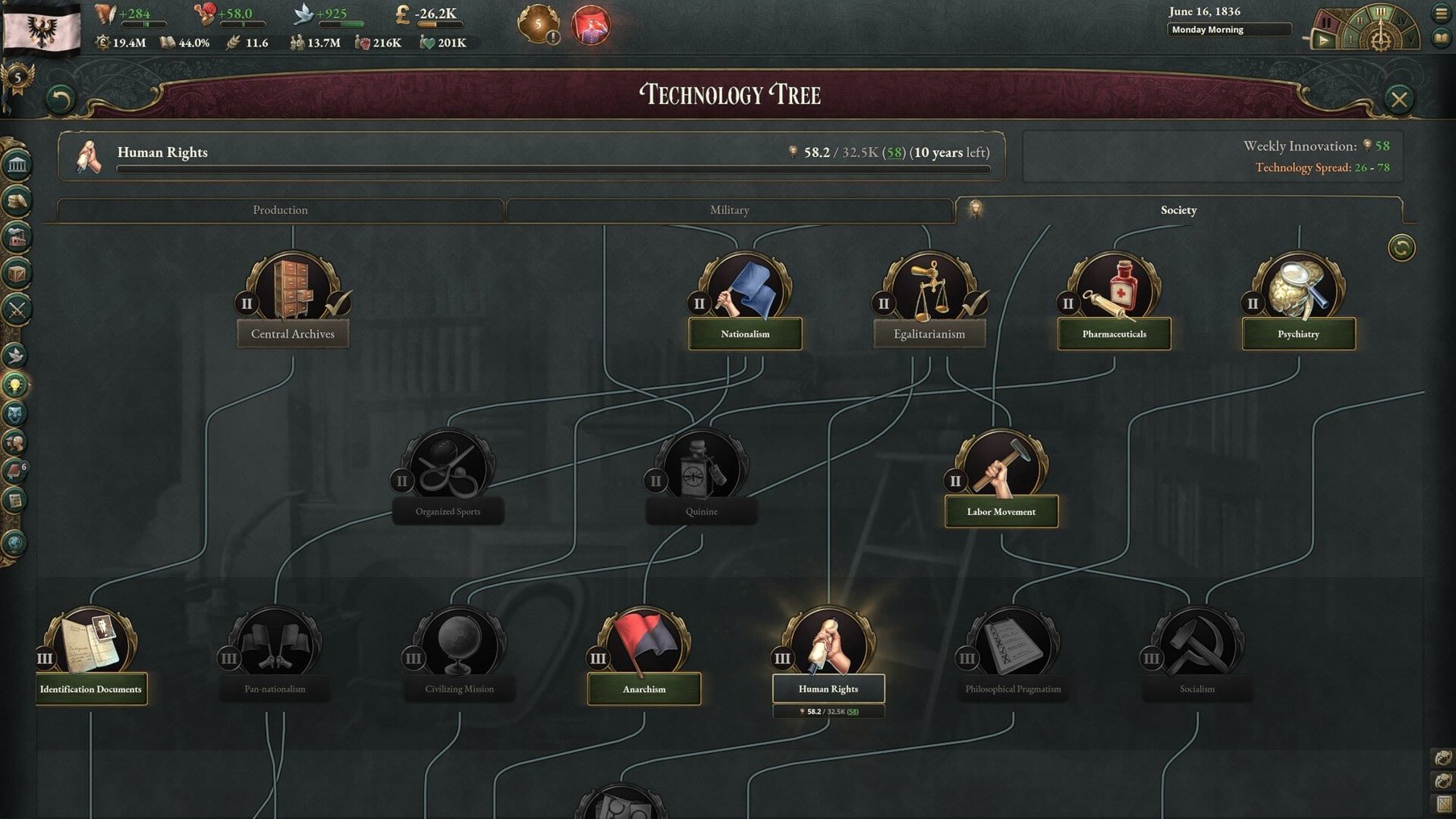
Checksum a47f marks the current build, a hotfix that arrived with version 1.13.11. The game models one hundred years of global transformation, starting in 1836 and closing in 1936, where every population group carries its own political outlook and material concerns. Those groups react to industrial output, tax policy, and trade routes; a factory closure in one state can shift loyalties three provinces away.
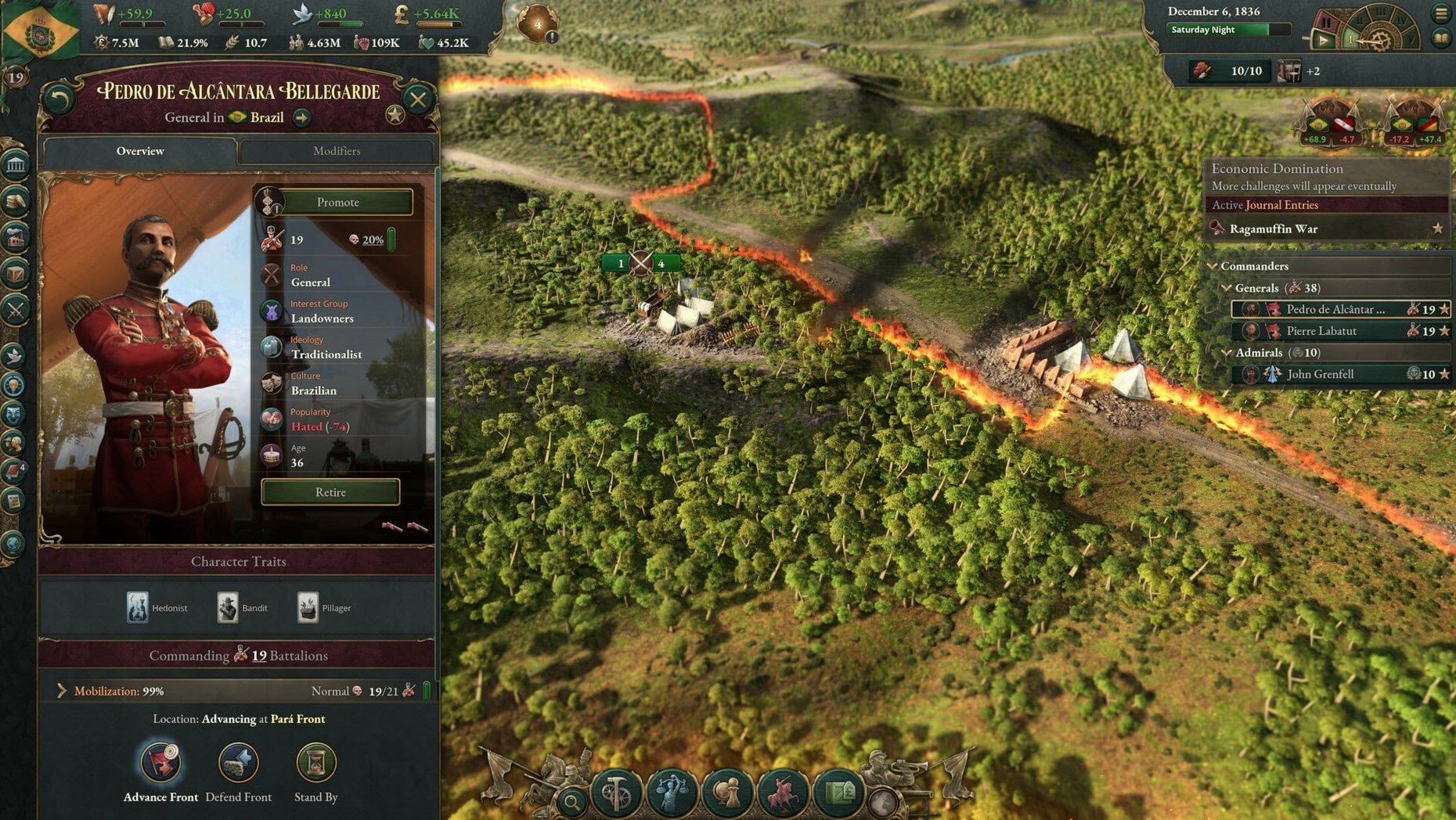
The economic layer tracks industry, imports, goods regulation, and taxation across interconnected markets. You do not control a monolithic nation so much as a set of competing interests held together by laws and institutions. Government reforms and constitutional changes let you reshape society, though the landed gentry rarely gives up power without a fight. Diplomacy runs parallel to the domestic sphere: alliances, intimidation, deception, and formal negotiations all sit on the same table, and a diplomatic play can escalate faster than your army can mobilise.
This release adjusted Banana Plantation output values and tweaked the outcome options for the A Doctrine of Iron and Steel event. A crash at the turn of the month, triggered when sway offers remained pending in a diplomatic play, has been fixed. The build runs natively on both Apple Silicon and 64-bit x86 architectures.
A Session in Victoria
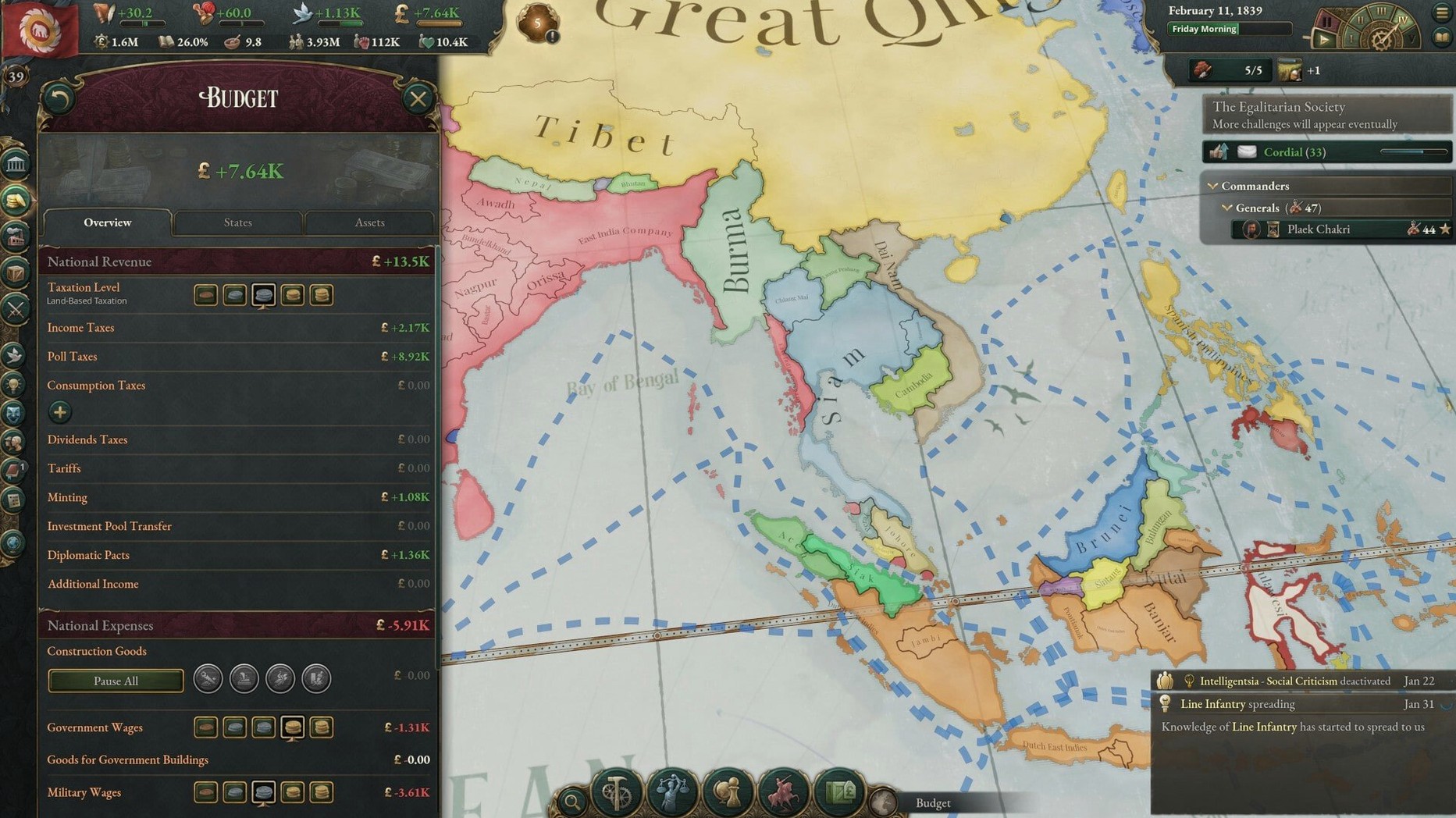
A typical run opens with a choice that takes longer than you expect. Belgium in 1836 looks modest on the map, but the neighbouring markets and the two dominant parties pulling in opposite directions suggest a session shaped by small margins. The pause button is your first click. Before a single week advances, you spend twenty minutes inside the budget panel, checking tariff income against the cost of imported grain, then moving into the production lens to see which factories in Wallonia are barely breaking even.
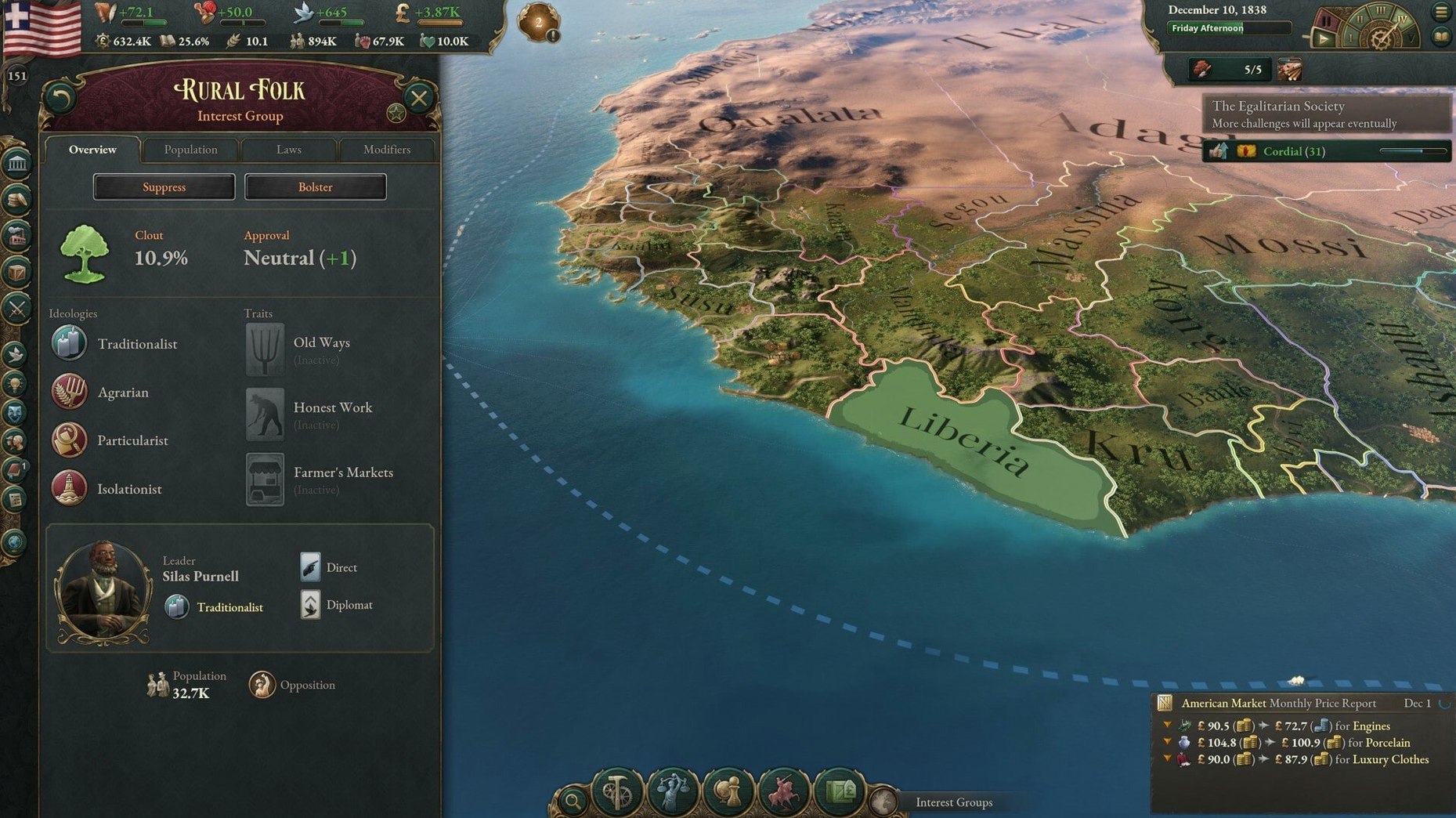
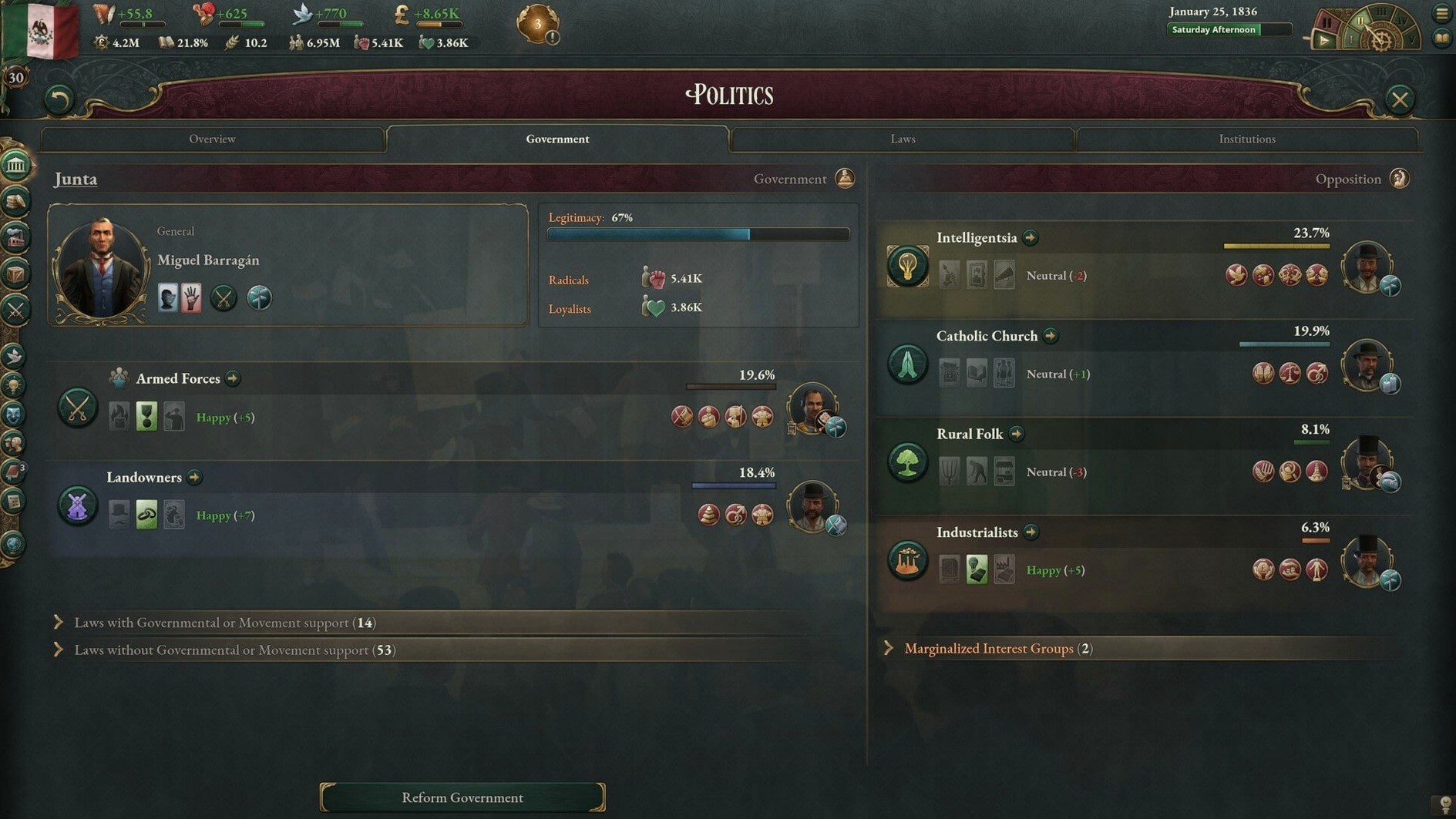
The first five years tend to pass at speed three, interrupted by pauses whenever a diplomatic play appears. Prussia demands Schleswig; you are not involved, but the resulting shift in the balance of power in the German Confederation alters who might back a Belgian claim on Luxembourg later. You bookmark the play and return to your domestic screen. A law to expand the franchise sits at 22 % support in the upper house. The industrialists approve, the clergy do not, and a rural folk movement that formed three months ago in Flanders is now radicalising because the price of furniture has crept above their expected standard of living. You notice this not through a pop-up alert but by hovering over the radical count in the outliner, then drilling into the tooltip that names the specific goods shortfall.
By 1855, the session has settled into a rhythm: monthly construction queue checks, quarterly trade route reviews, and a diplomatic lens sweep every time a truce expires. A colonial race in the Niger Delta triggers an incident with France. You send a small expeditionary force, attach a general with the “Surveyor” trait to speed movement through uncharted terrain, and watch the infamy counter tick upward. The next cabinet meeting event fires, and you spend five minutes reading the tooltip for each option, calculating whether the 10 % prestige boost from the militarist path outweighs the −15 relations penalty with Britain. The game does not pause for you here; you pause it yourself, because the clock is a resource as real as iron or coal.
Performance and Stability
On an M4 Mac mini, the simulation runs without noticeable stutter through the first four decades. The late game, roughly 1900 to 1936, is where the pop calculations accumulate. At speed five, the day counter can hitch for half a beat at the turn of each week when the engine recalculates all global market prices and migration pressures. It is a CPU-bound pause, not a graphical one; the map camera remains responsive. Zooming into a dense urban state like New York or London during a late-game world war drops the frame pacing slightly, but the strategic zoom levels stay fluid. Memory usage in a full campaign settles around 6–8 GB, which leaves headroom on 16 GB systems for a browser and a notes app in the background.
The hotfix deserves credit for stability. The crash triggered by pending sway offers at the month tick was one of those bugs that turned a tense diplomatic play into a lesson in saving every ten minutes. With that fixed, the only interruptions across a thirty-hour campaign tend to be the occasional UI quirk: a tooltip that overflows the screen edge on a 1440p display, or a notification that stacks behind the outliner until you manually clear the queue. The autosave interval is configurable, and the game keeps three rolling backups by default, which means a corrupted save from an unlucky power cut rarely costs more than a few months of in-game time.
Next to Similar Titles
Place Victoria beside Europa Universalis IV and the difference becomes obvious in the first hour. EU4 runs on mana pools — diplomatic, administrative, military points that you spend to achieve discrete results. Victoria replaces that abstraction entirely. Everything flows from population groups, their wealth, their literacy, and their access to goods. Where EU4 asks you to click a button to develop a province, Victoria asks you to build a steel mill, staff it with employed machinists, ensure the iron input is not bottlenecked by convoy raiding, and wait for the resulting wage increase to attract migrants who then raise the state’s average education level over a decade. It is slower, more opaque, and for a certain type of player, far more rewarding.
Crusader Kings III is a character drama; Victoria is a society drama. In CK3, a bad heir can unravel a kingdom. In Victoria, a bad harvest and a poorly timed move to free trade can radicalise a third of your industrial workforce. The two games share the Paradox DNA of nested tooltips and event chains, but CK3 foregrounds personality and dynasty while Victoria foregrounds systems and demographics. Some players who look for a Victoria 3 torrent end up trying both and finding that CK3 scratches a different itch entirely — one is about people, the other about populations.
Workers & Resources: Soviet Republic offers a narrower time window and a single economic model, but its supply-chain granularity appeals to the same audience that enjoys Victoria’s goods substitution mechanics. Where Victoria abstracts factory input ratios with a production method toggle, Workers & Resources makes you physically move every ton of coal by truck or train. The comparison is instructive: Victoria simulates global markets and political forces; Workers & Resources simulates logistics. A player who wants a Victoria torrent for the economic puzzle might find both satisfying, though Victoria’s diplomatic layer has no equivalent in its competitor.
Intel Mac Performance and Late-Game Tick Times
Does it run on an Intel Mac? The build supports both Apple Silicon and 64-bit x86 architectures, so Intel machines from the last several years handle it. Expect longer late-game tick times on older chips, especially below 3 GHz.
Is the learning curve as steep as the forum threads suggest? The first three hours are disorienting if you treat Victoria as a map painter. The interface rewards reading tooltips rather than clicking through them. A tutorial run as Belgium or Sweden teaches production chains, trade, and the political process without the pressure of great-power diplomacy. Most players find the economy clicks around the ten-hour mark.
What changed in version 1.13.11? It is a hotfix release: Banana Plantation output values were adjusted, the A Doctrine of Iron and Steel event had its outcome options tweaked, and a crash on the month turn when sway offers remained pending in a diplomatic play was resolved.
Can I play it in my language? The interface supports Russian, English, German, Spanish, Simplified Chinese, Korean, Polish, Portuguese, Turkish, French, and Japanese. Voice audio is limited to the musical score; there is no spoken dialogue to localise.
Is the Mac version the same as the Windows build? Feature-identical, same checksum. The Mac version runs natively on ARM, so on Apple Silicon it does not go through Rosetta. Multiplayer cross-play with Windows and Linux works as long as both clients share the same checksum — a47f for this release.
- Stability — Fixed a crash at the turn of the month when sway offers were pending in a diplomatic play.
- Economy — Adjusted Banana Plantation output values.
- Events — Tweaked the outcome options for the A Doctrine of Iron and Steel event.
- macOS (version not specified by developer)
- Apple Silicon or Intel (ARM and 64-bit x86 supported)
Questions on file
Does Victoria 3 run on Apple Silicon Macs?
Yes. The current build supports ARM and 64-bit x86 architectures, so it runs natively on Apple Silicon and Intel Macs.
What languages are supported in the interface?
The interface is available in Russian, English, German, Spanish, Simplified Chinese, Korean, Polish, Portuguese, Turkish, French, and Japanese.
Sign in · Create an account to add a field note.
No field notes yet. A measurement, a version, a machine — they appear after moderation.