Games
Vampire Therapist 1.214
GamesUpdated

| Requirement | On file |
|---|---|
| macOS | See the sheet |
| CPU | Apple Silicon, Intel 64-bit |
| Download | 1.8 GB |
| Tested on | macOS Tahoe, Mac mini 2024 M4 |
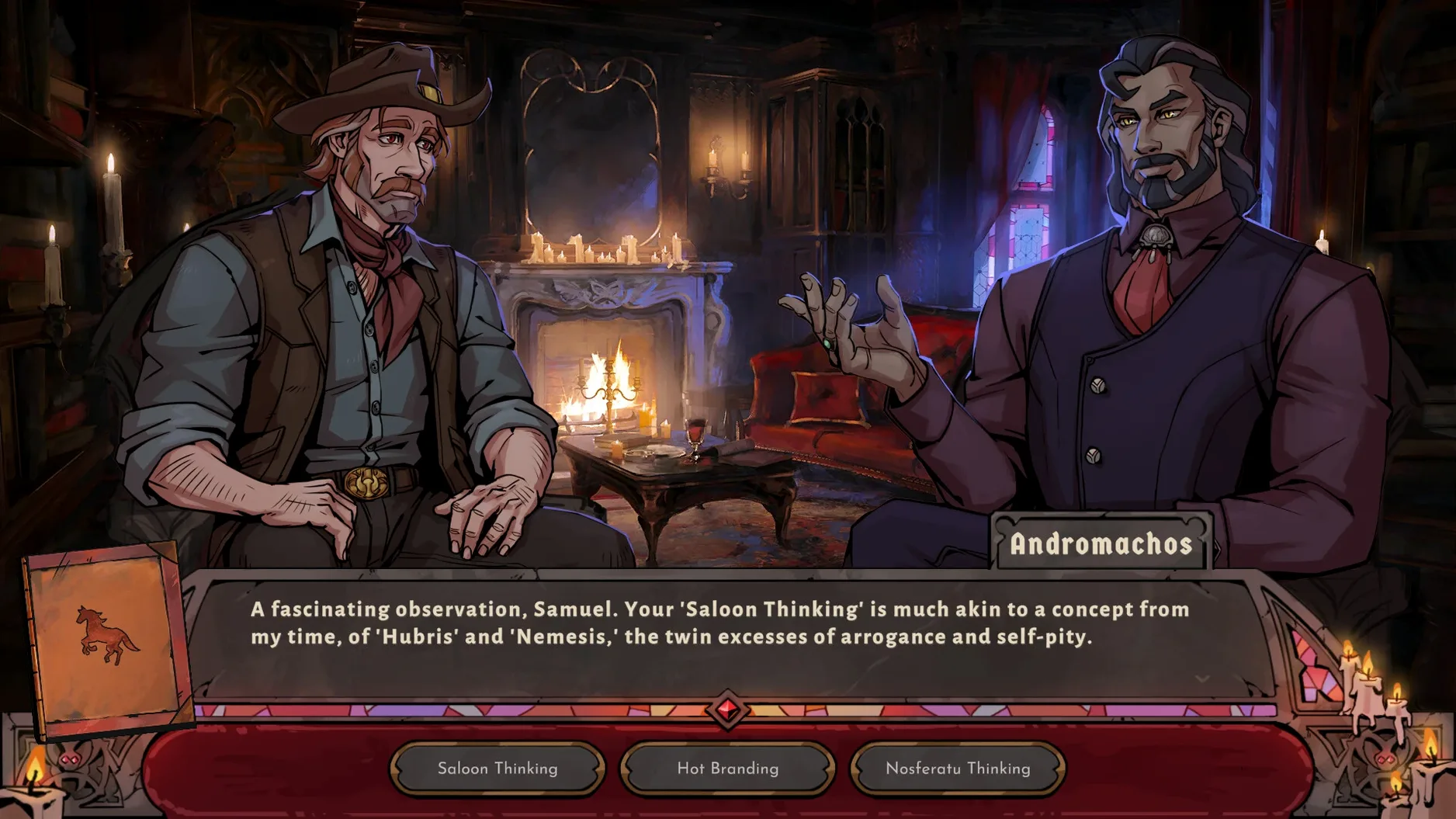
Version 1.214 of Vampire Therapist ships as a universal binary — one app bundle that runs natively on both Apple Silicon and Intel 64-bit Macs. It is a single-player narrative visual novel that blends adventure-game structure with a therapy simulation, set in a stylised version of Europe where the undead have surprisingly modern emotional problems.
What the game gives you
- A story-driven campaign centred on Sam, a newcomer who teams up with a 3,000-year-old vampire therapist.
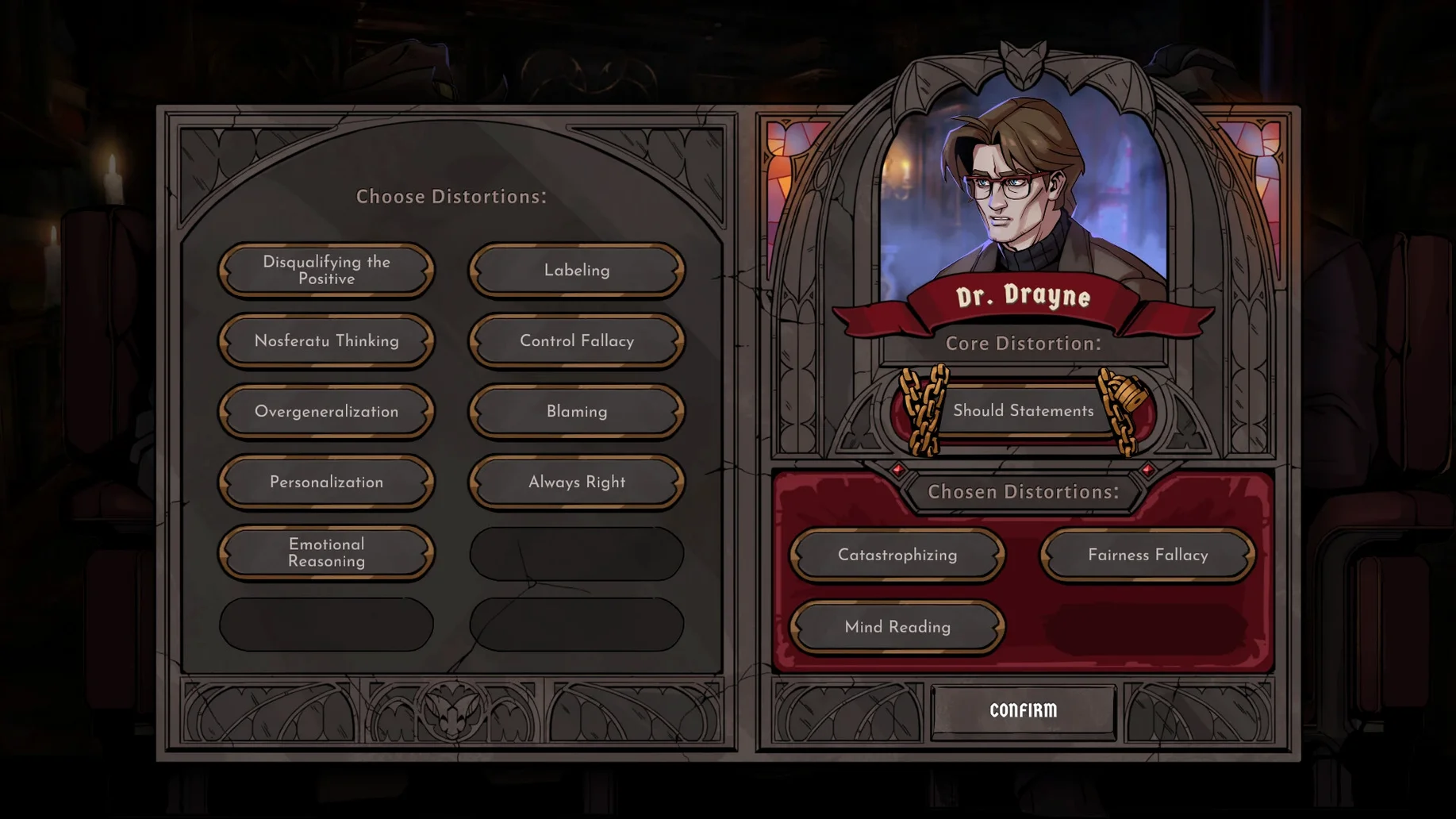
- Conversation-based mechanics where the core loop involves identifying cognitive distortions and guiding clients toward a healthier outlook.
- A cast of vampire characters, each with a specific psychological knot to untangle, presented with a comedic tone.
- A single continuous playthrough — no multiplayer or co-op modes, just one player working through the narrative.
- English-language interface and dialogue, with no in-game language switching.
Puzzles Are Purely Conversational
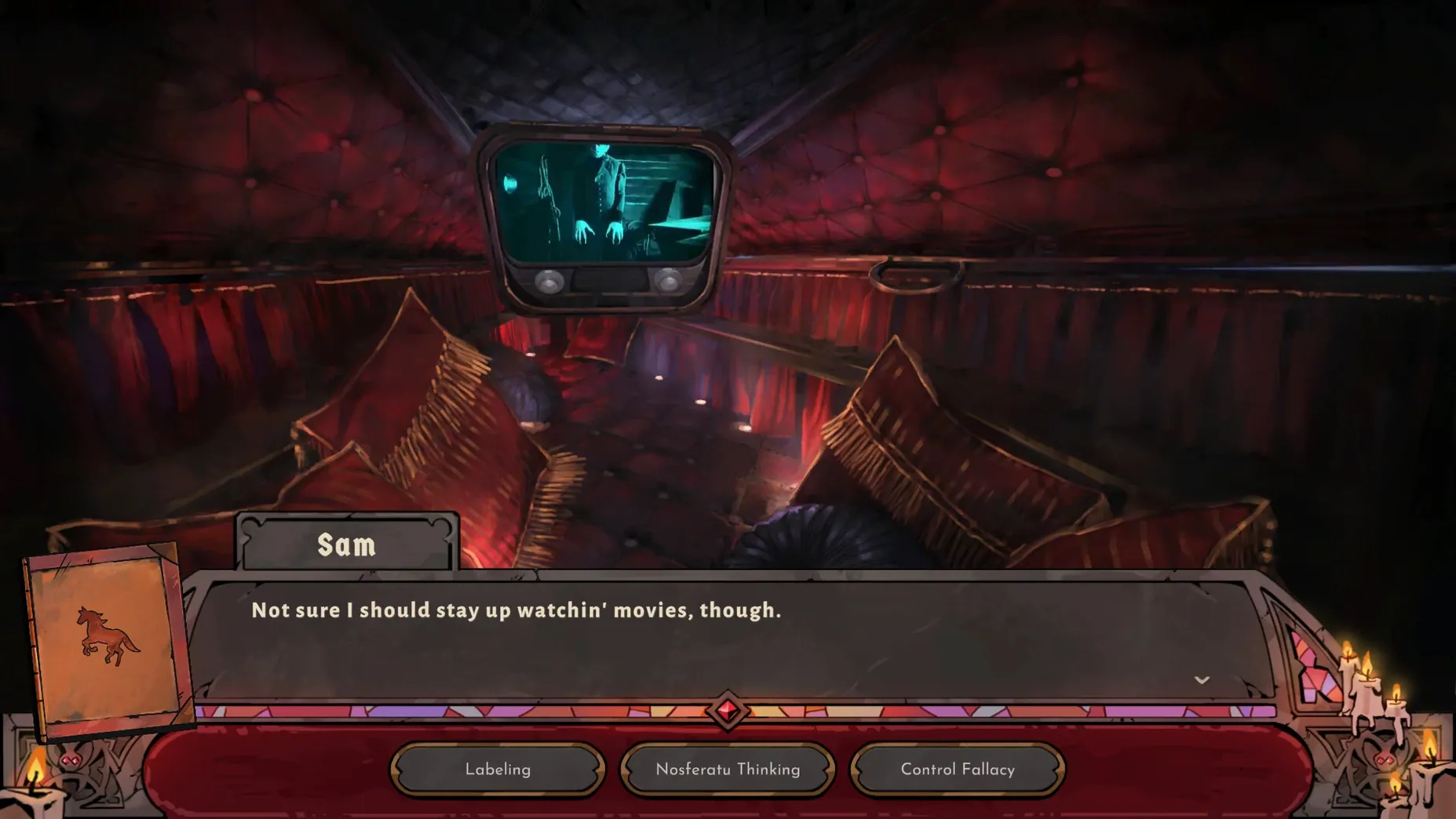
- The format is a visual novel with branching dialogue, not a three-dimensional open world; all interaction happens through text choices and illustrated scenes.
- Combat, inventory management and traditional adventure-game puzzles are absent — the challenge is entirely conversational and psychological.
- Native ARM support is present, but the minimum macOS version is not published by the developer; you may need to test compatibility on older releases.
DRM‑Free Launch with a Gatekeeper Hurdle
Vampire Therapist runs as a standalone app that you drag into Applications and launch from the Finder or Launchpad — no launcher client, no online account, no background services. The build is DRM‑free, so macOS Gatekeeper will present a one‑time warning on first launch. Right‑clicking the app and choosing Open from the context menu clears that prompt without adjusting system security settings permanently.
The game integrates with a few macOS conveniences out of the box. Mission Control handles it as a standard full‑screen space, and you can swipe between the game and other desktops without the app minimising or pausing. The cursor disappears during dialogue sections, which keeps the screen clean, but reappears the moment you move the mouse — standard behaviour for a visual novel that respects system pointer preferences. It responds to the system volume keys, not an internal slider, and honours the Mac’s current output device, whether that is built‑in speakers, USB headphones or an HDMI audio sink. If you use a third‑party tool like Rogue Amoeba’s SoundSource, you can route the game’s audio independently just by assigning the Vampire Therapist process to a different output.
Since the game stores its save files locally, Spotlight does not index them by default. You will find the folder inside the usual ~/Library/Application Support/ path — something to remember if you ever migrate to a new Mac and want to carry your progress manually. Time Machine picks up the save data with every backup run, so restoring a week‑old session after a mistaken dialogue choice is entirely possible without any in‑game save‑slot gymnastics.
A typical session for a narrative‑focused player
Someone who plays point‑and‑click adventures and visual novels — the kind of person who has played Unavowed twice and keeps a folder of Wadjet Eye soundtracks — will settle into Vampire Therapist in a particular way. Picture a Friday evening after work. The MacBook Pro is on the coffee table, a cup of tea to the right, notifications muted via Focus mode. The player launches the game and picks up right where they left off: a session with a 19th‑century vampire countess whose perfectionism has calcified into a fear of being seen without a mask, literal and metaphorical.
The interface presents a branching dialogue tree. The countess says something self‑defeating. The player spots the cognitive distortion — all‑or‑nothing thinking — and selects a response that gently challenges it. Sam, the protagonist, delivers the line with a dry twang that lands somewhere between frontier pragmatism and beginner’s‑luck psychology. The countess pauses. A new branch opens. The player leans back, glances at the illustrated background for details they missed the first time — a cracked mirror, a portrait half‑covered by a sheet — and thinks about what to say next. No timer, no quick‑time event. Just the dialogue, the art and the quiet satisfaction of seeing a fictional vampire inch toward self‑awareness.
When the session ends, the player saves, closes the lid and walks away. The whole segment lasted about forty minutes. It felt less like gaming and more like reading a graphic novel where you occasionally steer the protagonist’s moral compass. That is the rhythm Vampire Therapist aims for, and on a Mac it arrives without fan noise, without a launcher update dialog, and without breaking the quiet.
Narrative‑First Players Who Loved Eliza
Players who gravitate toward narrative‑first experiences will find the most to enjoy here. That includes fans of visual novels, interactive fiction and story‑driven adventure games — the audience for titles like Eliza, Neo Cab or Astrologaster. The game asks you to listen, read closely and choose words carefully, so it suits people who treat dialogue as the main mechanic rather than filler between action set‑pieces.
A second group that connects with the material are players with an interest in psychology or therapy — not necessarily professionals, but anyone who has read a book on CBT or found themselves analysing character motivations in a TV drama. The cognitive‑distortion framework is real and labelled accurately, which gives the sessions a layer of intellectual engagement beyond the jokes. You are not just clicking through funny vampire banter; you are practising a rudimentary form of therapeutic listening, and the game rewards you with character breakthroughs when you get it right.
Mac users who value a clean, self‑contained app experience also benefit. There is no Steam client running in the background, no cloud‑sync service pinging a server, no in‑app store. The game is a single .app bundle that sits in Applications, behaves predictably with macOS window management and stays out of your way when you quit. For someone who keeps their Dock free of clutter and their menu bar minimal, that matters.
Dark comedy fans who appreciate the tonal lineage the developers cite — What We Do in the Shadows, Monty Python, Mel Brooks — will recognise the blend of historical absurdity and emotional sincerity. The humour lands best for players who enjoy jokes about immortality feeling tedious, outdated fashion choices and the logistical nightmares of feeding on humans in the 21st century. If you laughed at the vampire flatmates arguing over whose turn it was to do the dishes, you are in the right territory. The vampire therapist mac download simply gives you a self‑contained copy of that world, ready to sit alongside the other narrative games in your library.
- macOS (minimum version not specified by the developer)
- Apple Silicon (ARM) or Intel 64-bit processor
- Interface language: English
Questions on file
Does Vampire Therapist run on Apple Silicon Macs?
Yes. Version 1.214 is a universal build with native support for both ARM (Apple Silicon) and x86 64-bit architectures.
Is Vampire Therapist a multiplayer game?
No. The developer describes it as a single-player experience — a narrative visual novel played alone from start to finish.
What is the gameplay structure of Vampire Therapist?
It is an adventure-style visual novel and therapy simulation where you help vampire clients identify and reframe unhelpful thought patterns through dialogue choices.
Sign in · Create an account to add a field note.
No field notes yet. A measurement, a version, a machine — they appear after moderation.