Games
Tropico t6 1290
GamesUpdated
| Requirement | On file |
|---|---|
| macOS | See the sheet |
| CPU | Intel 64-bit |
| Download | 40 GB |
| Tested on | macOS Sequoia, MacBook Air (M1. 2020) |
Methodical planners and detail-oriented strategists get the most out of managing a small Caribbean state. Players who prefer fast action or lose patience with supply chains and infrastructure logic may find the pace too deliberate.
Who finds the core loop satisfying?
Anyone who enjoys laying out bus routes, balancing a budget and watching a city tick over. The satisfaction comes from seeing a ferry dock connect two islands and then watching traffic actually use it.
What makes the transport layer different from a standard city builder?
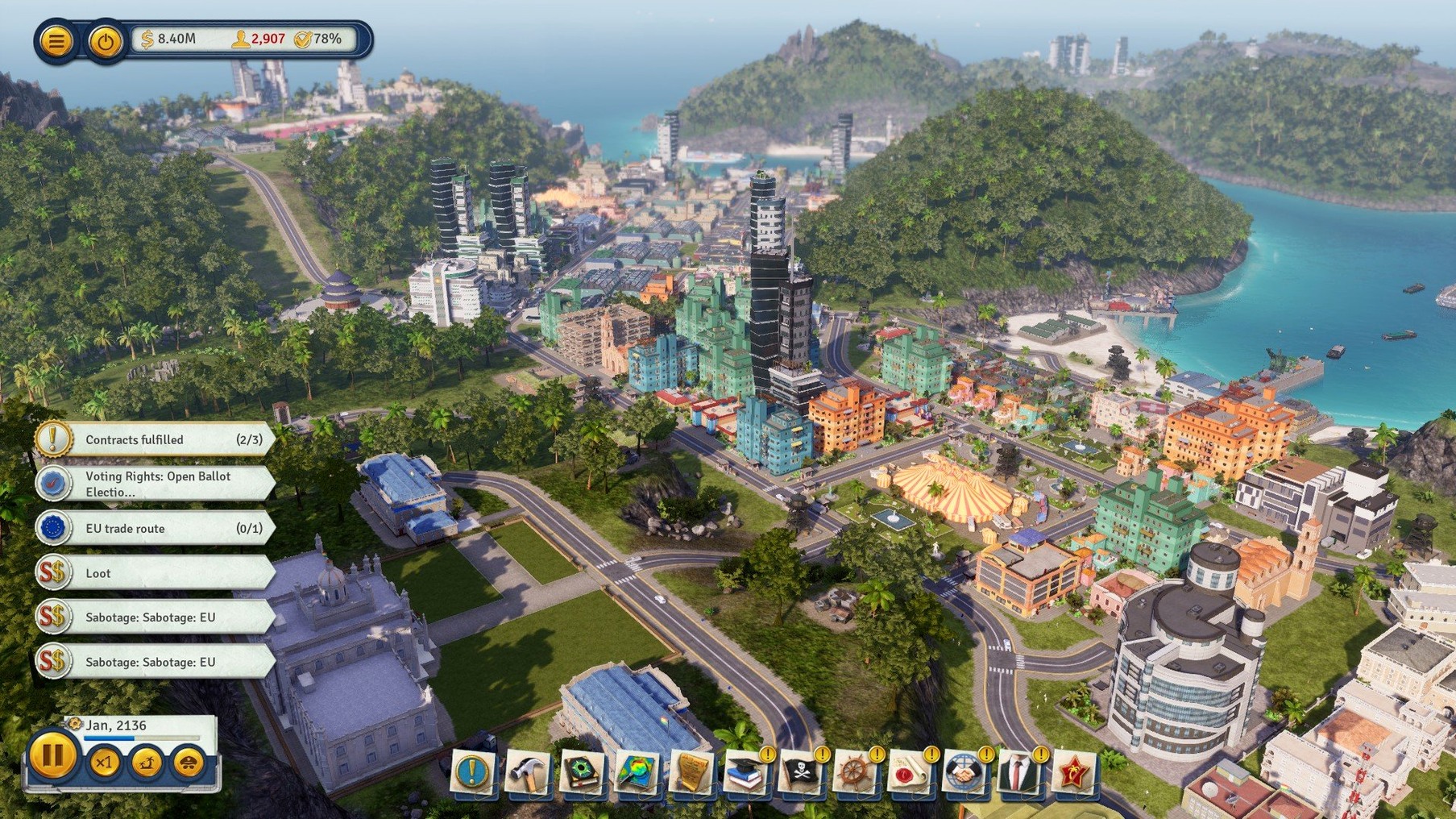
The archipelago setup forces you to think beyond a single landmass. Bridges, taxi ranks and cable cars are not decorative — a poorly placed taxi stand creates real bottlenecks visible in the simulation.
When does the pace feel rewarding rather than slow?
When you pause to strengthen defences after a smuggling run and realise the fort you placed three hours ago just repelled an invasion without your input. The game rewards systems set up in advance more than split-second reactions.
No scripted urgency or combat-driven tension
Players who want a tight narrative or moment-to-moment tension. There is no scripted campaign urgency — you set your own goals, and the feedback loop is measured in export profits and election cycles, not explosions.
A session from boot-up to the next election
Double-click the icon and the game launches into a Rosetta-translated x86 process on Apple Silicon. On an M1 MacBook Air the menu loads in about twelve seconds. The language defaults to system locale, but the voice track can be switched independently in audio settings — useful if you prefer Spanish voice acting with English interface text.
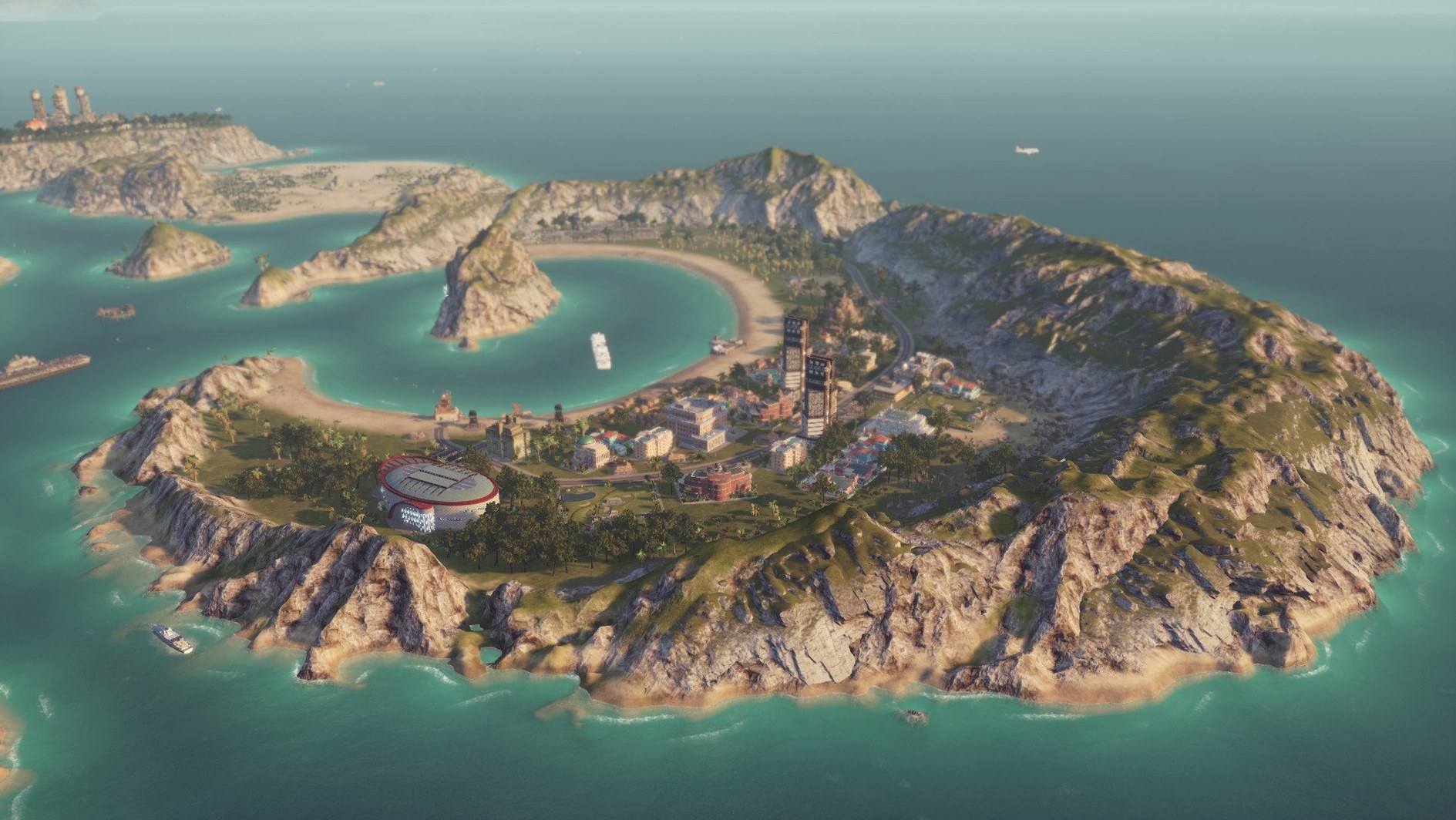
Start a new sandbox. The map generator offers an archipelago seed; pick one with four medium islands and two tiny islets. Set the colonial era as a starting point — this unlocks the slowest build-up, where every bridge and pier matters. Political difficulty stays on default, economic difficulty one notch above default to keep the treasury tight enough that transport decisions carry weight.
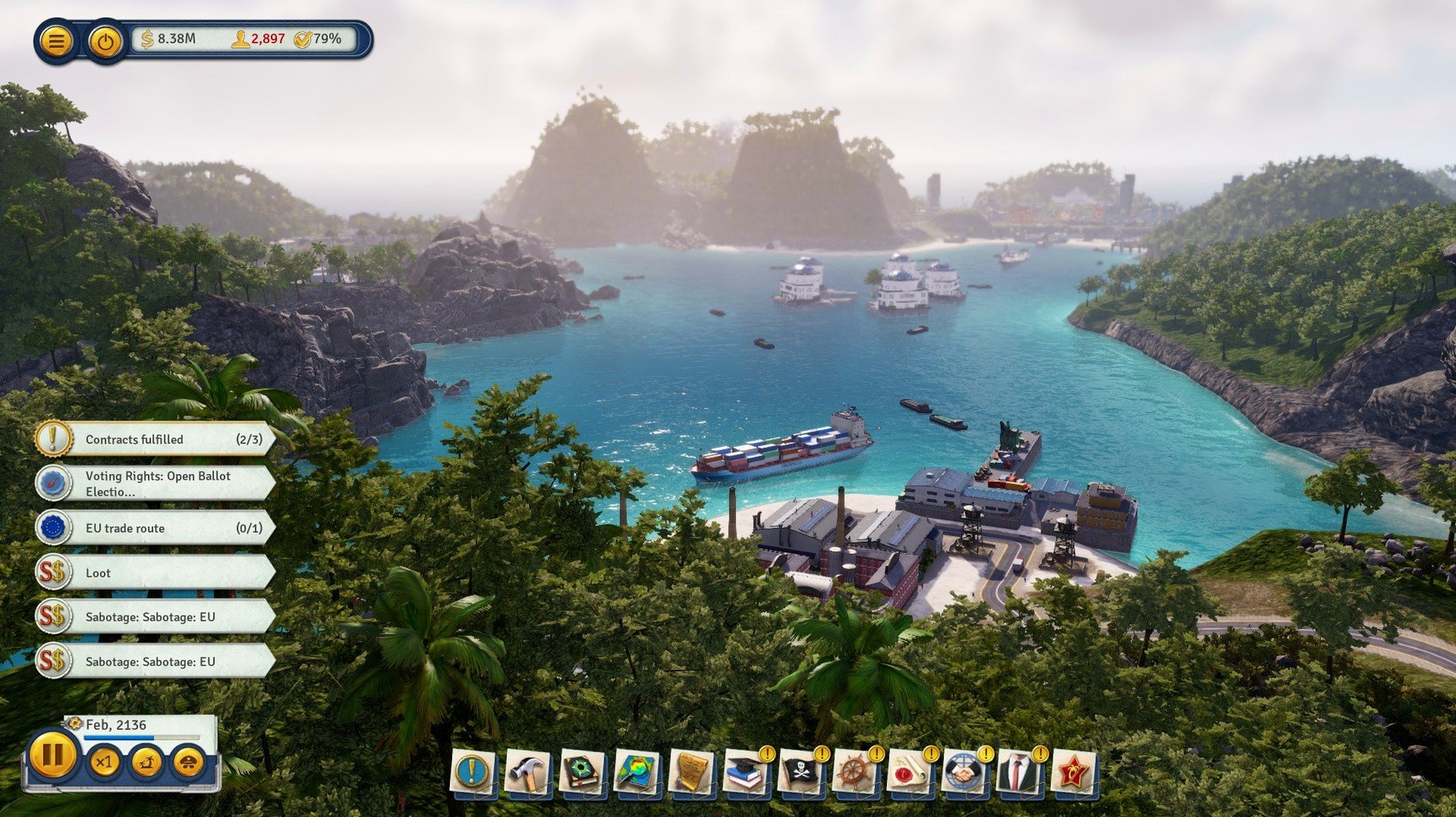
The first fifteen minutes are pure infrastructure scouting. Zoom out to survey shipping lanes — freighters favour deep-water approaches, so the first dock goes on the eastern shore where the water turns dark blue. Place a teamster office within six tiles. Connect the dock to the main settlement with a dirt road, then unpause. The simulation ticks forward at 1× speed while you watch the first tobacco harvest creak toward the pier in a mule cart.
By the forty-minute mark the population splits across two islands. Build a taxi rank near the rum distillery and a second near the residential cluster on the smaller island. Assign three taxis to each; the route-finding algorithm begins routing cars onto the new bridge you laid between the landmasses. Open the traffic overlay — the bridge carries 47 vehicle crossings per in-game day within the first cycle. That number climbs as the economy shifts from agriculture to light manufacturing.
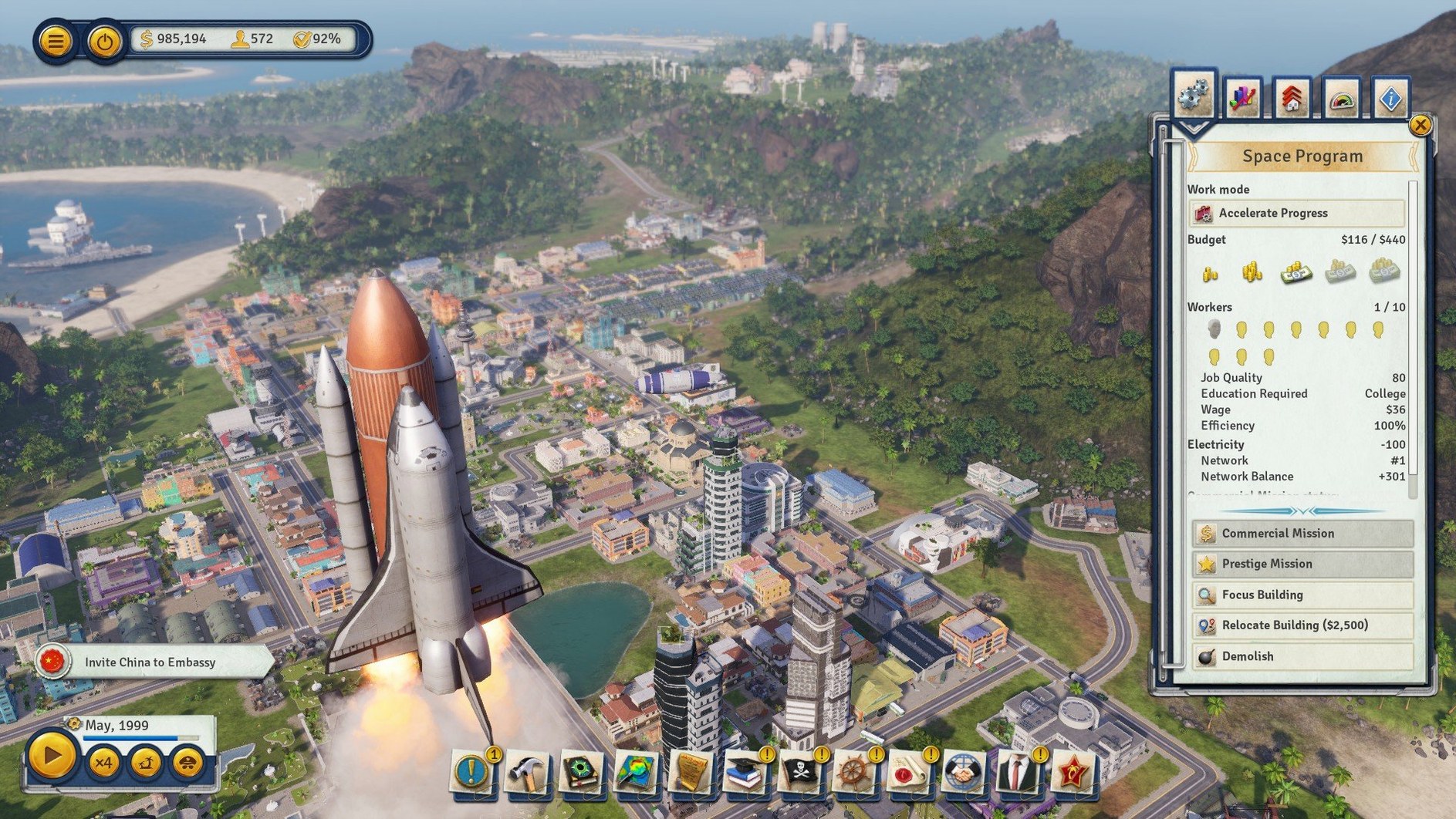
The session hits its stride around hour two. A cable-car line runs from the beachfront tourist zone up to the presidential palace on the ridge. Tourists use it. Locals prefer the cheaper bus loop. Both systems generate revenue and reduce congestion on the coastal road. Pause, check the almanac — transport satisfaction sits at 73%, export income covers import costs with an 18% margin, and the Swiss bank account holds enough for a rainy-day defence upgrade. Drop a fort on the uninhabited southern islet. Lay a military road and a small bridge. The construction crew finishes in three in-game months. You never touch it again, but fifty hours later a pirate raid spawns and breaks against its walls while you micromanage a trade deal with the Middle East.
Save before the next election. The session ends at the two-hour-forty-minute mark with the incumbent securing 61% of the vote — a margin built on functional transport, consistent exports and one well-placed fort.
Transport-network tinkerers solving island geography
Three player profiles find a deeper fit here than the broader strategy audience.
Transport-network tinkerers. These are the players who opened Cities: Skylines just to design bus loops. In Tropico the island geography makes network design a constraint puzzle — you cannot simply grid out a metro. Every bridge, taxi rank and cable-car station is a spatial decision with visible throughput feedback. The traffic overlay shows actual vehicle counts and wait times, so a bottleneck is not guesswork. If you find yourself comparing bridge placement options for twenty minutes, this is your sandbox.
Economic-layer strategists. Players who treat a P&L sheet as a game interface. The export-import balance, trade-route reliability and production-chain ratios form a spreadsheet-worthy system that plays out in real time. You can ignore it on lower difficulties, but at higher settings a mispriced trade deal drains the treasury within three election cycles. These players spend as much time in the almanac as in the main view.
Single-player sandboxers. No multiplayer pressure, no ranked ladder, no daily challenges. Tropico suits anyone who wants a long-form solo session with self-defined goals. The absence of DRM and online checks means the game launches on a plane, in a cabin or anywhere without a connection — a practical detail for MacBook users on the move.
Players who want scripted urgency, combat micro or a tight tech tree with clear win conditions will feel the lack of direction. The game hands you a set of tools and an island chain; the thread you pull is yours to choose.
Multi-island taxi pathfinding finally stable
The version tested — t6 1290 fix — represents a mature, post-launch state of the codebase. While early 2019 builds still carried occasional pathfinding quirks around multi-island taxi routing, the current build resolves most of those edge cases. The most noticeable change in daily use is stability under Rosetta 2 on Apple Silicon: the tested M1 MacBook Air running macOS Sequoia handled a 2,000-population state across six islands without a crash over a four-hour session. Frame rates dip into the mid-20s when zooming across the full archipelago at population peaks, but the simulation layer stays responsive.
Load times benefit from the 16 GB RAM ceiling — cold launch to main menu hovers around twelve seconds on the M1 Air; loading a late-game save takes roughly twenty-five seconds. The x86 binary runs through translation, not natively, so there is a small CPU overhead compared to a native ARM build, but the turn-based nature of the underlying simulation masks it well.
Interface-language switching remains a one-time setting rather than a hot-swap feature. Voice language selection in the audio menu takes effect after a reload, not instantly — a minor friction point if you like to alternate between German and Spanish voice tracks session to session.
Straightforward manual saves in the user Library
Tropico integrates with macOS at the file-system level, not through cloud or platform hooks. Save files live in the user Library, which makes manual backup and transfer between machines straightforward — copy the folder, paste it on another Mac, and the game picks it up. This matters for players who move between an iMac and a MacBook and want continuity without an online account.
Mission replay and screenshot workflows benefit from macOS Quick Look. A save file preview shows the timestamp and map name, so you can identify the right session without launching the game. Screenshots captured with Shift-Command-5 drop onto the desktop at native resolution; the photo mode built into the game offers additional framing tools, but the system-level capture works without interrupting the simulation.
On the audio side, the game respects the system volume and mute state, and Bluetooth headphone switching mid-session works cleanly on macOS Sequoia — the audio output shifts without a restart or a settings tweak. This is a small thing until you have a session running and want to swap from speakers to AirPods without losing twenty minutes of progress.
The DRM-free package also means the game coexists peacefully with other apps that modify files or overlay graphics — no anti-tamper checks, no kernel-level processes. If you run activity monitors, system-cleanup utilities or window managers like Rectangle or yabai, Tropico does not interfere or flag false positives. For users who keep a lean system with minimal background processes, this is a quiet, self-contained installation.
- macOS (64-bit only)
- Intel processor; Quad-core i5 or i7 at 3 GHz or better
- 8 GB RAM
- Metal-capable GPU with Shader 5 support and 2 GB VRAM
- 16 GB available storage
Questions on file
Can I connect separate islands in Tropico?
Yes, you can link islands with bridges and ferry routes, which makes transport planning across the archipelago a core part of the infrastructure layer.
What interface languages are available?
The interface supports Russian, English, German, Spanish, Italian and French, while voice audio comes in English, German, Spanish, Italian and French.
Does the Mac version run on Apple Silicon?
The current build is x86 64-bit for Intel Macs. Running it on Apple Silicon requires Rosetta 2, and a Metal-capable GPU with 2 GB VRAM is still needed.
Sign in · Create an account to add a field note.
No field notes yet. A measurement, a version, a machine — they appear after moderation.