
Games
Timberborn 1.1.2.4.52e959e.gm
GamesUpdated
| Requirement | On file |
|---|---|
| macOS | See the sheet |
| CPU | Apple Silicon, Intel 64-bit |
| Download | 1.1 GB |
| Tested on | macOS Tahoe, Mac mini 2024 M4 |
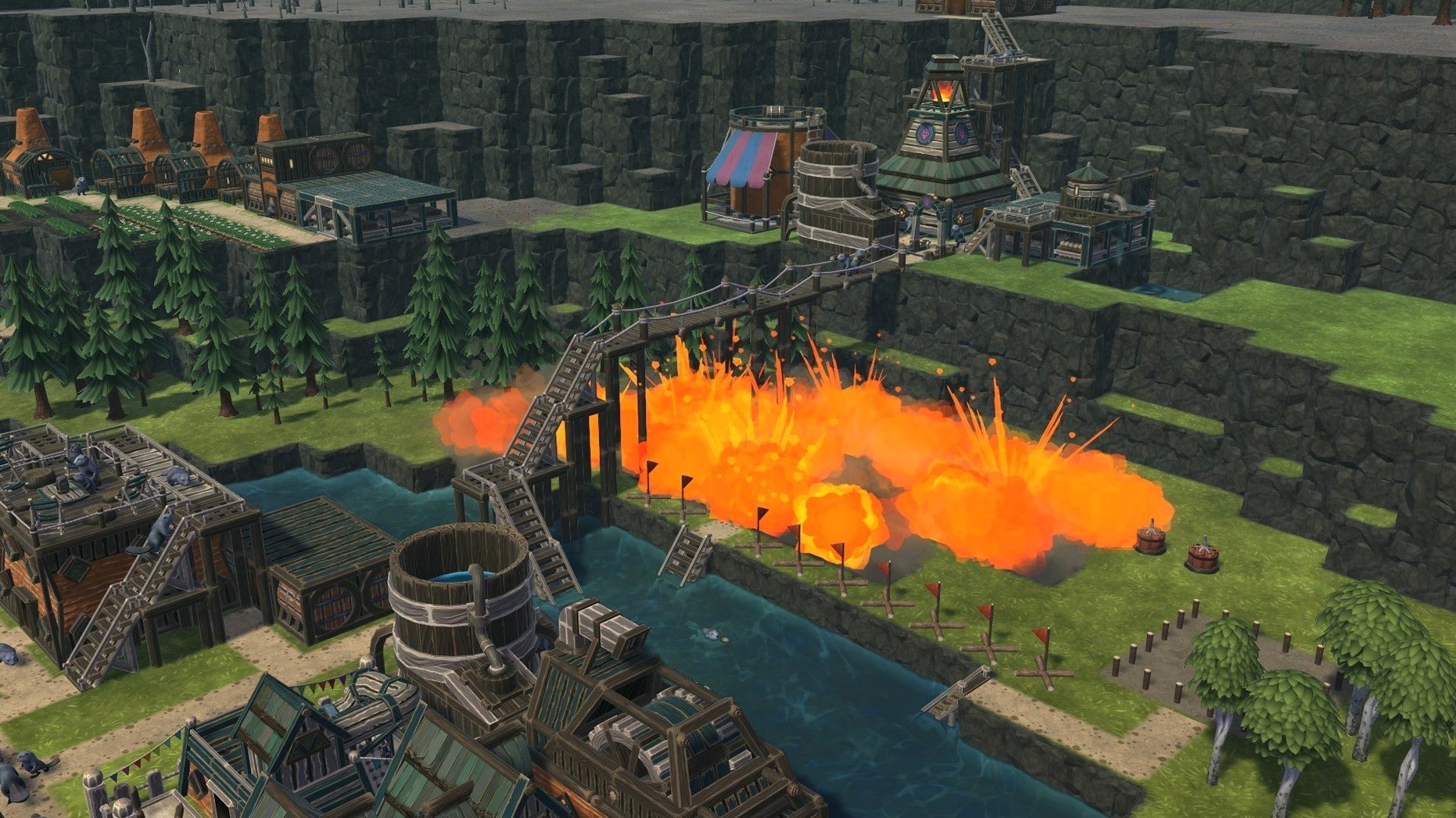
Drought season three hits and the river is already a muddy trickle. You order an emergency levee upstream of the carrot patch, then unpause to watch a dozen beavers scramble over scaffolding with planks on their backs.
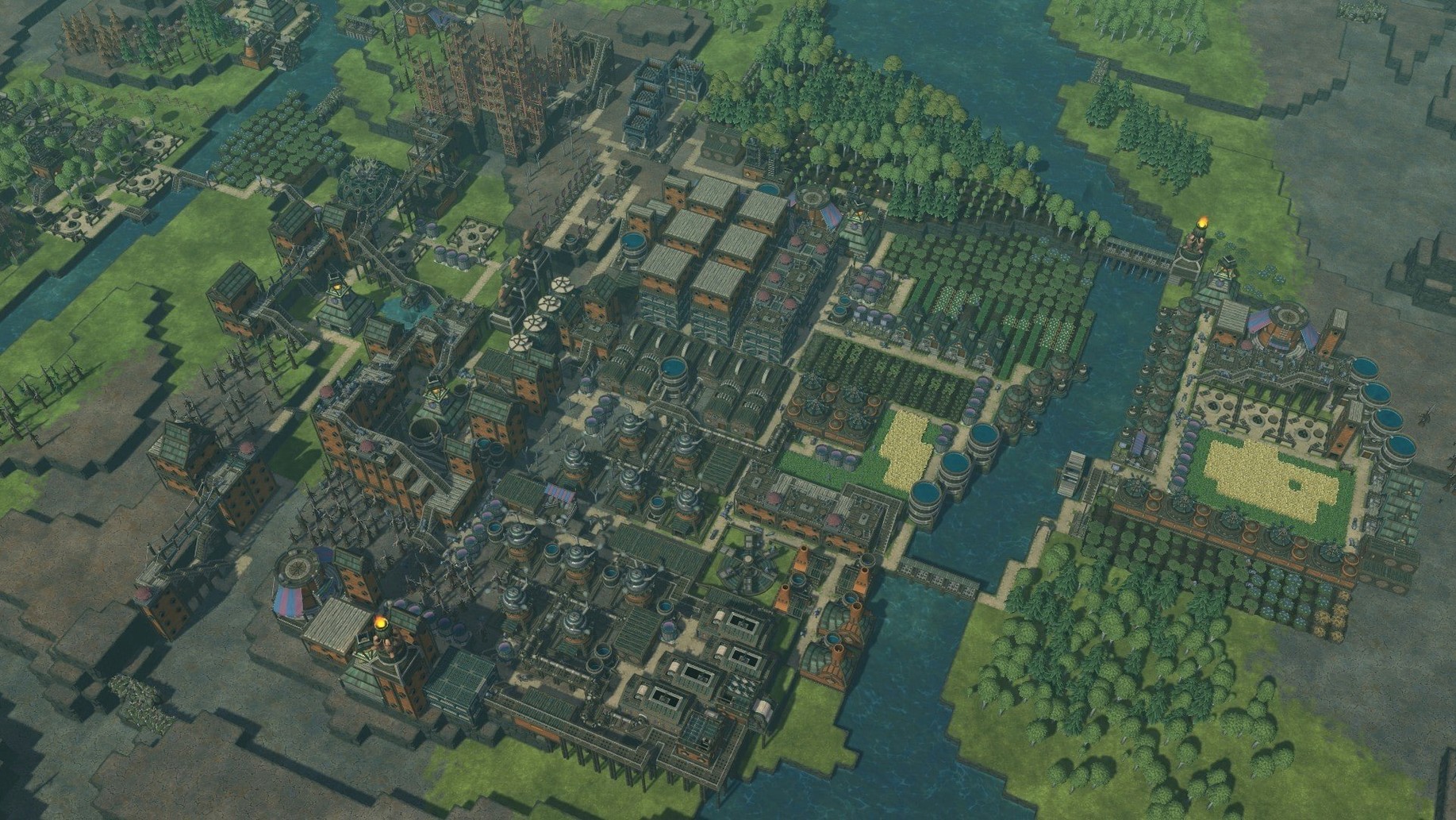
Water flow — the physics system that runs every map. Water pools behind dams, moves through floodgates, and evaporates in the sun. A dry riverbed means dead crops and thirsty beavers within a day.
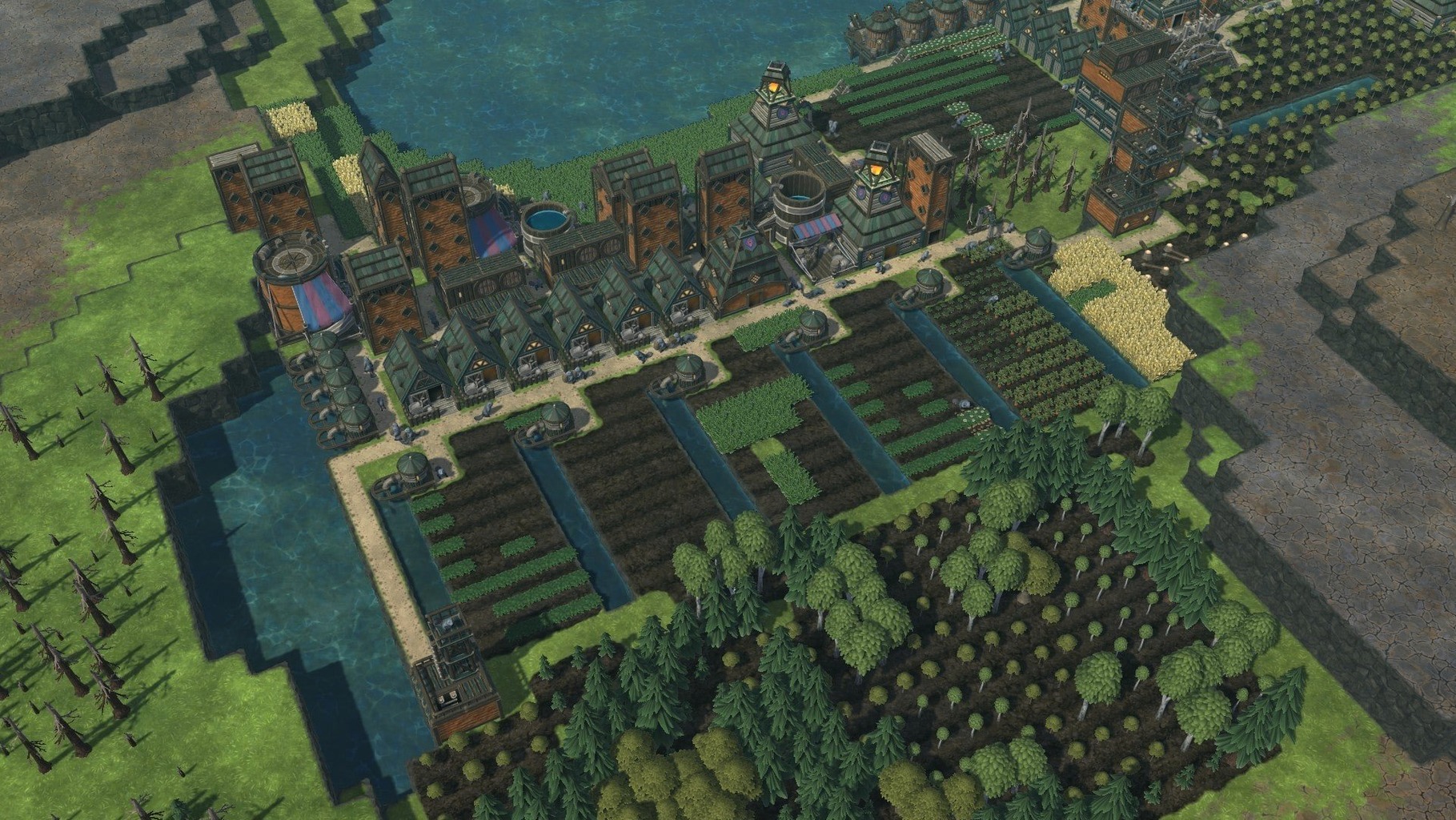
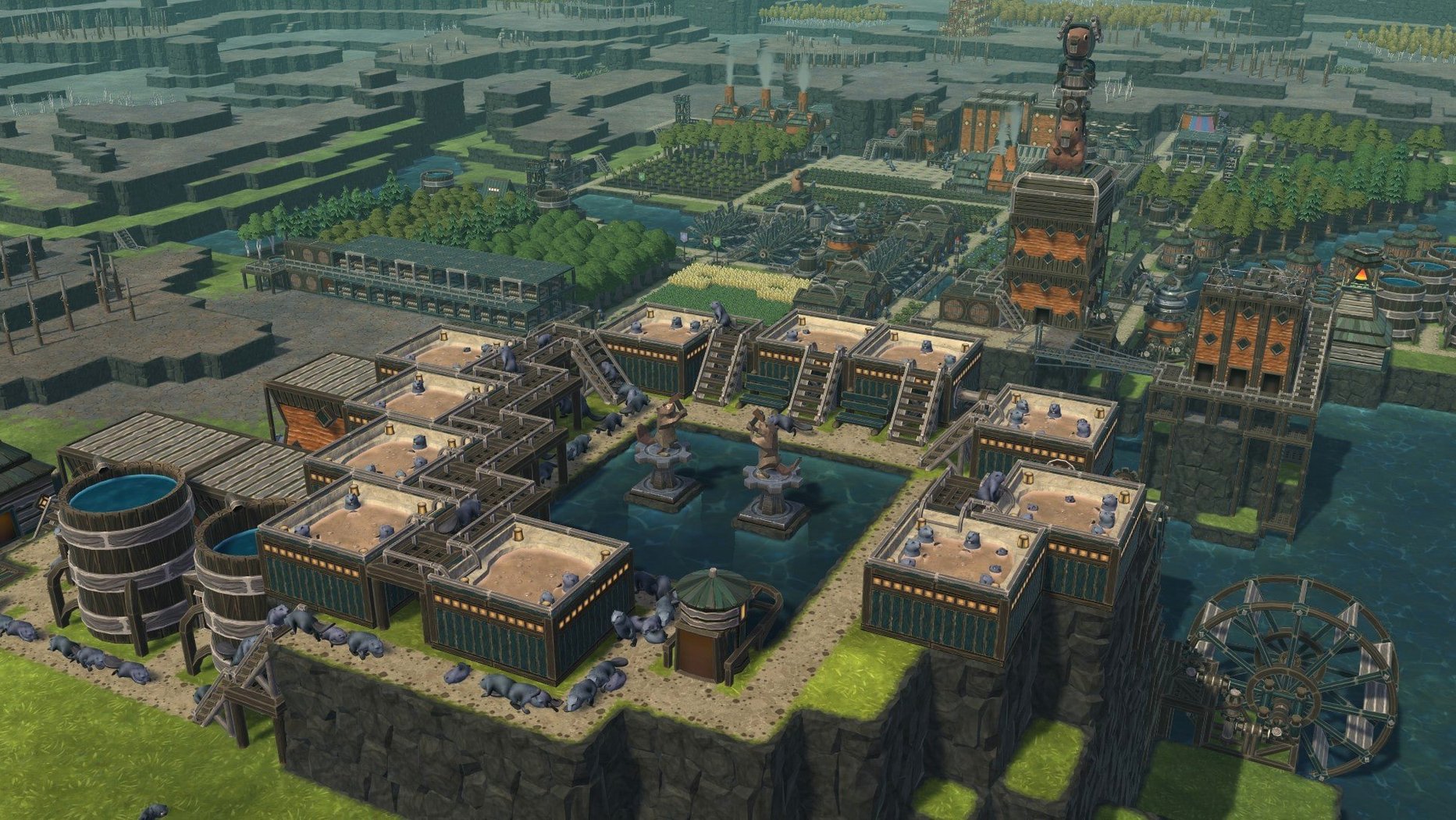
Vertical building — you stack lodges, warehouses, and gear workshops on timber platforms. Bridges connect hilltops to a district centre three storeys up. Space isn't flat ground; it is everything you can build over.
Districts — self-contained colony segments with their own population, storage, and hauling range. You set up a mining district on a distant plateau and send metal blocks back to the main settlement via a distribution post.
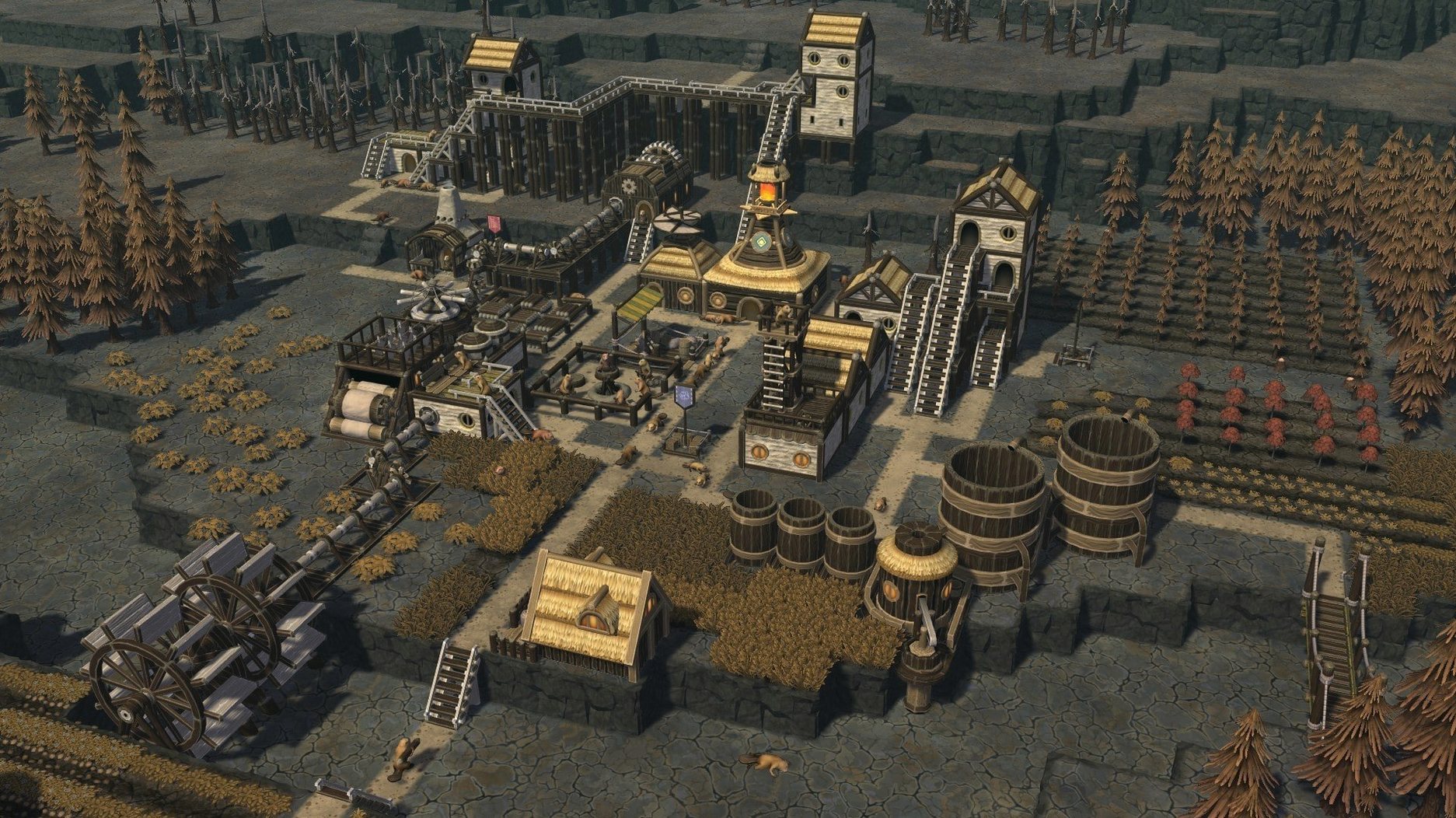
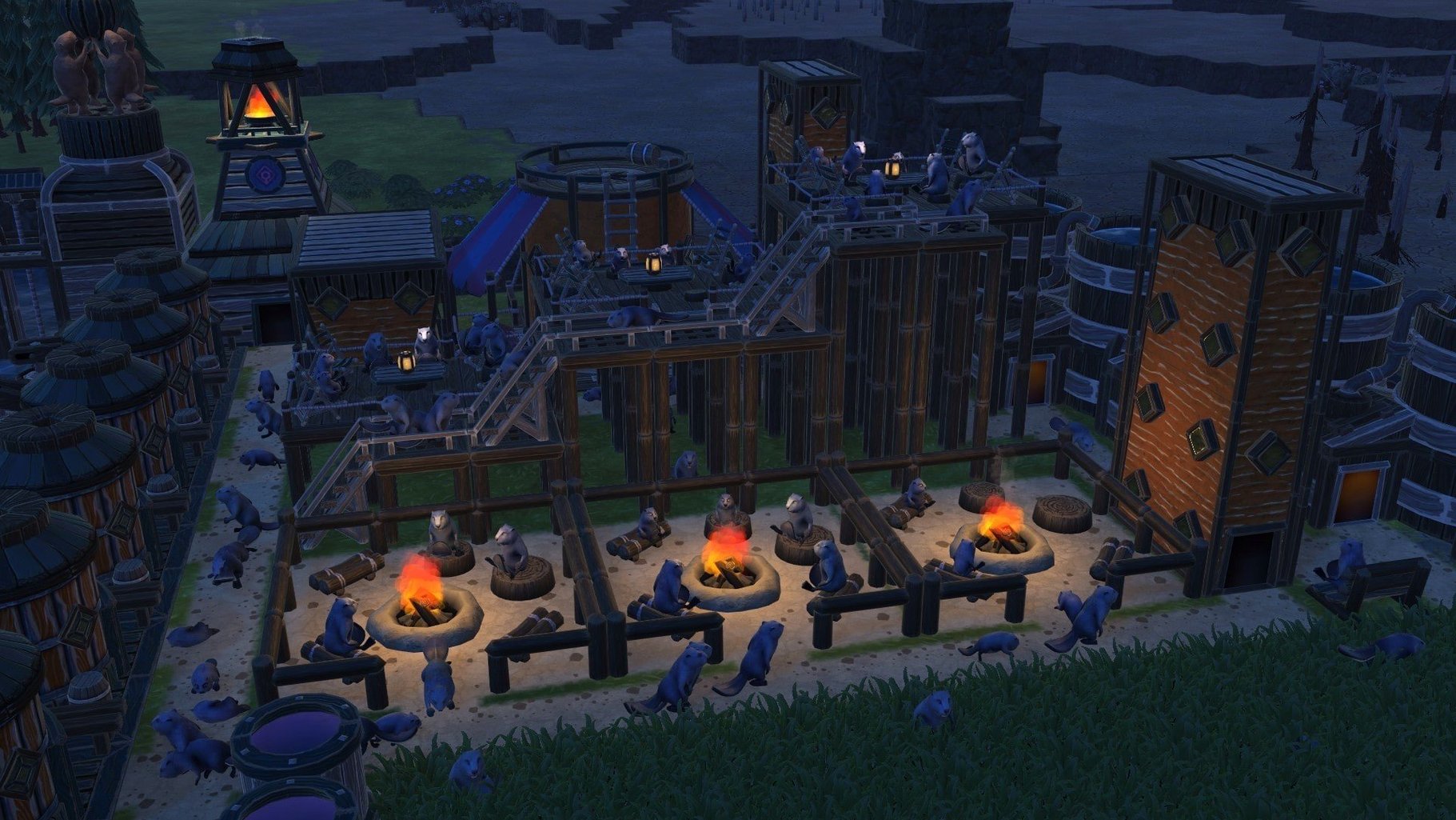
Factions — Iron Teeth breed faster and push for industrial efficiency with engines and large breeding pods. Folktails rely on wind power, agriculture, and communal housing. The build order and pace shift completely between the two.
Map editor — the same tools the developers used are available in-game. You carve canyons, paint ore deposits, and set water source blocks, then share the map file with a community that has been making canyon cities and stair-step reservoirs for years.
Timberborn Next to Other Colony Simulators on Mac
Three Mac-native colony sims get mentioned in the same breath, but they pull the genre in unrelated directions.
RimWorld shares the colony-scale management and the sense that one bad decision cascades into starvation. The difference is focus. RimWorld builds stories from individual colonists with moods, relationships, and prosthetic limbs. Timberborn pushes individuals into the background — a beaver is a labour unit, not a person, and the drama comes from water levels and reservoir capacity rather than social breakdowns. Where RimWorld asks "will this colonist have a mental break before the corn harvest," Timberborn asks "will the dam hold through a nine-day drought with forty beavers drinking from the reservoir."
Frostpunk overlays a city builder with a single overwhelming environmental pressure. Both games make you stare at a resource gauge and calculate how many days remain. Frostpunk uses temperature as its clock; Timberborn uses water. The tone diverges sharply. Frostpunk is grim and law-driven, with scripted moral choices. Timberborn has no morality system and no scripted narrative — the beavers do not form factions, petition for laws, or banish anyone. The engineering is the story.
Banished is the closest ancestor. Small population, resource chains, and the constant threat of a death spiral if one link breaks. Banished stops at ground level. Timberborn adds the whole vertical axis and a fluid simulation that Banished never attempted. In Banished a river is a decorative edge; in Timberborn it is a resource you dam, divert, and measure in cubic metres per second. Banished fans often slide into Timberborn without friction, then realise they need to unlearn the habit of ignoring water.
Where Timberborn Fits in a Mac Workflow
Timberborn runs as a standard windowed or fullscreen Mac application and behaves well with common macOS features. It does not require Rosetta on Apple Silicon — the ARM binary loads natively on M-series chips.
Mission Control and Spaces handle it predictably. You can drop it onto a separate desktop and swipe back to a browser or note-taking app without the game fighting for resolution or minimising itself. This matters during long drought cycles when the colony is stable and you want to half-watch it while reading something else.
Notifications from other apps can interrupt the game audio. The workaround is standard: enable a Focus mode before launching. No in-game toggle switches notifications off; the game assumes you will handle this at the system level.
Save files live in the user Library, not in iCloud. If you move between two Macs, you will need to transfer the Timberborn/Saves folder manually or sync it through something that watches that directory. The map editor's output goes to the same location, so custom maps need the same manual transfer.
Timberborn does not read or write to the Photos library, the Music app, or any other Apple ecosystem service. It is a self-contained simulation and treats the Mac as a host, not an integration point.
Four Water Blunders That Flood the First Colonies
New players tend to repeat the same four errors through the first several colonies. Most of them involve water.
Dam placement too close to the settlement. A dam wall two tiles from the crop fields looks tidy but leaves zero buffer for reservoir expansion. When the drought hits you need upstream storage that floods empty land, not the carrot patch. Build the dam one or two screen-widths upstream and let the reservoir spread into a valley that has no buildings in it.
Floodgates set to full height and forgotten. Floodgates at their maximum block level trap every drop during the wet season, then the river downstream dries out before drought even begins. Open floodgates to half or three-quarters during normal flow so the downstream ecosystem stays alive. Adjust them only when drought warnings appear.
Flat-land thinking. Players coming from grid-based city builders lay out roads on the ground and treat hills as scenery. In Timberborn a plateau is usable floor space if you build a staircase and platforms. The second storey of a warehouse sits directly above the first, doubling storage on the same footprint. If a district feels cramped at cycle ten, the problem is usually that everything is on one level.
Ignoring hauling range. Each district centre has a fixed range. A lumberjack flag placed at the edge of the map generates logs that sit there indefinitely because no hauler can reach them. Drop a small district or at least a distribution post within range before pushing outposts to the fringe.
Building a second district too late. The starter district hits its population soft cap around thirty to forty beavers. Waiting until food runs short before splitting the colony means the new district has no stocked pantry and no builders. Split earlier, send a full shipment of food and planks with the first migration wave, and let the new district establish a farm before it needs to feed anyone.
How a Hydrologist Plays Timberborn
A hydrologist opening Timberborn for the first time will likely ignore the tutorial's suggestion to plant carrots and instead zoom straight to the river source blocks on the map edge.
She picks the Thousand Islands map because it has multiple water source nodes at different elevations. Before unpausing, she pans across the entire watershed. The river splits into three channels below a ridge. She marks a dam location not at the narrowest point — the instinctive choice — but where the valley widens behind a choke point, maximising reservoir volume per tile of dam construction. That is a calculation about storage-to-cost ratio, not aesthetics.
She places a stream gauge. The game calls it a depth marker, but she treats it as a discharge proxy. During the first wet season she notes that the river level peaks at 0.9 metres at the gauge and drops to 0.3 metres two days after the rain stops. She writes none of this down; she just knows the lag time now.
Drought one arrives. Her reservoir is four tiles wide and three deep behind a triple-layer dam. She has already built floodgates on the middle layer and set them to 0.5 metres during wet flow. By drought day three she closes them completely. The reservoir drains at roughly 0.1 metres per day by her reading. At that rate she has eighteen days of water for thirty beavers, assuming no evaporation spike. She builds a second reservoir on the western channel just in case.
By cycle fifteen she has a cascading dam system — upper reservoir for storage, middle for irrigation canals, lower as a backup. The beavers are drinking from the middle tier while the upper tier refills during the next wet season. She is not fighting the water simulation; she is running a small watershed management agency with wood and teeth.
Maps — new playable maps added to the selection.
Statistics — expanded settlement stats panels for tracking production and well-being over time.
- Tested on macOS Tahoe
- Intel and Apple Silicon Macs supported
Questions on file
What are the two playable factions in Timberborn?
The Folktails focus on agriculture and wind power, while the Iron Teeth favour industrial methods, engines, and rapid population growth through breeding pods.
Does Timberborn include tools to build custom maps?
Yes, the game ships with a full map editor and supports sharing custom creations through community channels.
Sign in · Create an account to add a field note.
No field notes yet. A measurement, a version, a machine — they appear after moderation.