
Games
Terraria 1.4.5.8
GamesUpdated
| Requirement | On file |
|---|---|
| macOS | See the sheet |
| CPU | Apple Silicon, Intel 64-bit |
| Download | 624 MB |
| Tested on | macOS Tahoe, Mac mini 2024 M4 |
Version 1.4.5.8 lands with crossovers that add new tools to your belt. A Dead Cells guest brings a blindingly fast flail and a dodge-roll, while a Palworld visitor arrives with a localisation fix. Fifteen furniture sets, four transformation mounts and five new boulder types round out the patch for builders and trapmasters alike.
Morning: Dig, Scout, Survive
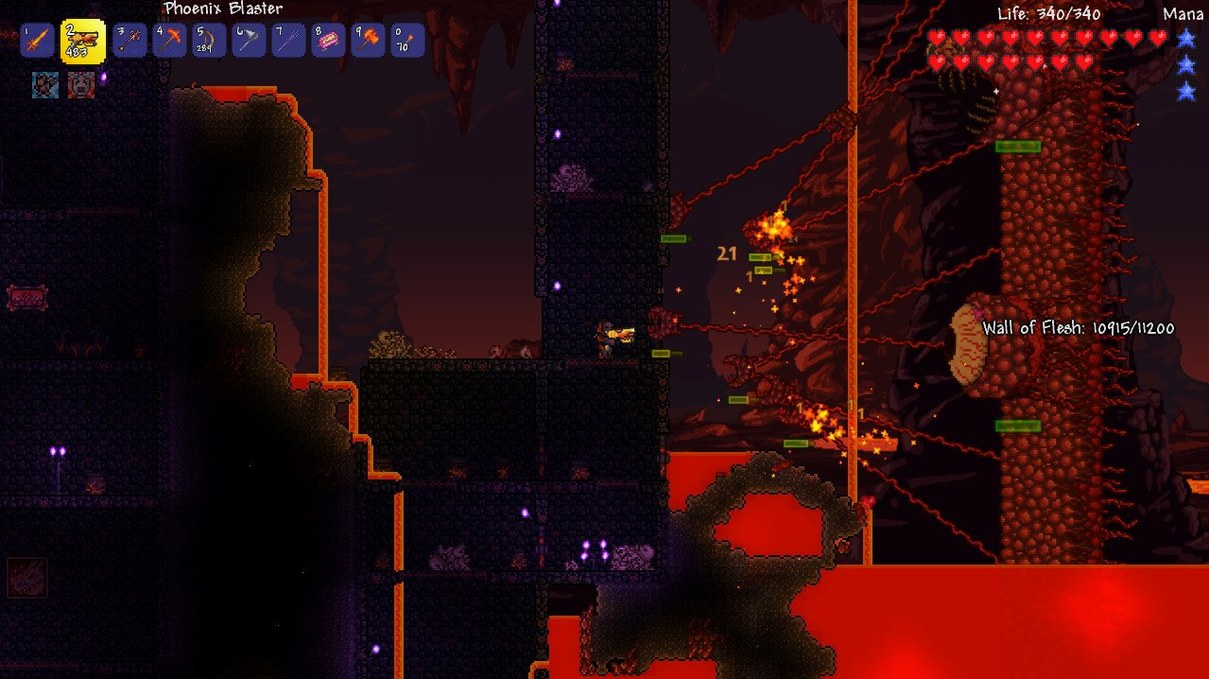
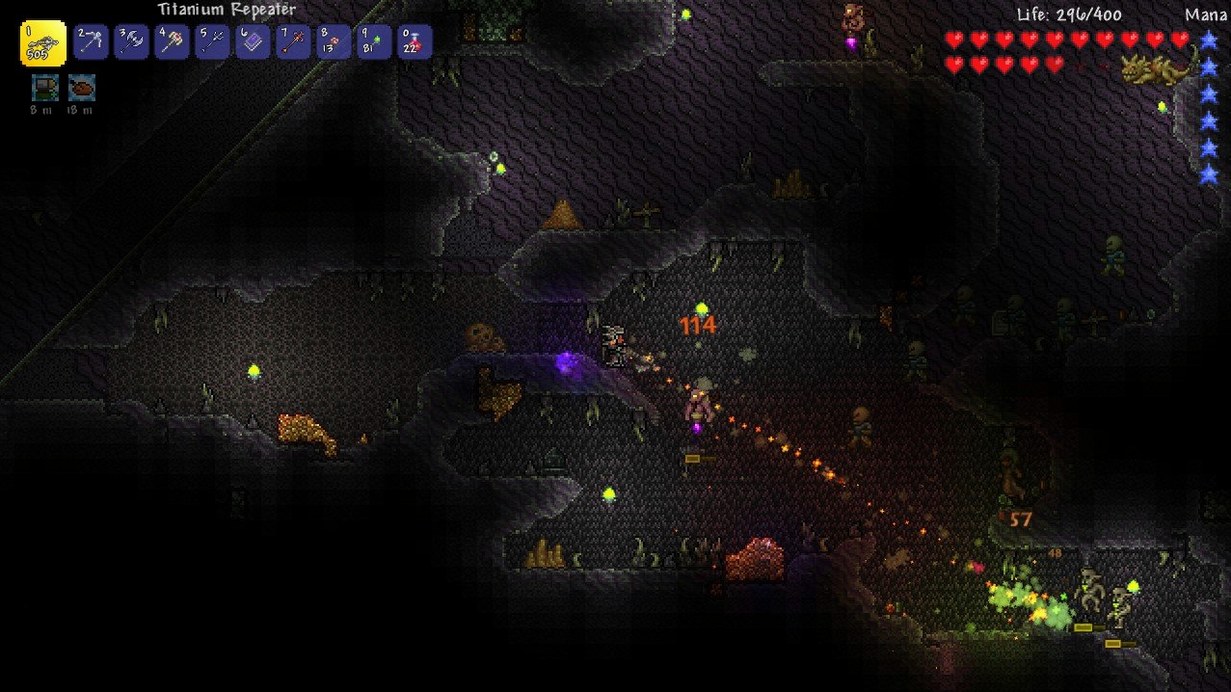
You start at dawn with a copper pickaxe and a surface base that is little more than a wooden box. The first task is digging a vertical shaft straight down through soil, stone and pockets of ore. Light is limited; placing torches as you descend marks your path back. Every chime of a pickaxe brings a small haul of stone and copper. At a depth of roughly 100 metres you will hear the wet squelch of a slime before you see it. Combat is immediate — a broadsword swing arcs across the 2D plane, and the gelatinous enemy drops coins and gel. By noon you are probably returning to the surface with an inventory of ore, rope and a suspicious-looking heart crystal.
Evening: Build Rooms, Host Guests
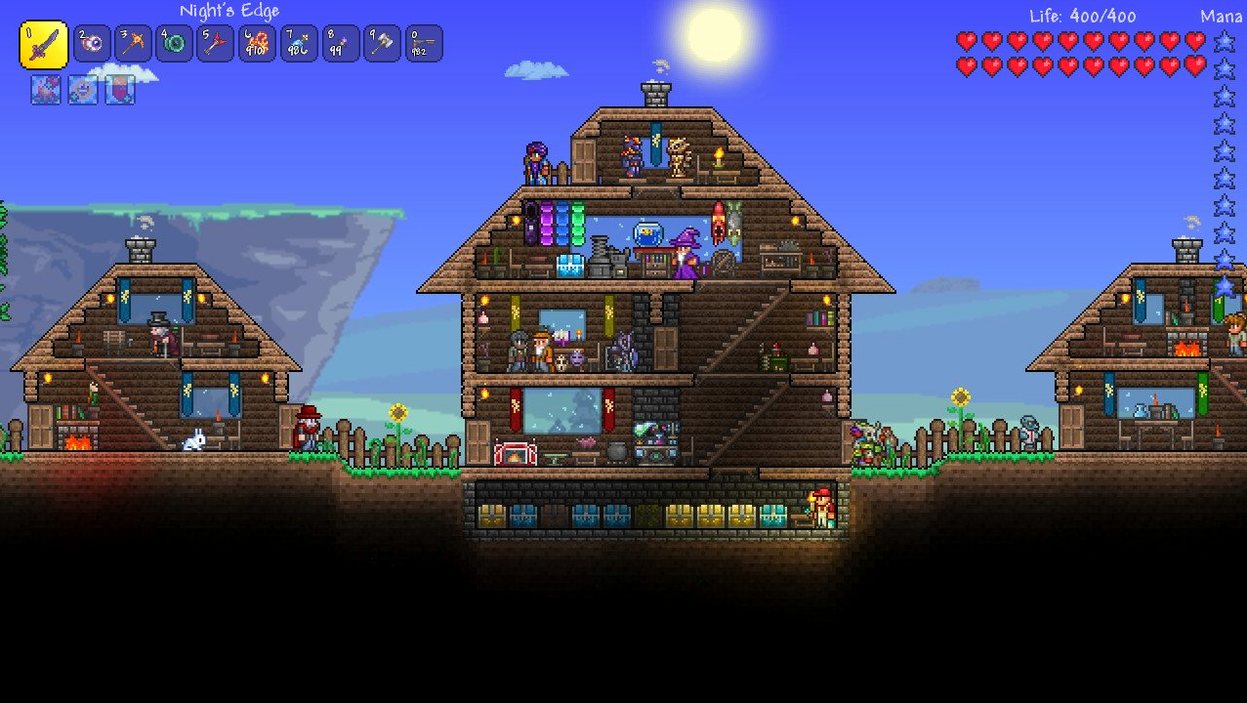
Back at base, the spoils of the day turn into walls and furnishings. A room must meet a strict spec to be recognised as valid housing: back wall, light source, flat surface, chair and a minimum enclosed area. Build one correctly and the Merchant NPC will move in by morning, selling torches and an anvil. With the anvil placed, copper bars become armour, and suddenly the night-time zombies outside the door feel less threatening. The cycle repeats — dig deeper, find rarer metals, build more rooms for the Nurse, the Demolitionist and the Arms Dealer. Each new NPC brings items that change how you fight and build. The game does not push you toward a final boss; it leaves you standing in your workshop at midnight, sorting glowing mushrooms and wiring teleporters, already planning the next shaft.
Bind Quick Heal to a Key You Can Hit Blind
The first few sessions reward a few deliberate habits. Bind Quick Heal and Quick Mana to keys you can reach without looking — the default positions are workable, but a fight in the Underground Jungle will not wait while you scan the keyboard. Place a bed in your base as soon as you have silk and wood; it sets your spawn point and skips the long walk back after an unlucky encounter with a boulder trap. The new boulder types in 1.4.5 make that walk more frequent than it used to be.
Storage matters more than most new players expect. Label chests from the first hour: Ore, Plants, Gear, Building. Rows of unlabelled chests turn into a memory game after a week. A piggy bank bought from the Merchant gives you a second inventory that travels with you, which is useful when a deep dig outlasts your inventory space. And never sell your first stack of gel — it becomes torches, and torches become your map.
A Builder's First Week
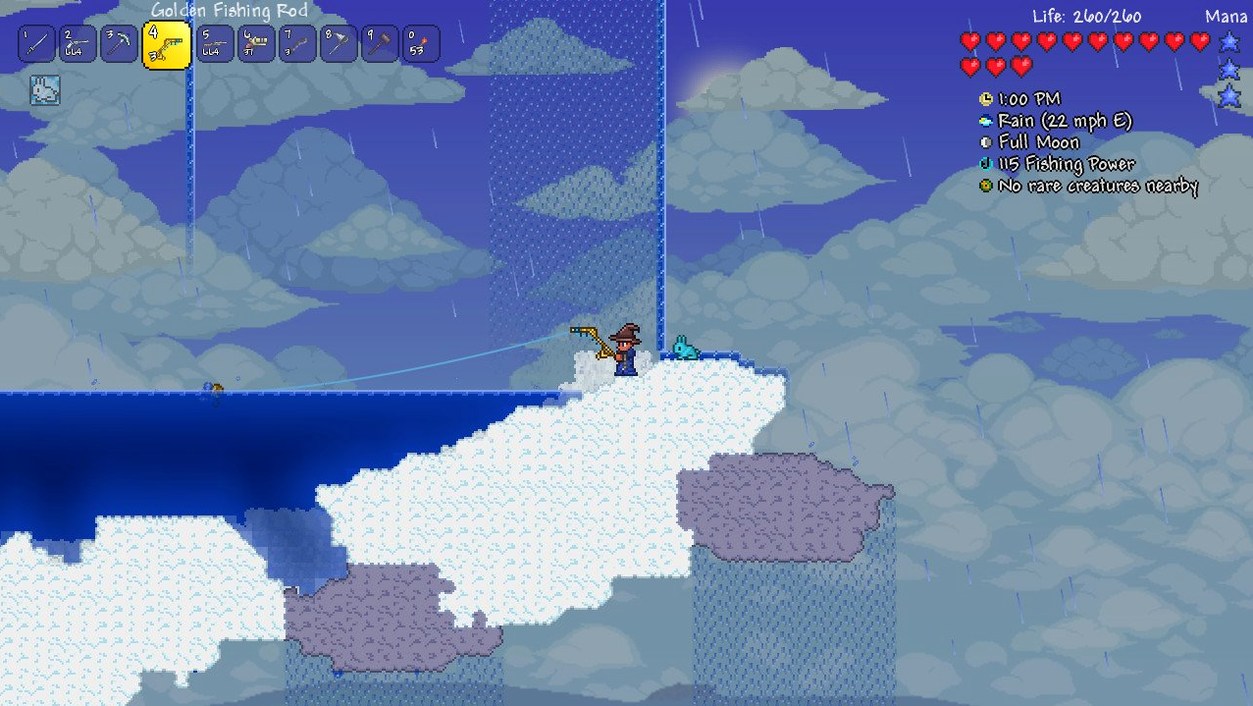
Consider a player who installs Terraria primarily to build. They ignore the guide's hints about the Corruption, open a medium world, and flatten a hill near the spawn point. The first house is a rectangle: wood walls, a door, two chairs, a torch. The NPC arrives at dawn. Encouraged, they spend the next three evenings raising a watchtower from grey brick, then a greenhouse with glass walls and a shallow pond. On day six they discover the Grand Design — a wiring tool that lets you lay and remove wire at range — and the base transforms. Pressure plates trigger dart traps they built themselves. A teleporter connects the greenhouse to the mineshaft. The NPCs complain about crowding, so a second housing block goes up. The builder never fought a boss in that first week, and the game never asked them to.
Missing Background Walls Behind Furniture Break Housing
One common stumble is invalid housing. The game will not always tell you why a room fails; the usual culprits are missing background walls behind placed furniture, a gap in a corner, or a room that is too large. Keep rooms under 750 tiles of interior space and fill every wall segment by hand. Another recurring headache is the NPC housing query — open the housing menu and click the room; the panel will list missing items in order.
Performance on Mac hardware is generally stable, but a full inventory of animated items plus a large base can push frame pacing on integrated graphics. Turning off Frame Skip in video settings usually smooths movement at the cost of some visual effect. For anyone who wants a fresh install or a revisit, a terraria mac download runs natively on both Apple Silicon and 64-bit Intel Macs, so the game does not spend CPU cycles translating x86 instructions on an M-series chip. Keep the world files backed up outside the game folder if you plan to move machines — a decade-old character can be surprisingly hard to replace.
Dead Cells crossover — a new flail and dodge-roll mechanic arrive.
Palworld crossover — a localisation fix and a companion on board.
Furniture — fifteen new sets for themed builds.
Mounts — four transformation mounts that alter movement.
Traps — five new boulder types with distinct physics.
- Tested on macOS Tahoe with a Mac mini 2024 M4
Sign in · Create an account to add a field note.
No field notes yet. A measurement, a version, a machine — they appear after moderation.