Games
The Forest 1.12
GamesUpdated
| Requirement | On file |
|---|---|
| macOS | See the sheet |
| CPU | Apple Silicon |
| Download | 4 GB |
| Tested on | macOS Tahoe, Mac mini 2024 M4 |
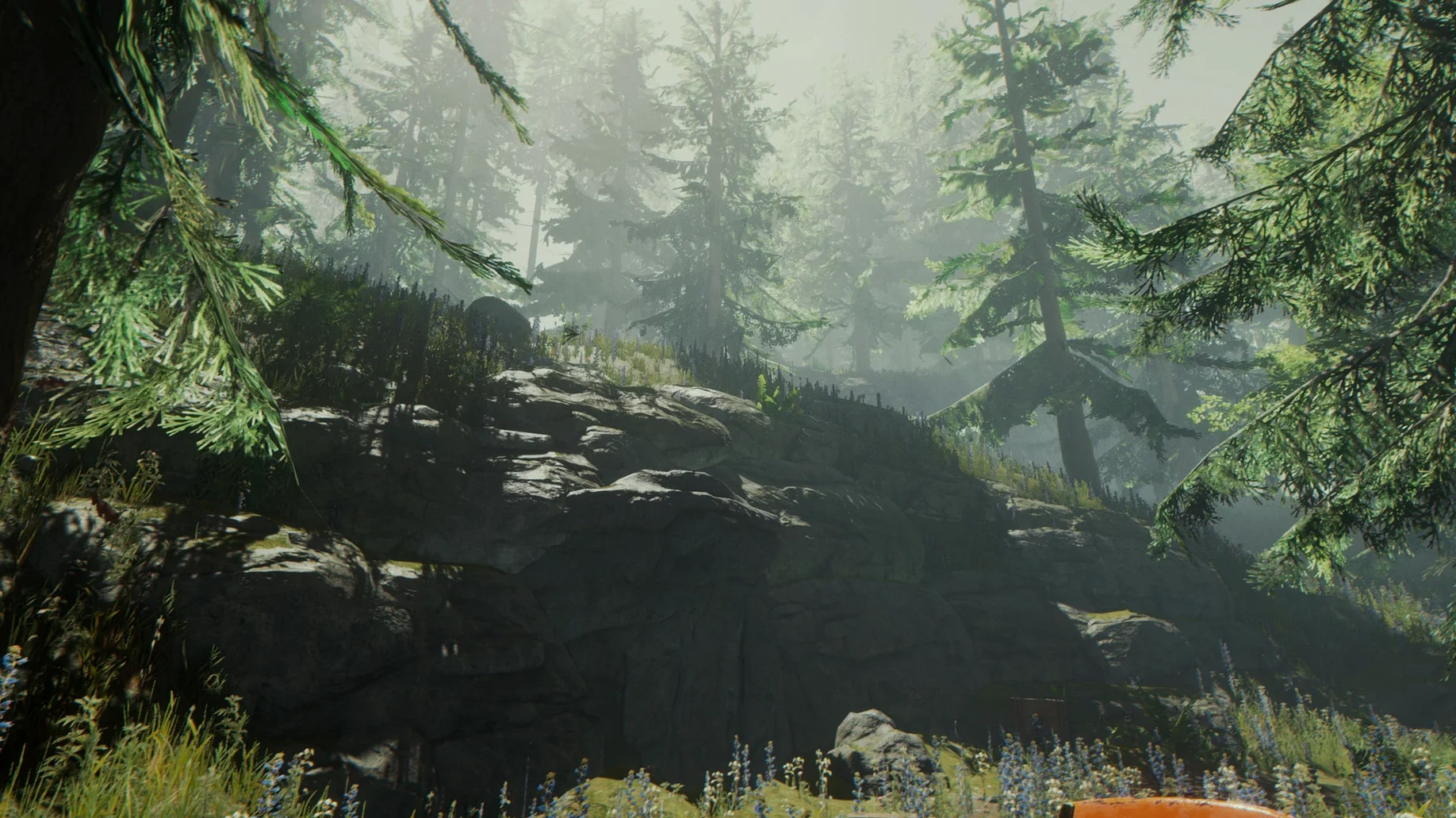
Most survival games give you a checklist. The Forest gives you a problem: you are the sole survivor on a peninsula, and the sun is going down. Everything after that is a practical answer to the question of how to see the next morning.
What does the first hour look like?
Scavenging Sticks Before the Hunger Timer Runs Out
You gather. Sticks, rocks, logs, plants — the peninsula is an open world of forests, coasts and abandoned camps, and every object is a potential resource. Food and water come first, because the game does not pause while you decide.
How does building actually work?
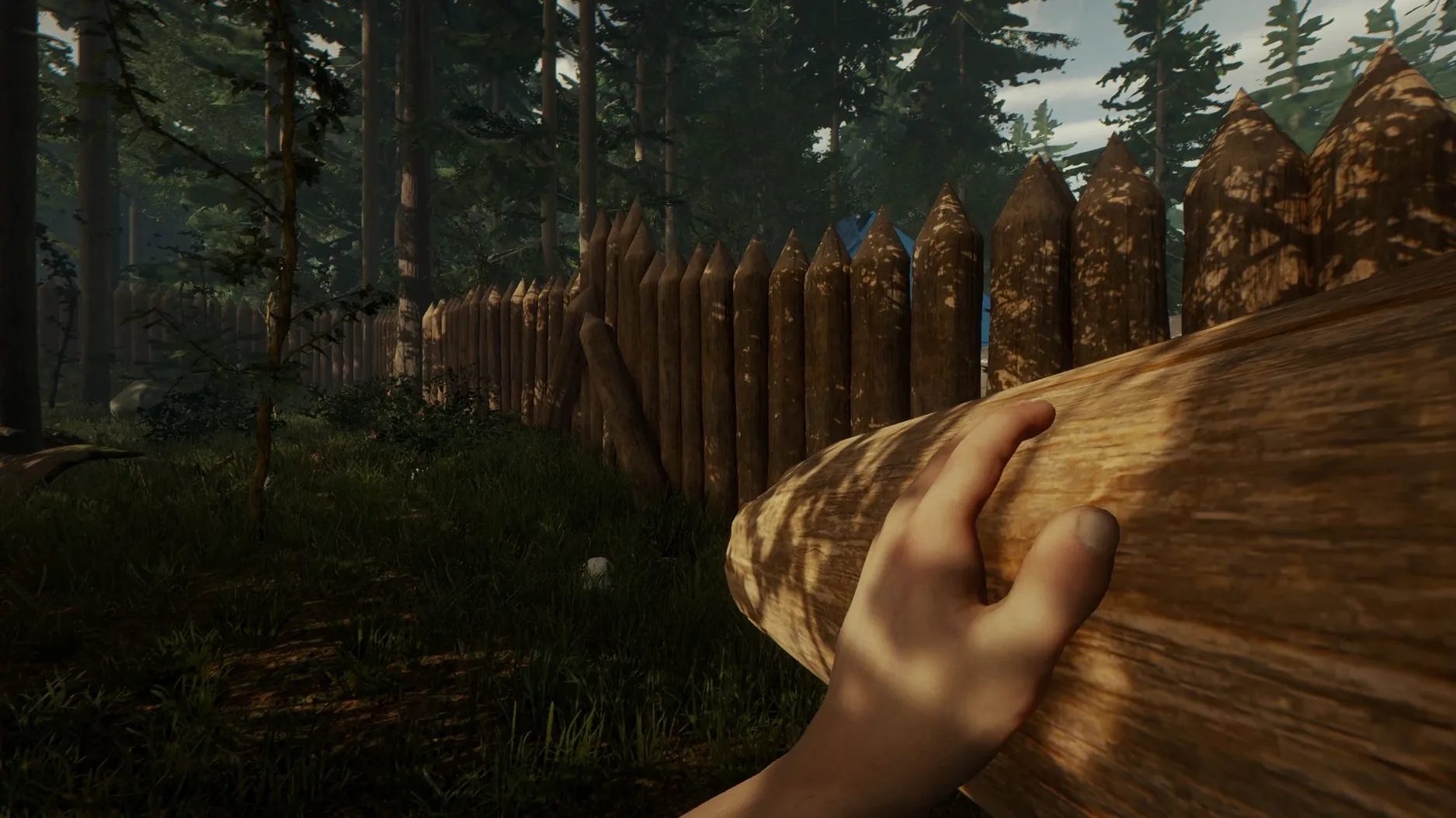
You choose a blueprint for a shelter or fortification and place it in the world. Then you physically carry logs and resources to the site and add them one by one. It is slow, deliberate work, and it makes your base feel like something you earned rather than something a menu generated.
What changes at night?
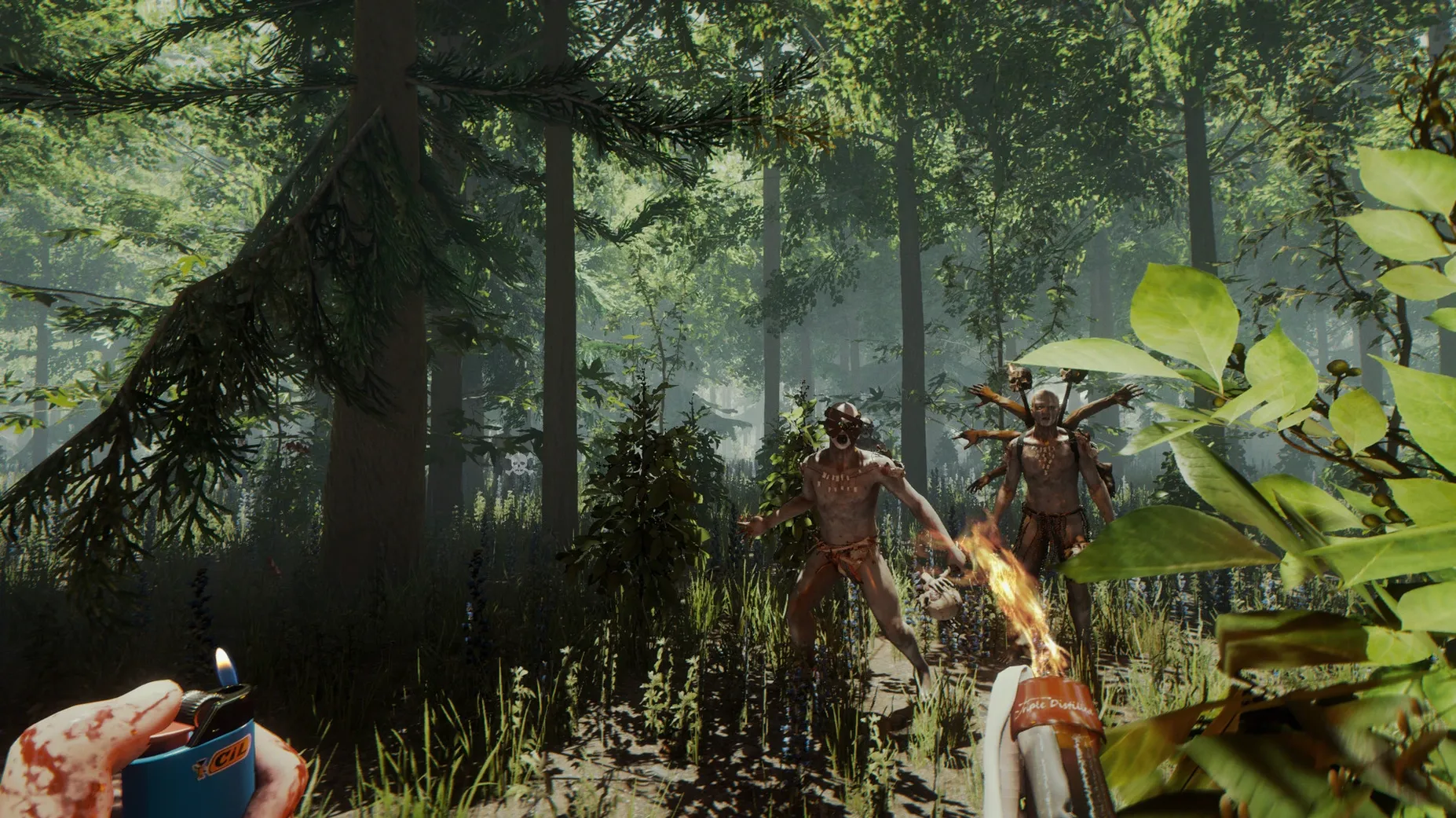
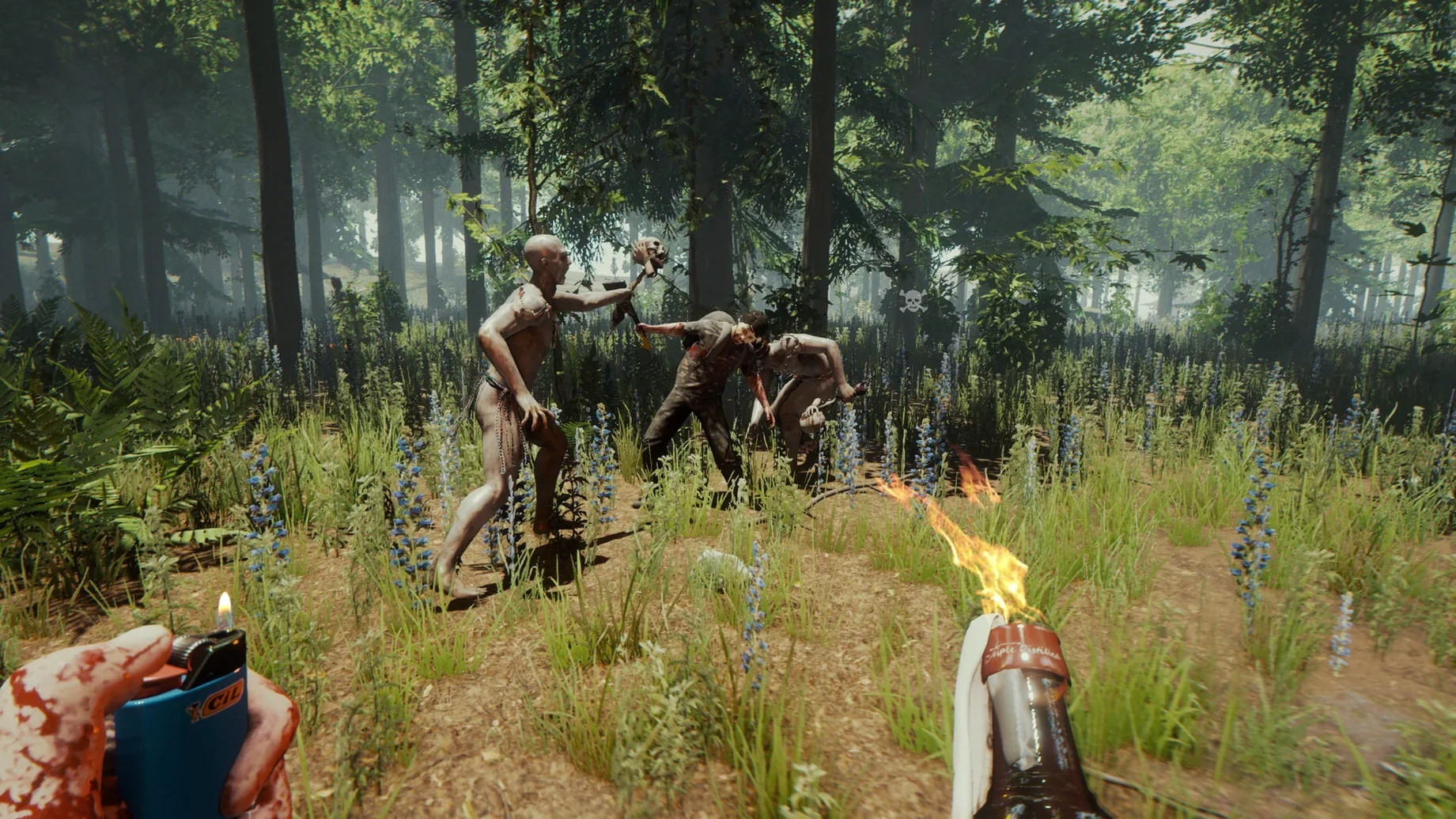
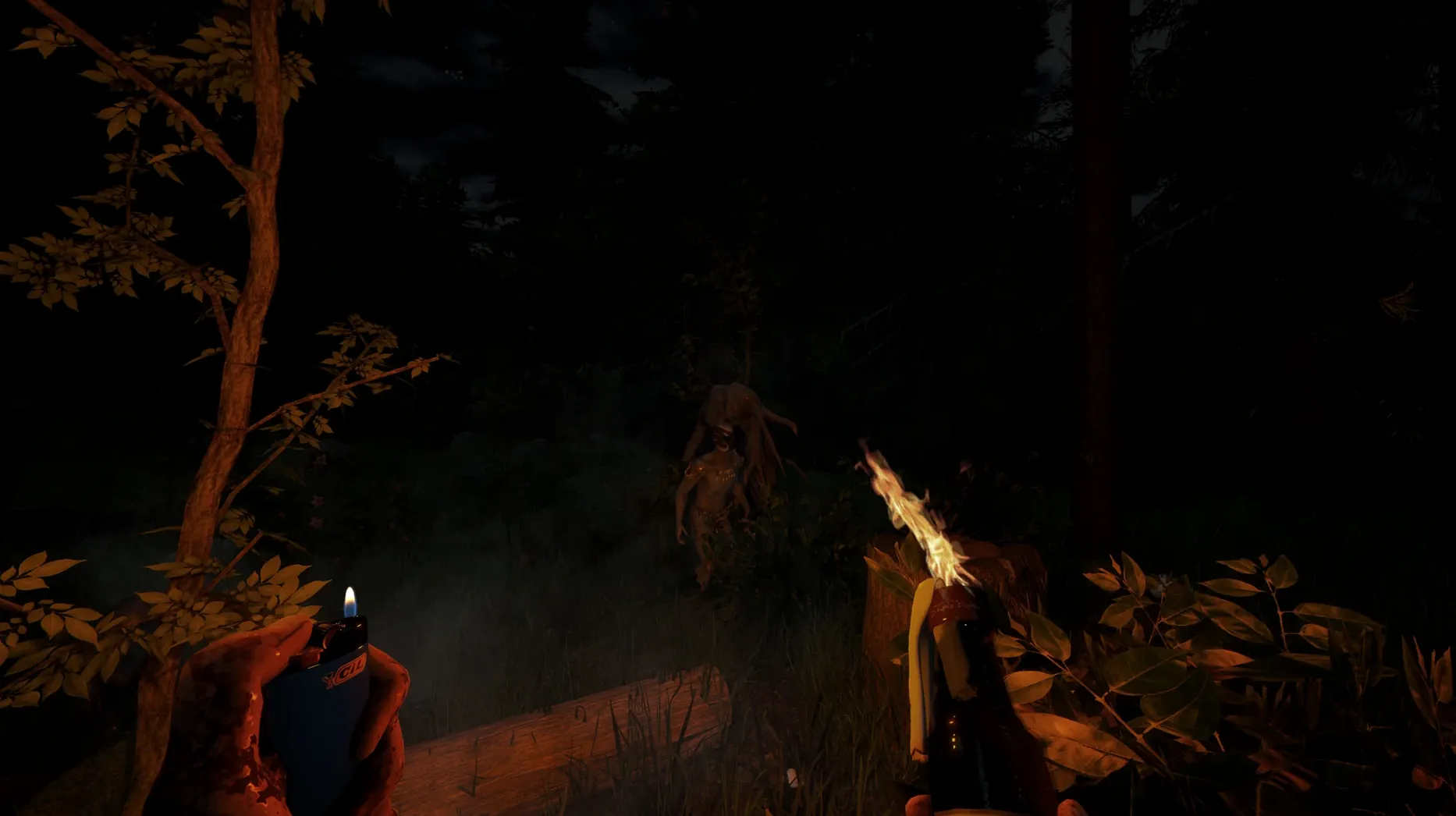
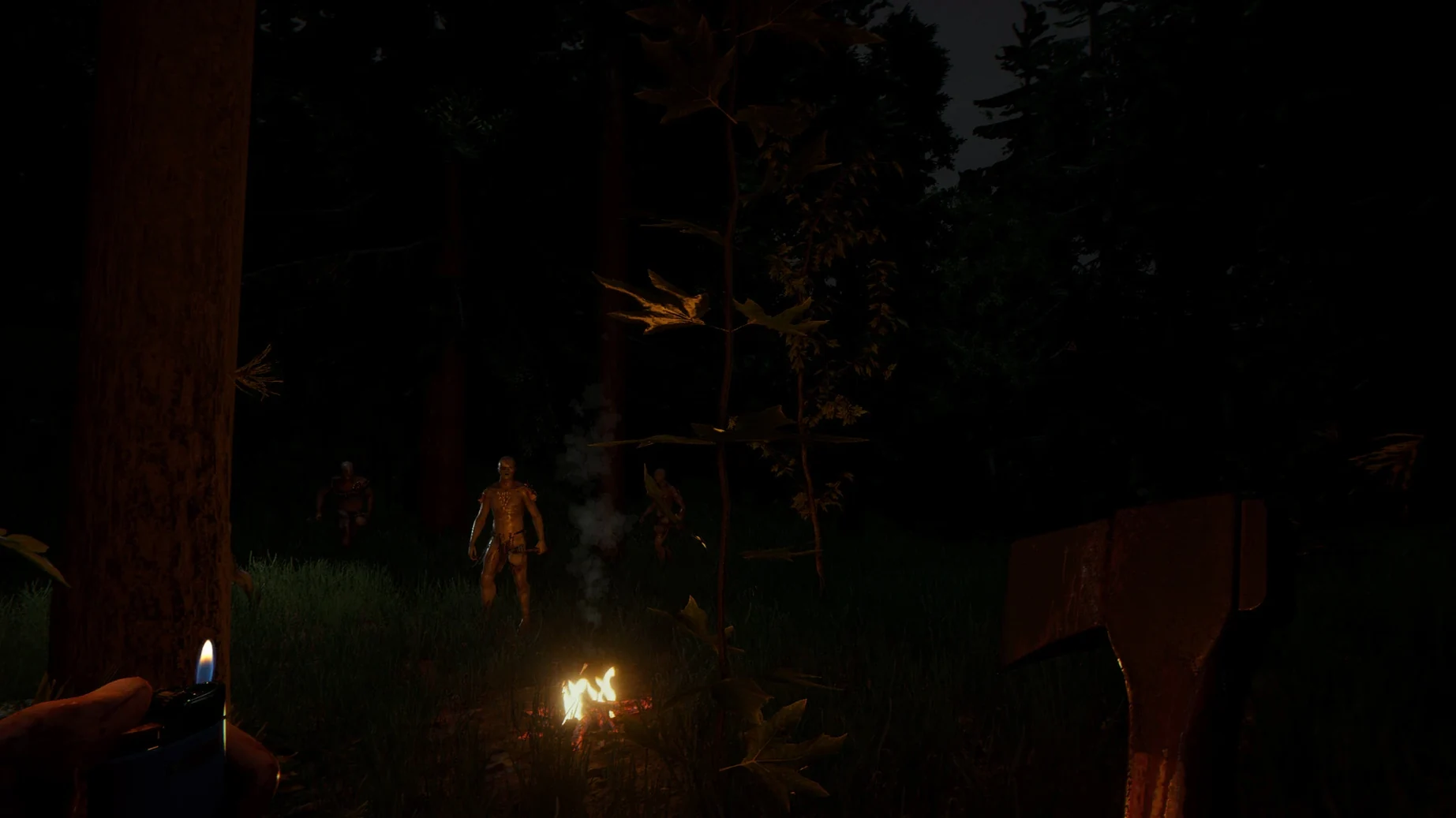
The tone shifts. The forest is still there, but you are now the thing being watched. Crafted weapons and traps become less about convenience and more about having a plan for the hours of darkness. Underground caves add a second layer to explore, with their own risks and materials.
What keeps you playing?
The loop is tight: gather, build, craft, survive, repeat. Each cycle teaches you something about the map or the AI, and each death sends you back with a clearer sense of what you should have done differently.
Self-Set Zipline Networks Over Scripted Quests
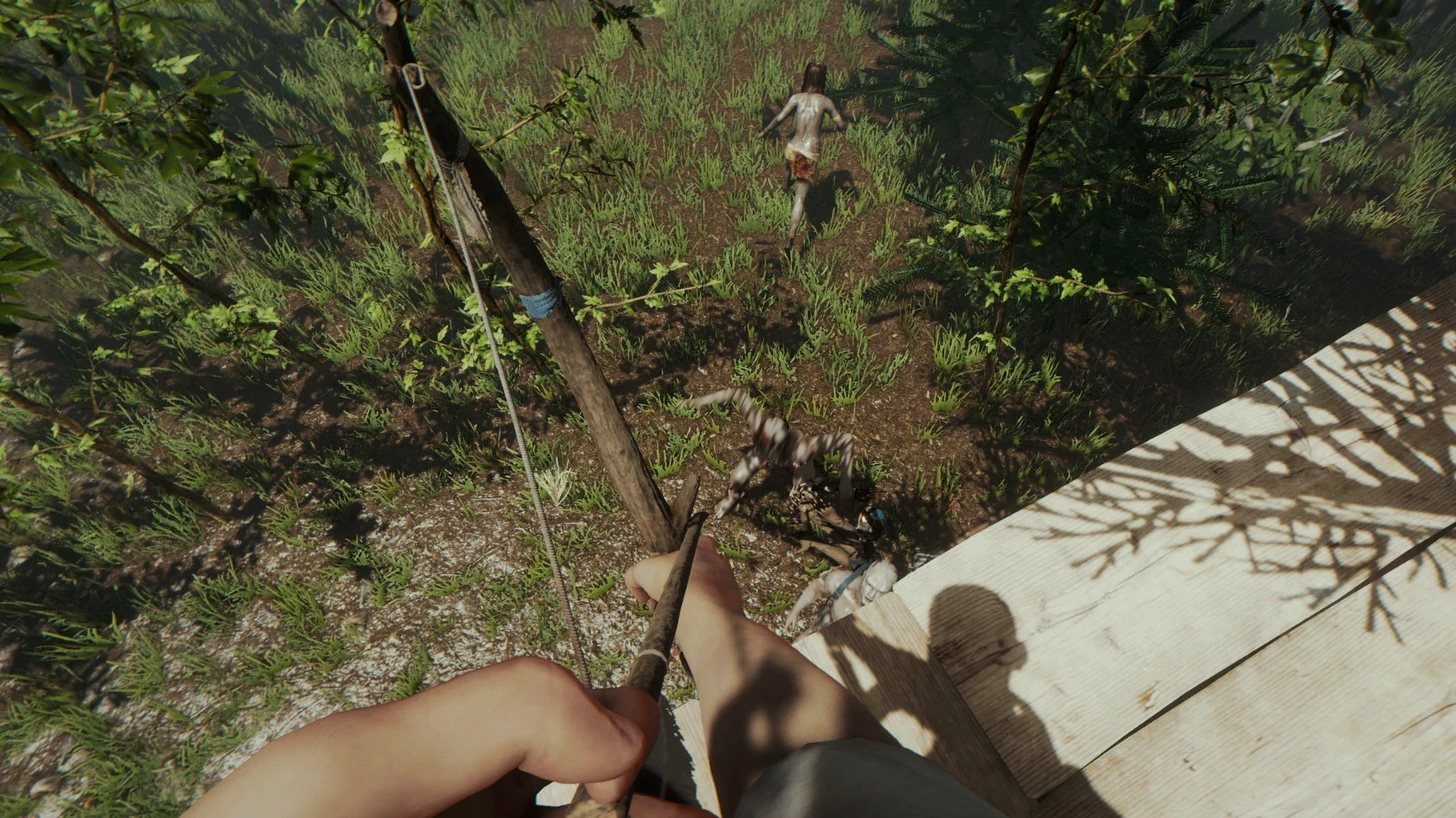
The game rewards a specific mindset. Players who treat the peninsula as a physics sandbox rather than a quest log tend to last longest. If you enjoy setting your own goals — a treehouse connected by ziplines to three resource caches, a cliffside base with a single kill corridor — the building system gives you the tools and then steps back.
Co‑op groups of two to four get a noticeably different experience. One person handles base fortifications while another maps cave entrances and a third runs food supply. Communication is not a nice-to-have; it is the difference between a coordinated defence and three people screaming into the dark while the fourth is dragged off by a mutant. Solo players, by contrast, feel the horror layer more acutely. Every snapped twig matters when there is nobody to watch your back.
Exploration-driven players find the underground cave network the strongest pull. The surface teaches you the rules; the caves break them, introducing creatures and environmental storytelling that the daylight hours only hint at.
Why a Sprawling Day-Three Base Gets You Killed
Building too large too early. A sprawling base with multiple walls looks impressive on day three, but you will spend every daylight hour hauling logs instead of scouting. A small, defensible shelter near fresh water and trees keeps you alive long enough to justify a bigger project later.
Ignoring the crafting mat. The inventory screen shows a central cloth; place an item on it and hover a gear icon to see recipe possibilities. Many new players assume recipes must be found first and miss early-game essentials like the crafted bow or the pouch for berry collecting.
Lighting fires on the beach at night with no walls. Fire is a beacon. The peninsula's inhabitants see it from a long distance, and a lone flame on open sand is an invitation you do not want to accept.
Underestimating stealth. Crouching in bushes works. Breaking line of sight and holding still works. Not every encounter needs to end in combat, and learning when to disappear is as valuable as learning when to swing an axe.
A single-session building workflow
Goal: a basic tree platform with a drying rack and a water collector, completed before nightfall on day one.
- Open the survival book (B key) and set a tree platform blueprint on a large tree within 30 metres of a fresh water source. Trees near the beach line south of the crash site work well.
- Cut down two nearby trees and strip the branches. Each log goes into the blueprint's ghost outline. You need seven logs for a small platform.
- Build a climbing rope from the craft mat. Seven cloth and one rope — collect cloth from suitcases along the shore. Attach it to the completed platform.
- Place a basic fire blueprint on the platform floor. Add leaves and sticks, but do not light it yet.
- Build a drying rack directly beside the fire. Three sticks and two logs. Hunt two rabbits or lizards on the way back from a stick run, hang the meat, and light the fire only once the rack is loaded.
- Craft a water collector from the survival book. Four sticks and one turtle shell — turtles spawn reliably on the southern beach. Place it on the platform edge where rain will reach it.
- Climb up, save at the temporary shelter, and wait for dusk. By the time the first howl sounds, you are off the ground with food drying and water collecting.
The whole sequence takes roughly 12 in-game hours. The platform is small enough to finish in one session, and it turns day one from a frantic scramble into a repeatable start that leaves you ready to explore the caves on day two.
- Version — 1.12 [Wineskin]
- Release — 30 April 2018
- macOS: not specified by the developer
- Architecture: Apple Silicon
- Interface languages: Russian, English, German, Spanish, Italian, Traditional Chinese, Simplified Chinese, Korean, Polish, Portuguese, Turkish, Finnish, French, Czech, Swedish, Japanese
Sign in · Create an account to add a field note.
No field notes yet. A measurement, a version, a machine — they appear after moderation.