Games
Devour 6.0.32
GamesUpdated
| Requirement | On file |
|---|---|
| macOS | See the sheet |
| CPU | Apple Silicon, Intel 64-bit |
| Download | 9 GB |
| Tested on | macOS Tahoe, Mac mini 2024 M4 |
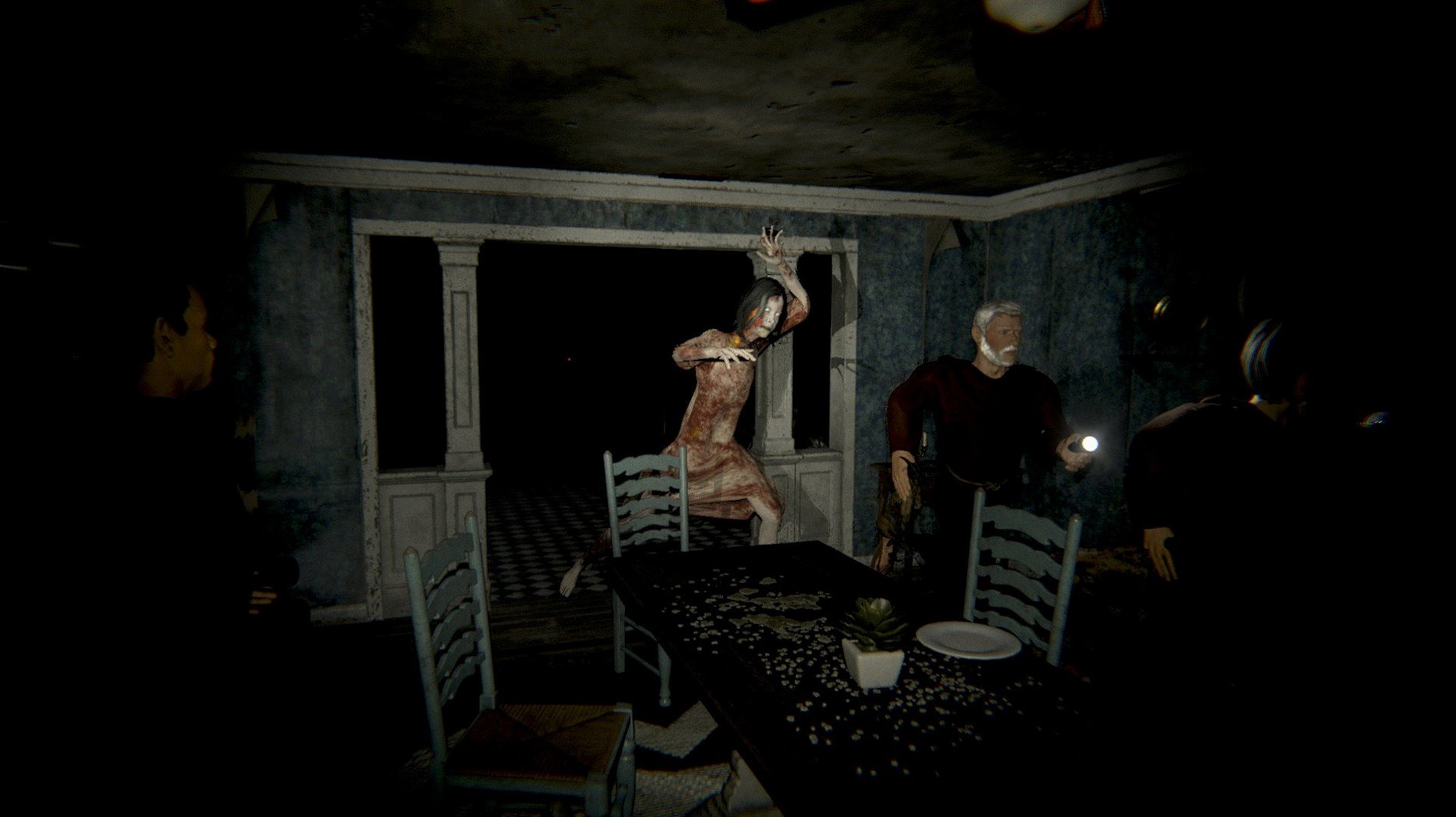
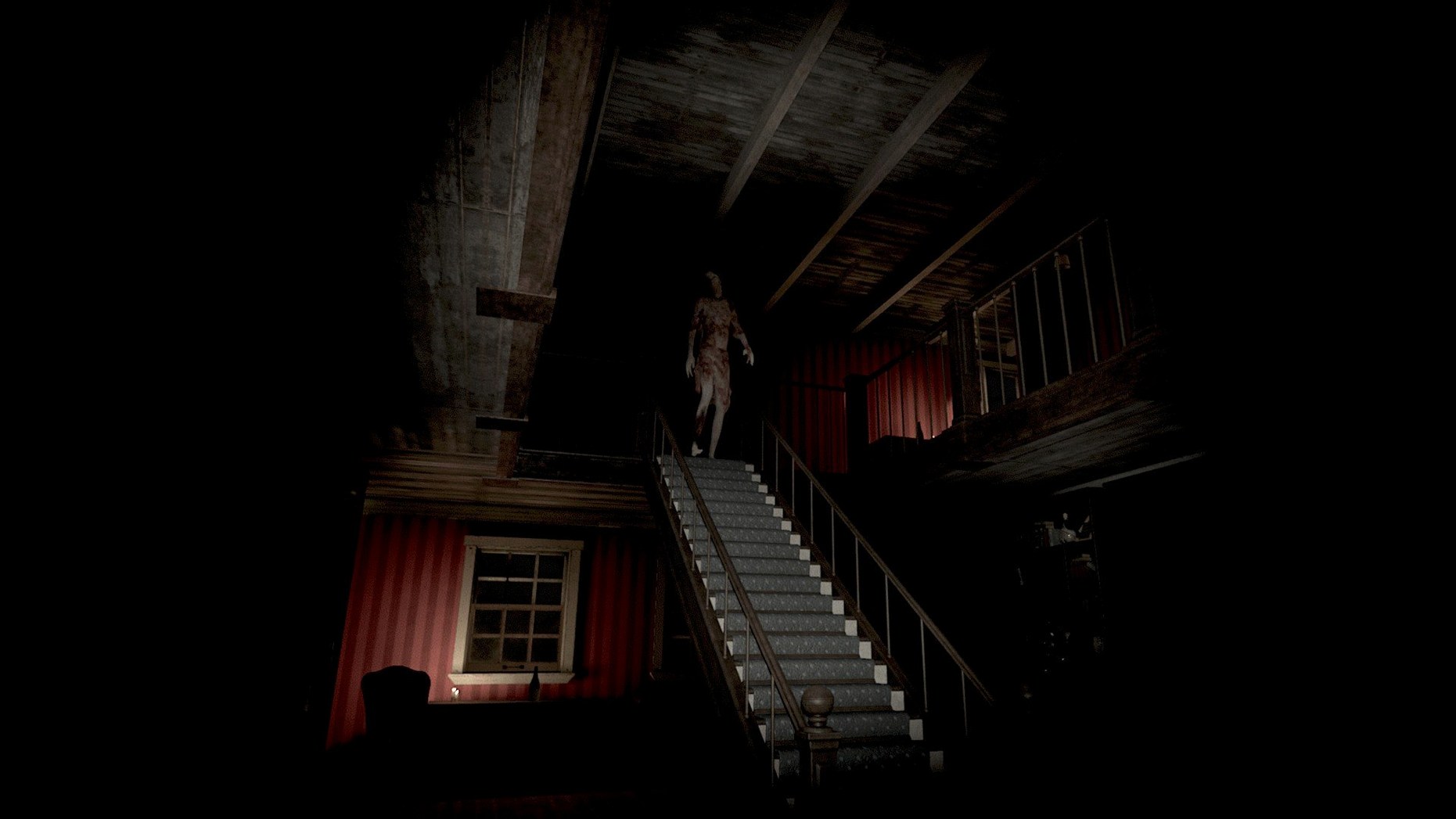
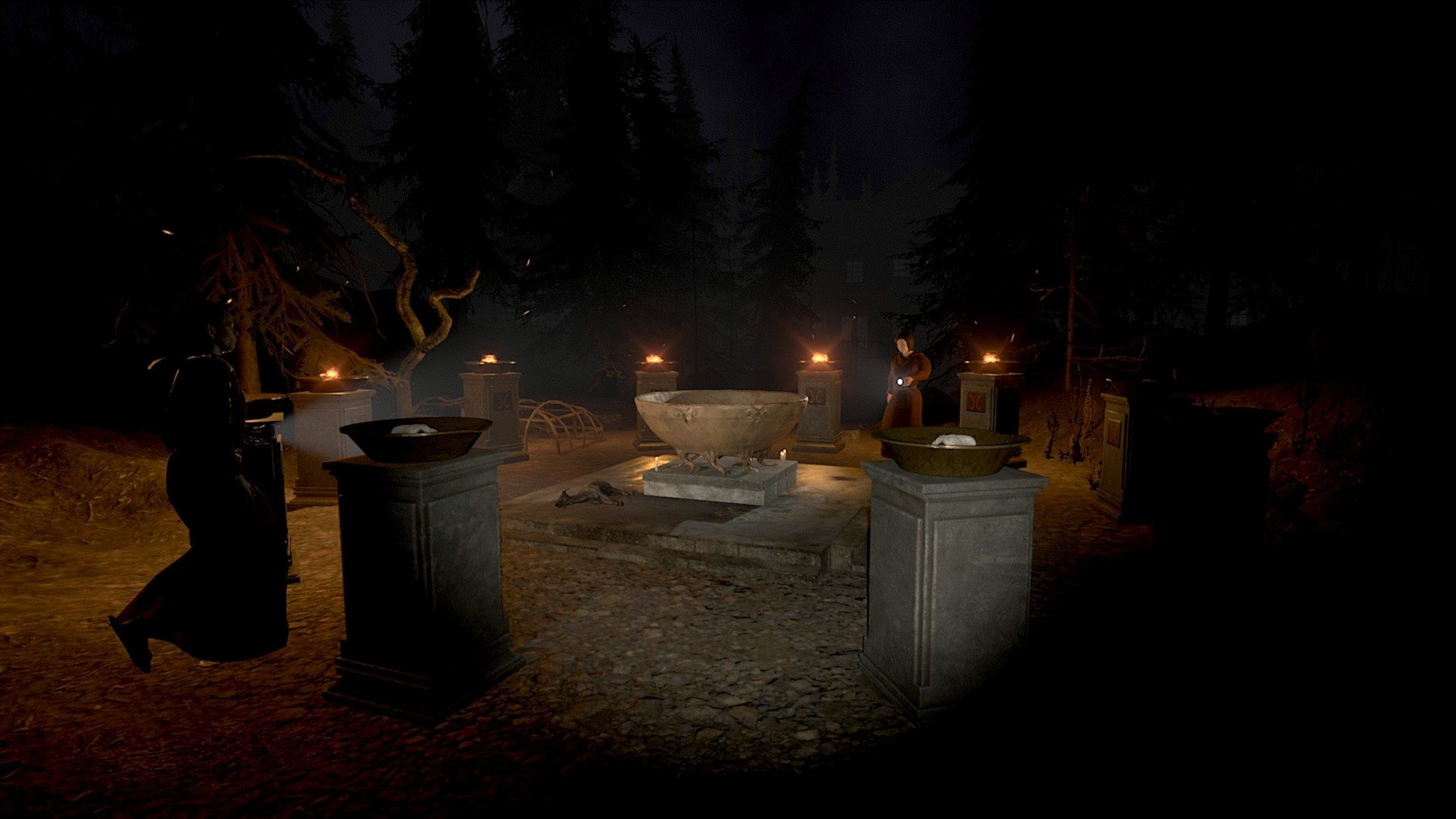
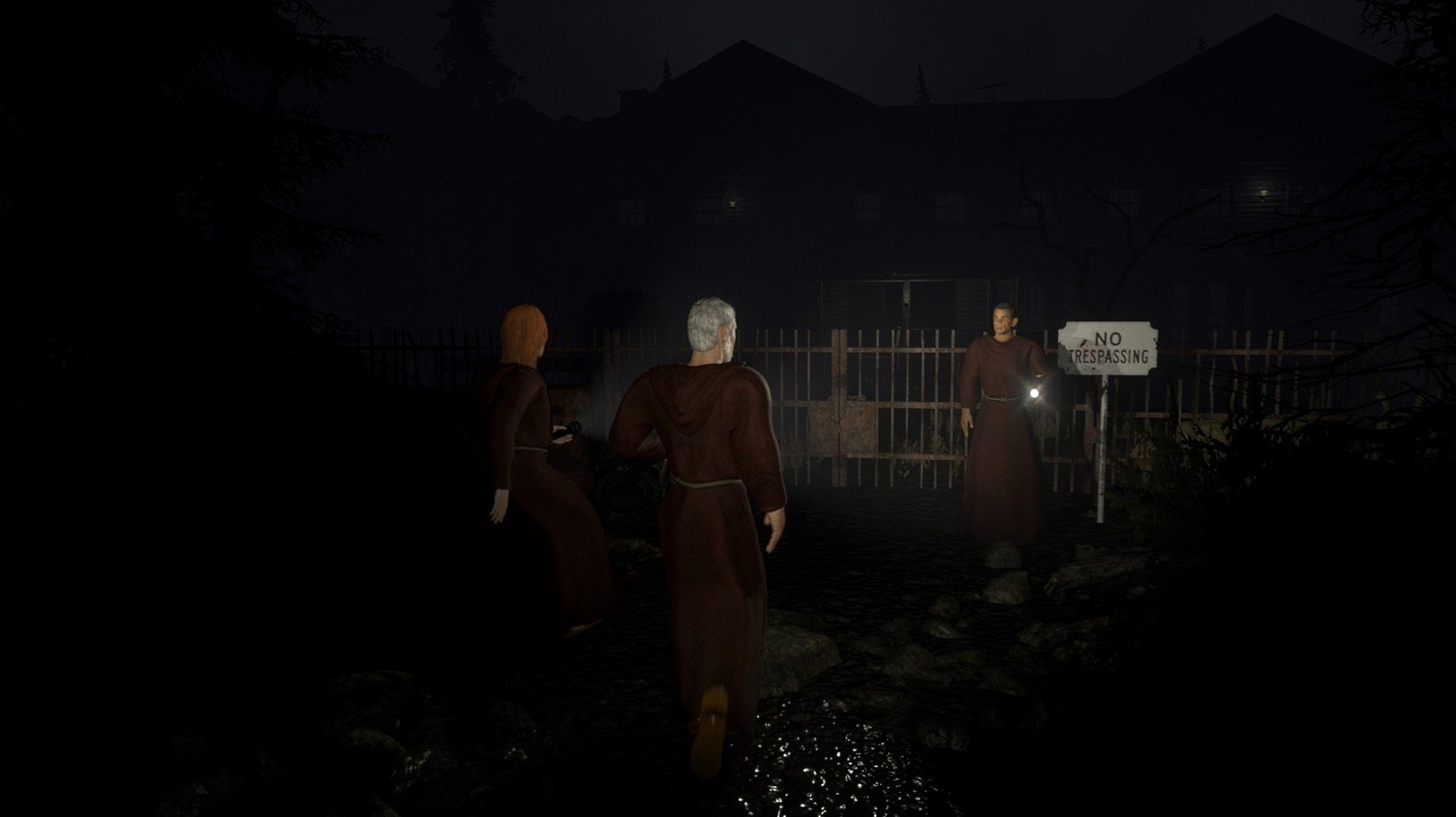
Ultraviolet flashlight in hand, you hear the cultist breathing somewhere in the next corridor. Devour from Straight Back Games builds every session around that single defensive tool — no weapons, no combat, just a beam of UV light that stalls possessed cultists long enough to complete the objective before they drag you to hell. Online co-op for up to four players is where it lands hardest, though a solo mode exists for those who prefer to suffer alone.
- Each run has a hard time limit of one hour, keeping tension high and sessions contained. You will not lose an evening to endless rounds.
- Progression comes through Cultist Rank and Ritual Tokens, which unlock perks that slightly shift how you approach the next attempt.
- Positional voice chat is built in, so the sound of a teammate's panic from the basement is genuinely useful navigation data.
- The single-player mode works, but you feel the design's co-op skeleton — the rhythm of shared task management is absent when you are alone.
- Precision matters and the game is unforgiving about it. If a teammate falls, you need to revive them; enemies notice that and react.
- Failure is quick and brutal. You stop the cultists or they take you — there is no third outcome and no safety net.
Devour suits groups who enjoy short, repeatable horror challenges where communication is the real weapon. Solo players get the mechanics but miss the social friction that makes the panic stick. The one-hour cap and token-based progression give it a tidy arc, but anyone craving combat variety or a power fantasy will find the UV flashlight a thin shield against the dark.
Teams That Call Out Items and Coordinate Light
Groups of three or four who already communicate well under pressure see the game at its best. The maps split objectives across separated areas, so a team that calls out ritual item locations and coordinates ultraviolet flashlight coverage will clear runs in 20–30 minutes. Duos can work, but the workload per player climbs sharply on larger maps like The Inn, where dirty eggs need washing while enemies patrol the washroom.
Solo players who enjoy routing and optimisation find a different kind of appeal. Without teammates to share the task load, you learn exactly which doors to unlock first, where ultraviolet batteries tend to spawn, and how long you can risk a ritual animation before an Azazel rounds the corner. It becomes a puzzle of movement efficiency rather than a social horror experience. The one-hour cap keeps even failed solo attempts from dragging.
Horror streamers and content creators gravitate toward the positional voice chat. A scream getting cut off mid-sentence because someone was dragged away reads cleanly to an audience, and the randomised item spawns keep repeated runs from looking identical on camera. The server browser also lets streamers pull in viewers for impromptu sessions without pre-arranged lobbies.
Flashlight Stuns Do Not Stack
The ultraviolet flashlight is not a weapon, and treating it like one wastes batteries. New players often hold the beam on a cultist until they back away, then keep holding it — but the stun effect does not stack. A quick flash resets the enemy's approach, and the battery drain between a tap and a sustained beam is significant over a full run. Learn the minimum exposure time and conserve.
Ignoring the server browser is another early error. The in-game matchmaking pool is small outside peak hours, but the browser list shows active lobbies with ping and player counts. Filtering for your region and joining a lobby with two or three players already in it skips the wait and puts you into a group that has likely already found a rhythm.
Many newcomers load into a map and scatter immediately, treating it like a scavenger hunt. Devour punishes this hard — an isolated player with no ultraviolet charge and a cultist between them and the nearest battery is a downed teammate in seconds. Stick in pairs at minimum, and always know which direction the nearest unlocked door faces. Locked doors you have not yet opened are dead ends, not escape routes.
Perks from Ritual Tokens sit unspent on fresh installs because the menu is tucked behind the progression screen. Check your Cultist Rank after every few runs; even the early perks that extend ultraviolet battery life or speed up revival animations shift the difficulty enough to notice.
April 2026 Patch Fixed Azazel Knockout Gaps
Version 6.0.32 landed on 14 April 2026 with fixes that quietly reshaped moment-to-moment play. The patch addressed spots on most maps where Azazel could not knock out a player — corners and geometry gaps that experienced groups had learned to exploit as safe zones. Those crutches are gone, and positioning now carries genuine risk everywhere except a few remaining quirks on the Carnival map.
Enemy item perception received a logic fix that changes how dropped objects work. Cultists carrying items can now see those items even when hidden inside other objects. For players who used to drop ritual pieces inside larger clutter to mask them from patrolling enemies, that trick no longer works. The change forces more deliberate handoffs between teammates rather than stashing objects and retrieving them later.
Long interactions — reviving a teammate, washing an egg, completing a ritual step — now cancel when forced out of range by falling. Previously, starting an animation right as a cultist knocked you off a ledge could lock the interaction into a broken state. The fix makes multi-level areas on The Manor less prone to glitched progress, though it also means a last-second revive attempt on a staircase often fails outright.
Crows on The Manor received a targeted fix preventing them from getting stuck trying to pick up clean heads in certain locations. The change smooths out enemy pathing on that map, which previously created dead moments where a crow would loop uselessly while players completed objectives nearby unchallenged. Nathan's behaviour inside vents also got tightened — he can no longer be pushed around if he calms down while inside one, closing a rare but frustrating exploit that let players reposition him during his cooldown phase.
- Map fixes — Fixed many spots on all maps except Carnival where Azazel could not knock out a player.
- Enemy item detection — Enemies carrying dropped items can now see those items even when hidden inside other items.
- Interaction cancellation — Long interactions are now cancelled when forced out of range, such as by falling.
- Crow behaviour — Crows no longer get stuck trying to pick up clean heads in some locations on The Manor.
- Enemy awareness — Enemies can now see players reviving another player or washing dirty eggs on The Inn.
- Nathan vent fix — Nathan can no longer be pushed around if he calms down while inside a vent.
- macOS Tahoe (tested)
- Apple Silicon and Intel Macs
- Tested on a Mac mini 2024 with M4
Questions on file
Does Devour include a single-player mode?
Yes, you can play solo, though the game is designed primarily around co-op for up to four players.
How long does a typical session last?
Every session is capped at one hour maximum. You either complete the objective in that time or the run ends.
What is the main defensive tool in Devour?
The only listed defence is an ultraviolet flashlight, which stalls possessed cultists but cannot permanently stop them.
Sign in · Create an account to add a field note.
No field notes yet. A measurement, a version, a machine — they appear after moderation.