Games
Don’t Starve Together 747465
GamesUpdated
| Requirement | On file |
|---|---|
| macOS | See the sheet |
| CPU | Apple Silicon, Intel 64-bit |
| Download | 2.8 GB |
| Tested on | macOS Tahoe, Mac mini 2024 M4 |
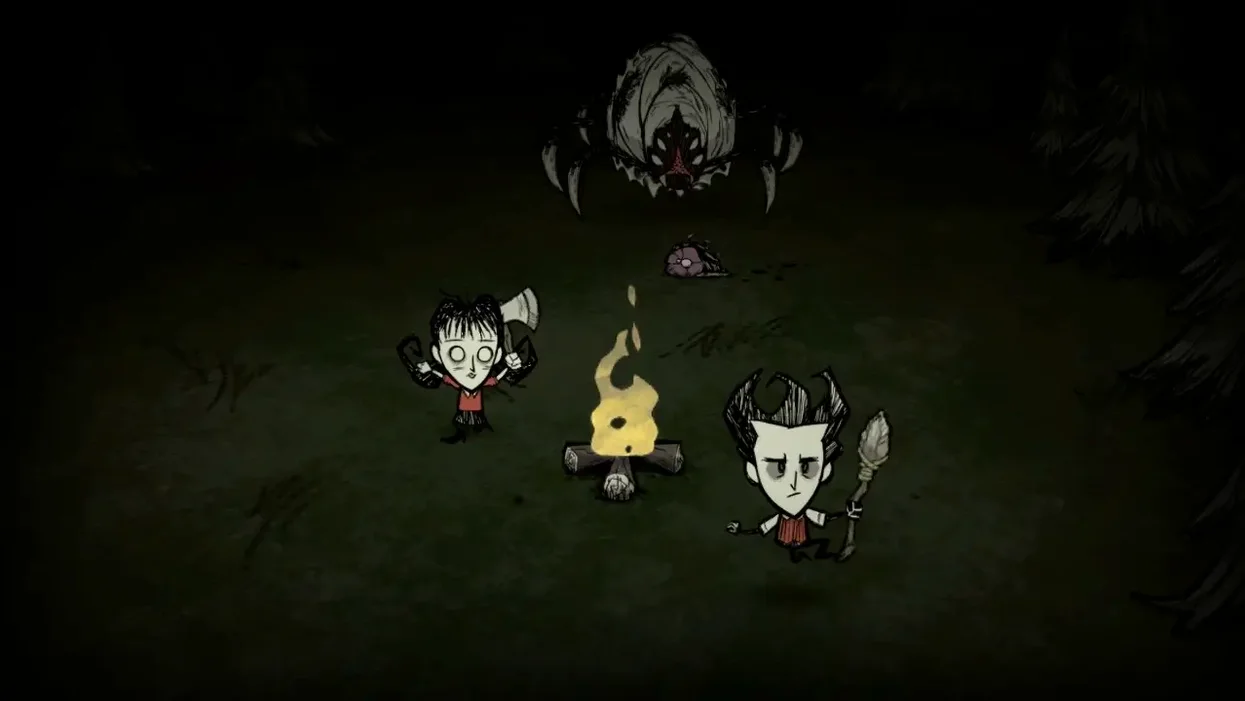
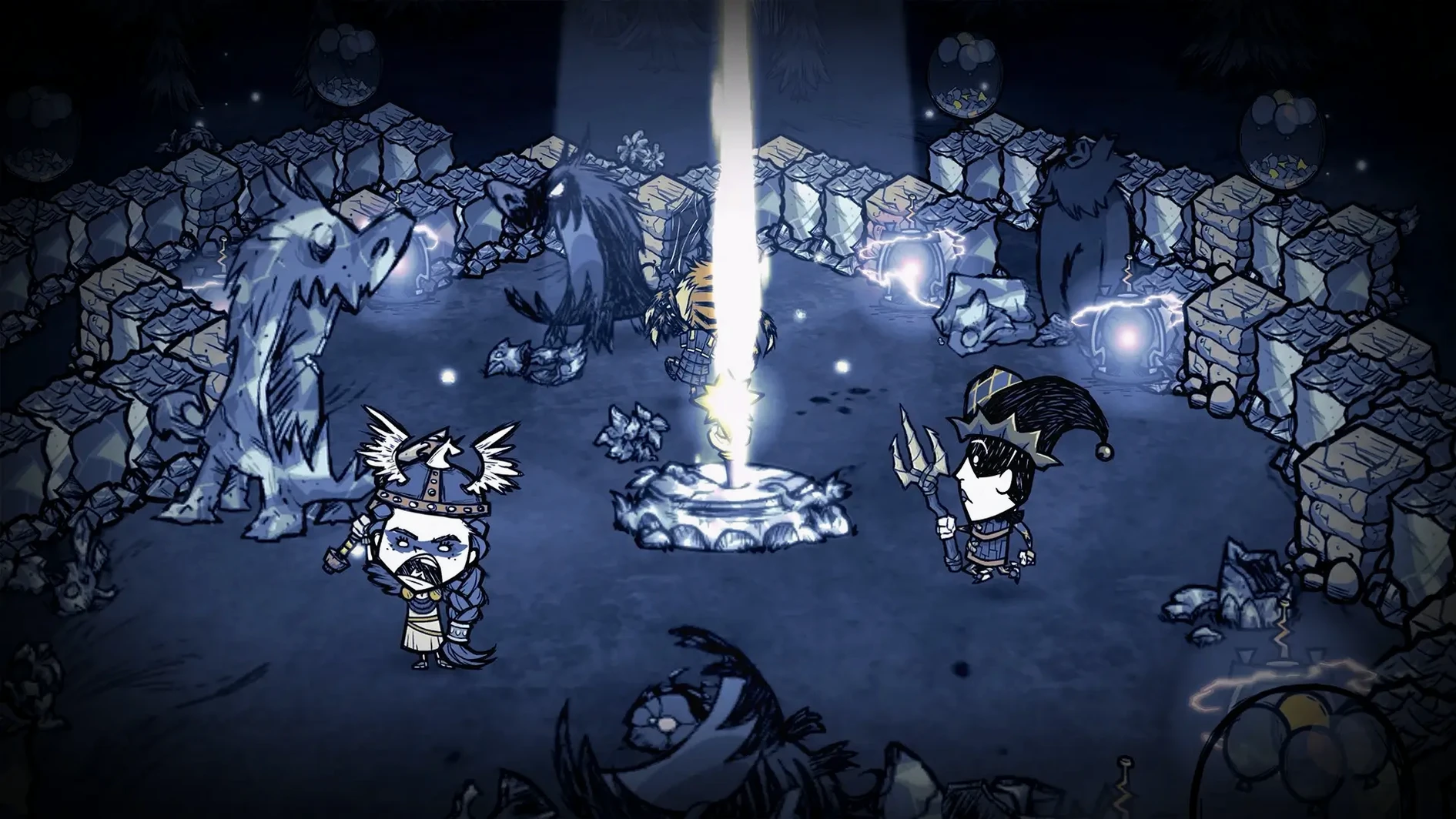
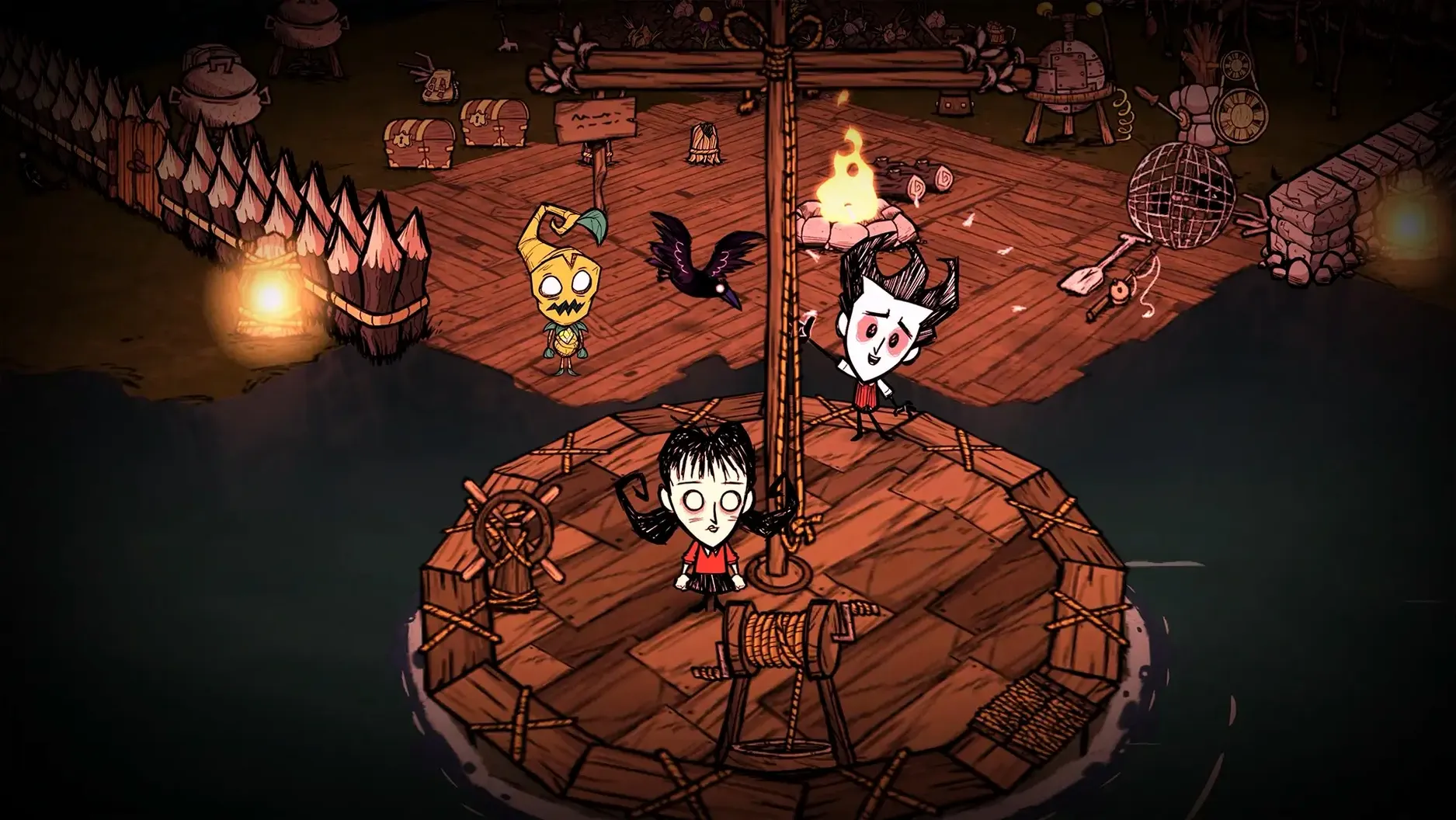
Touchstones are a lifeline. In Don't Starve Together, finding one means a dead teammate can haunt it to resurrect, sparing the group the cost of a Telltale Heart. That mechanic sets the tone: survival hinges less on individual skill and more on a group's ability to split tasks, share a map, and panic together when winter hits. The 'Together' in the name is not decorative.
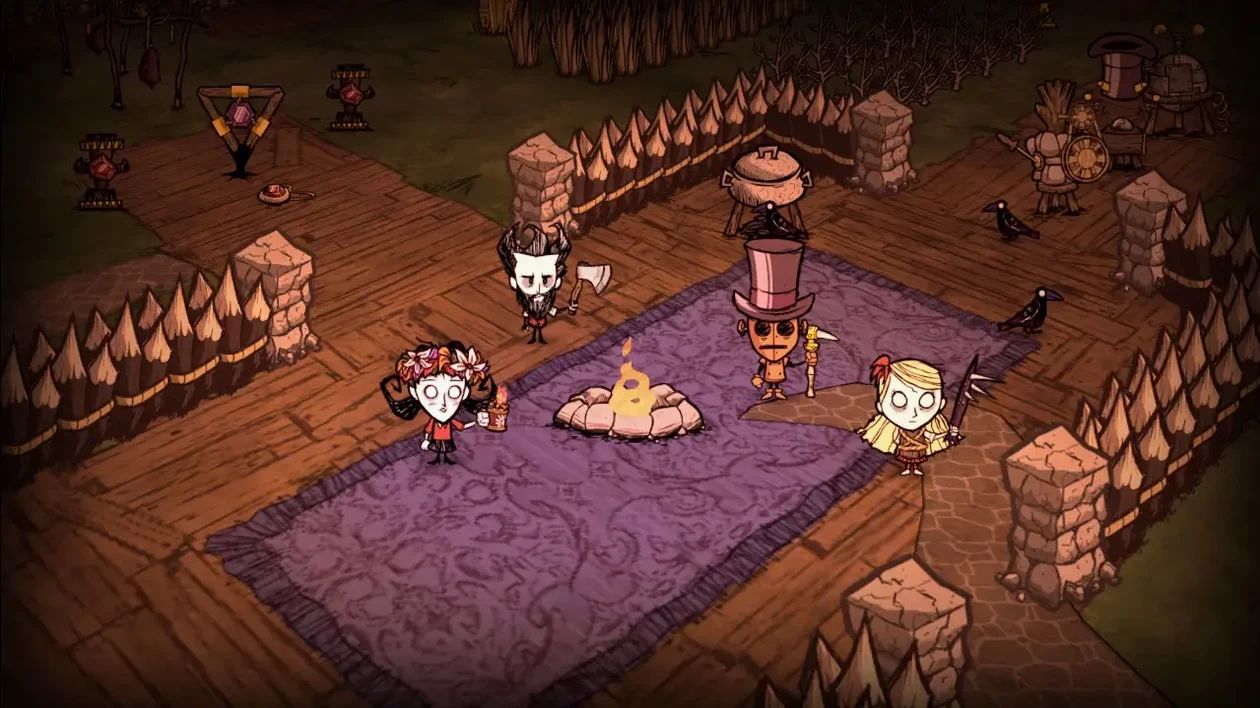
The player who thrives here enjoys managed chaos. One person scouts for gears while another walls off the base and somebody forgets to cook the monster meat. Communication is not a soft skill — it is a resource. You'll die, roll back the server, and try again because the world is enormous and actively hostile. Science machines unlock new crafting, seasonal bosses arrive on schedule, and a single uncontrolled fire can erase hours of work.
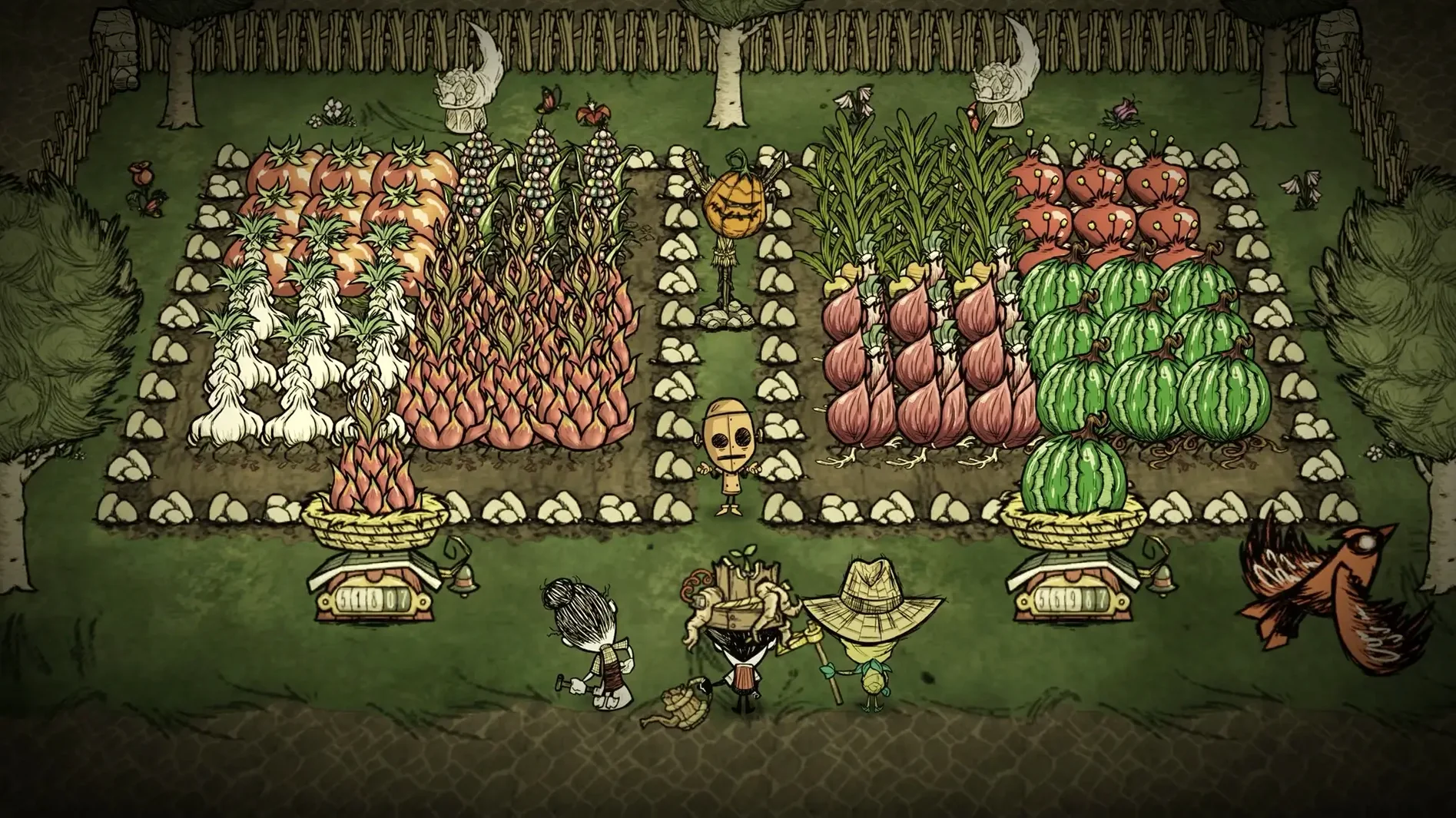
It is a poor fit for the solitary strategist. There is no pause, no hand-holding quest log, and the permadeath format means a bad evening can wipe a hundred-day settlement. The art style — gothic, hand-drawn, paper-cutout — masks a game that expects you to read the wiki. A player who wants a relaxed builder or a clear narrative will bounce off within the first winter.
For a group that likes shared stakes and doesn't mind losing, it delivers a rare thing: a survival game where the other people are not just obstacles, but the point.
Server Browser Shows ‘No Rooms Found’
A freshly hosted world defaults to settings that trip up new groups. The most frequent headache is the server browser showing "no rooms found" for a friend's game. Nine times in ten, the host has left the world as "Friends Only" but the friend appears offline in Steam because one of them is invisible. Switching visibility to "Online" fixes it in seconds. The remaining time, a mismatched game version is the culprit — both players need the same build, and a Steam restart forces the update check.
World presets matter more than people expect. The default "Survival" mode applies a 20-second respawn timer and a max health penalty on death, which turns a rough first night into a death spiral. Switching the world to "Endless" removes the health penalty and lets dead players float to the Florid Postern for a free respawn — far gentler while a group learns the basics. The trade-off is that Endless disables the Touchstone mechanic and some of the tension, but for the first 30 hours, it stops your group from quitting in frustration.
Cave generation stings. Enabling caves on a low-spec Mac — even an Apple Silicon one with 8 GB of RAM — can push the server's memory use past 2 GB and introduce micro-stutter whenever the host transitions between the surface and underground shard. The workaround is straightforward: generate the world without caves, play a season or two, then use the "Add Caves" option in the world settings. The second shard spawns on a separate process and the initial surface shard stays lighter.
Mod mismatch errors look cryptic — "workshop-XXXXX failed to load" — but the fix is almost always a client-side unsubscribe and re-subscribe in the Steam Workshop. The game caches mod versions aggressively, and a mod author pushing an update overnight can leave a client with stale files. A Steam restart alone won't clear it; you have to visit the mod page, unsubscribe, wait for the folder to vanish from ~/Documents/Klei/DoNotStarveTogether/mods/, and resubscribe.
200-Day World Hits 1.2 GB RAM on M4 Mac mini
On a 2024 Mac mini M4 with 16 GB of RAM, a 200-day world with one connected client lands around 1.2 GB of memory and a steady 15–18% CPU load on the host side. The client is lighter, hovering near 800 MB. These numbers come from Activity Monitor sampling across a two-hour session, not a controlled benchmark. The engine targets 60 fps, and it stays there on the overworld even with a large base full of crock pots and drying racks. Caves introduce a hit: descending near a fully lit ruins biome drops frames to the low 40s on the M4's GPU, more because of light entity count than polygon complexity.
MacBooks with Intel integrated graphics from the 2018–2021 era fare worse. The Iris Plus 655 in a 2020 MacBook Air can't hold 30 fps in a dense base with rain and a roaring fire. Turning off distortion effects and setting "Small Textures" in the graphics options buys back roughly 8–10 fps. The game runs natively on both ARM and x86 64-bit, so Rosetta 2 is never invoked — a point in its favour over older ports that strand Intel users on emulation.
Stability under extended play is solid but not flawless. The public build rarely crashes outright; the bigger concern is a memory leak that surfaces after roughly three real-time hours when running a dedicated server with caves enabled. The process creeps from 1.2 GB to 2.4 GB and eventually the server throws a "shard is unresponsive" warning before dropping clients. Restarting the server every two hours — or scheduling a daily restart via the world settings — sidesteps the problem entirely.
Mission Control Swiping Mutes Audio but Keeps Cursor Captured
The game respects macOS Spaces and Mission Control better than most Unity titles. You can swipe to a browser with the wiki open and the game audio ducks correctly, though the cursor remains captured unless you play in windowed mode. Windowed mode at 1920×1080 on a 4K display runs without scaling artefacts, and the UI text remains legible — a small detail that matters when you're reading crock pot recipe mods.
Voice chat is external by design. The game has no built-in voice, which pushes groups toward Discord, Mumble or FaceTime Audio. Discord's overlay does not inject into the game on macOS, so you rely on keyboard shortcuts or a second screen. A practical setup that works well: run Discord on an iPad or phone, route audio through Bluetooth, and keep the Mac screen free for the map. The game's musical score — instrumental, moody, reactive to season and sanity — is well-produced enough that muting it for voice feels like a loss, so balancing the two volumes takes some experimentation.
Automator and AppleScript hooks don't exist, but the server logs in ~/Documents/Klei/DoNotStarveTogether/ are plain text files. A simple Hazel rule to archive old logs or a Keyboard Maestro macro to restart the dedicated server after a crash are within reach for someone comfortable with macOS automation. The game also responds to standard Steam command line arguments, so launching a specific world from Terminal or a shell script works as expected with the -conf_dir flag.
iCloud Drive and the Klei folder do not mix. Do not symlink the save directory into iCloud — the constant file writes during autosaves (every 8 game-minutes by default) cause sync conflicts, and a corrupted world file cannot be recovered through the rollback feature. A local-only backup or a periodic manual copy to an external drive is the safer path.
Walls Before a Lightning Rod Burns the Science Machine
The most expensive oversight is treating the base like a permanent fortress. Walls do not stop hounds — they pathfind around them — and placing walls before a lightning rod means the first spring storm burns the science machine and the person standing next to it. A chest full of boards and cut stone matters less than a single ice flingomatic placed within range of the berry bushes and the crock pots.
New players hoard food that spoils. A stack of 20 raw carrots rots in 10 days on the ground, faster in summer. Cooking resets the spoilage timer partially, and drying meat on racks pauses it entirely. The pattern to learn early: cook what you need for the next two days, dry the rest, and never carry more than a stack of jerky into the ruins.
Sanity management looks like a secondary mechanic until a Terrorbeak spawns inside the base at night. Beginners ignore the shadow creatures because the first few are slow, then a crawling horror lands a hit that drops weapon durability by half and the group wipes. Picking flowers — 1 sanity per flower — is a renewable stopgap, but a tent and a top hat cost silk and rope, both farmable by day 15, and they solve the problem quietly.
Server rollback is the safety net nobody reads about. The host can roll the world back to any of the last five autosaves from the "Host Game" screen. A catastrophic fire or a Deerclops stomping through the crock pot array is not a campaign-ender — it is a 90-second reset to 8 minutes earlier. New hosts discover this feature three disasters too late.
- Architecture: Apple Silicon (ARM) and Intel (x86 64-bit)
- Interface languages: English, Simplified Chinese
Questions on file
Does Don't Starve Together run natively on Apple Silicon Macs?
Yes, it includes both ARM and x86 64-bit binaries, so it runs natively on current Macs with M-series chips.
Sign in · Create an account to add a field note.
No field notes yet. A measurement, a version, a machine — they appear after moderation.