Games
Euro Truck Simulator 2 1.61.1.1s
GamesUpdated
| Requirement | On file |
|---|---|
| macOS | See the sheet |
| CPU | Intel 64-bit |
| Tested on | macOS Tahoe, Mac mini 2024 M4 |
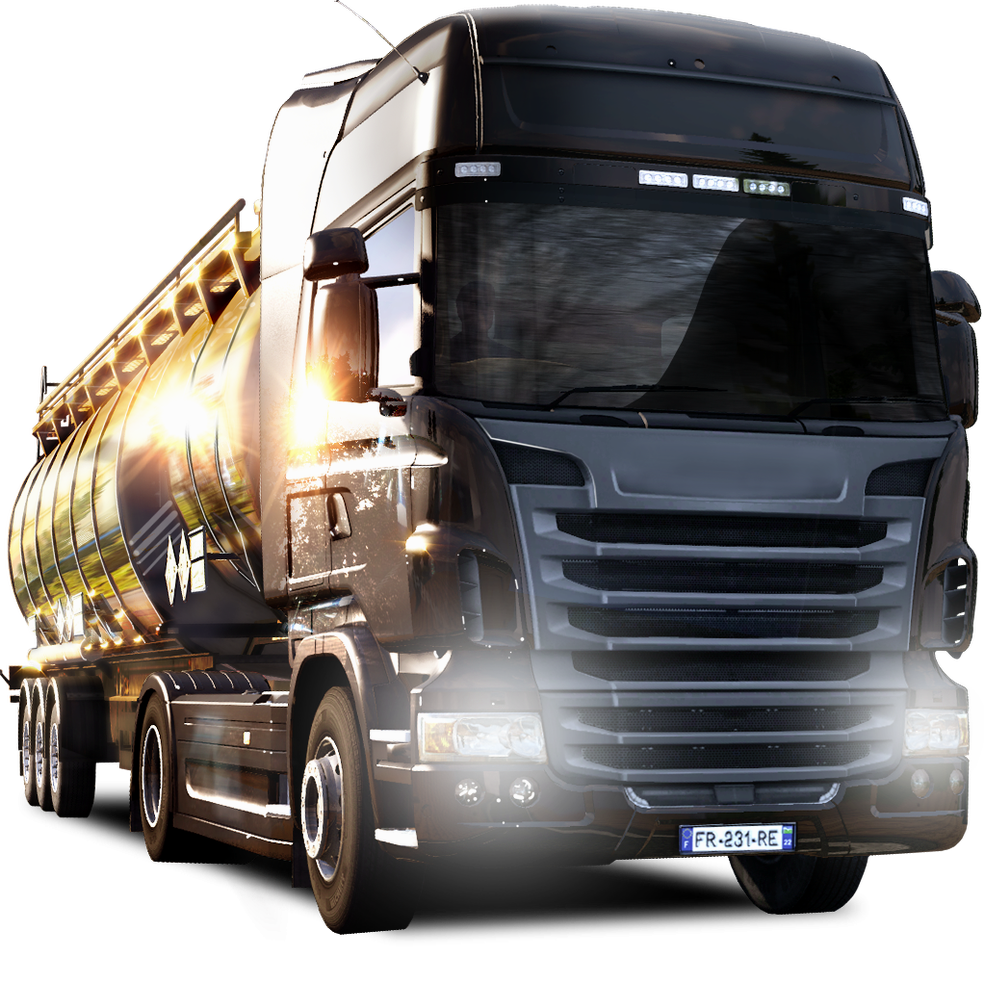
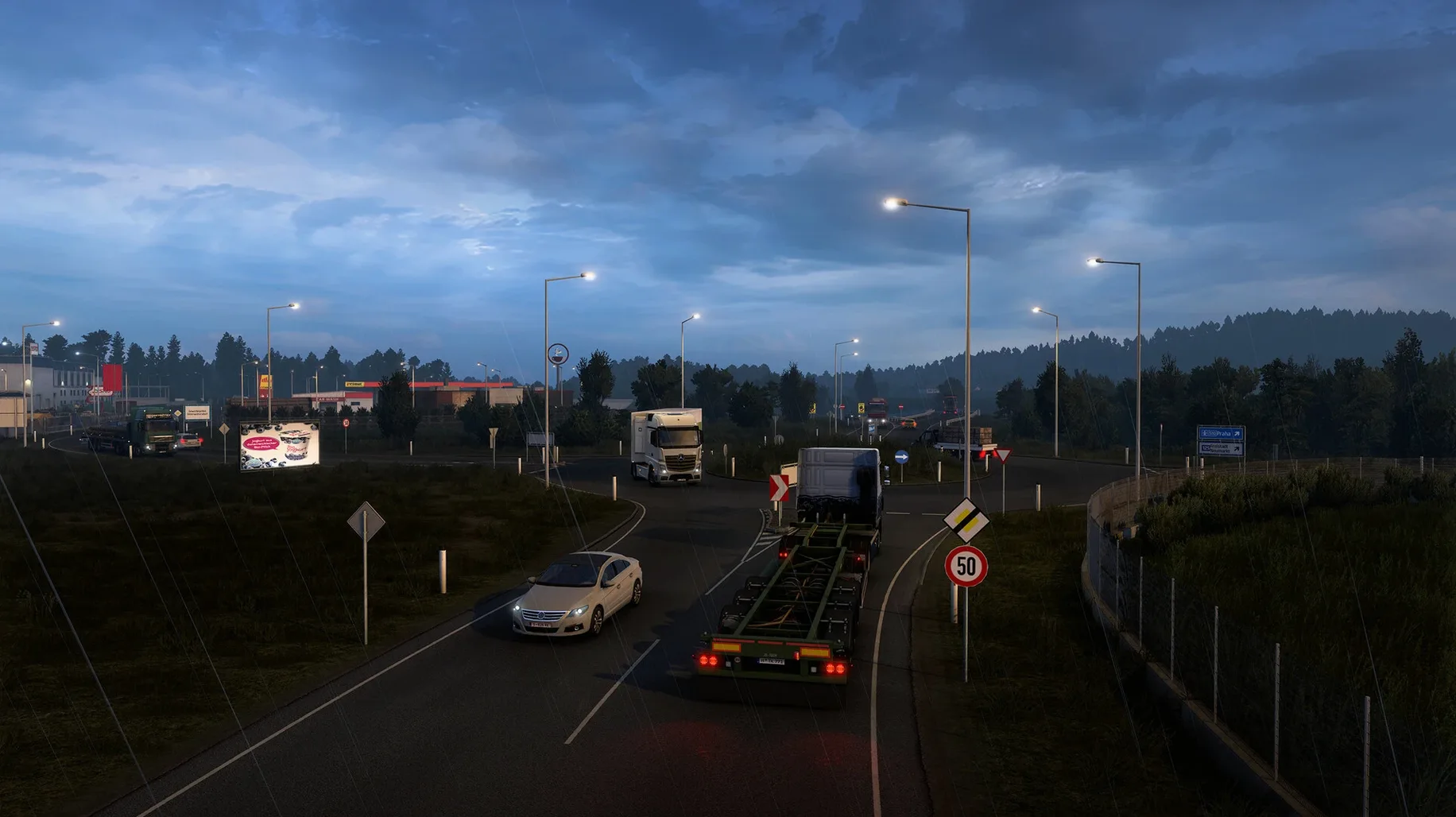
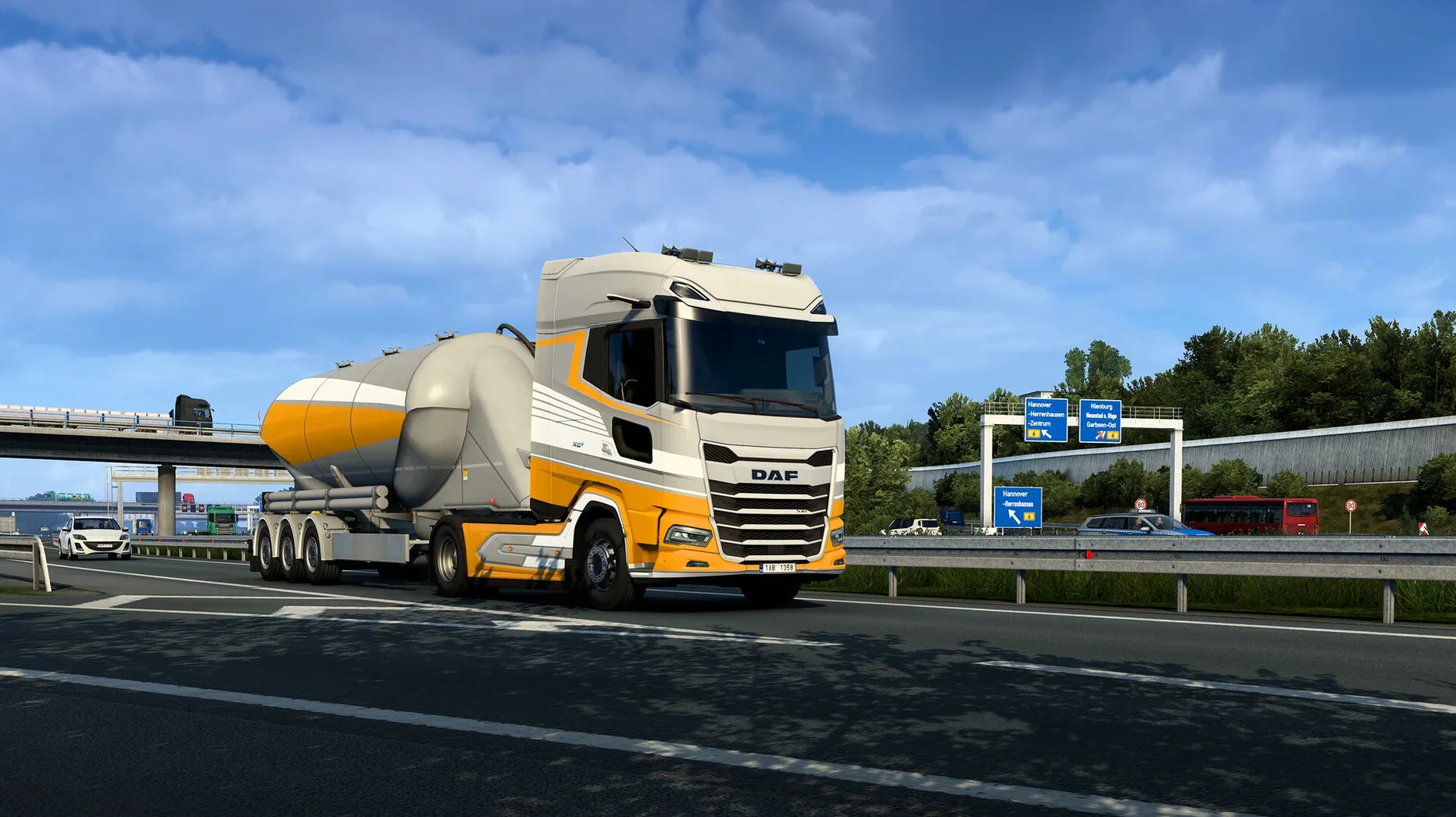
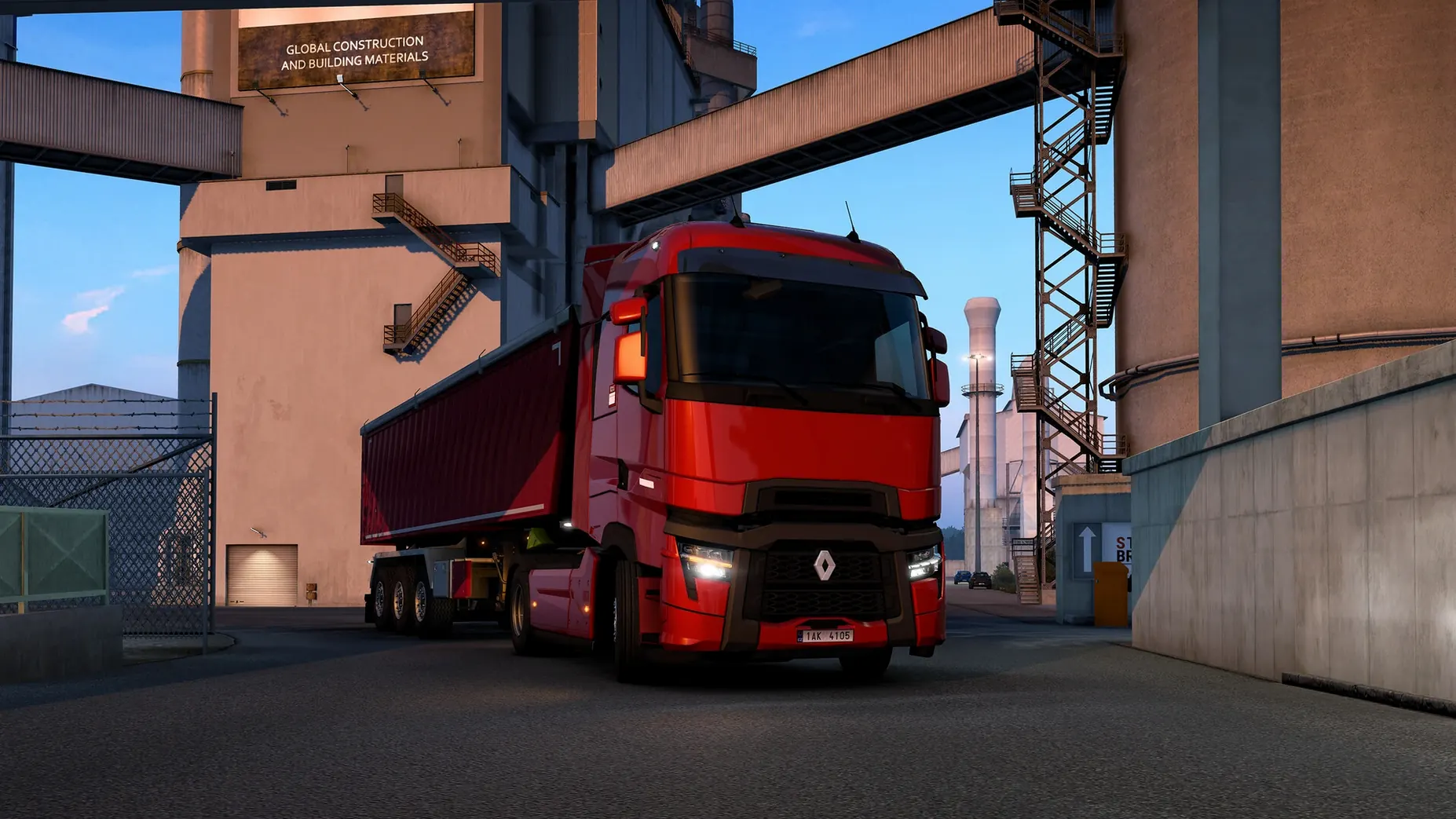
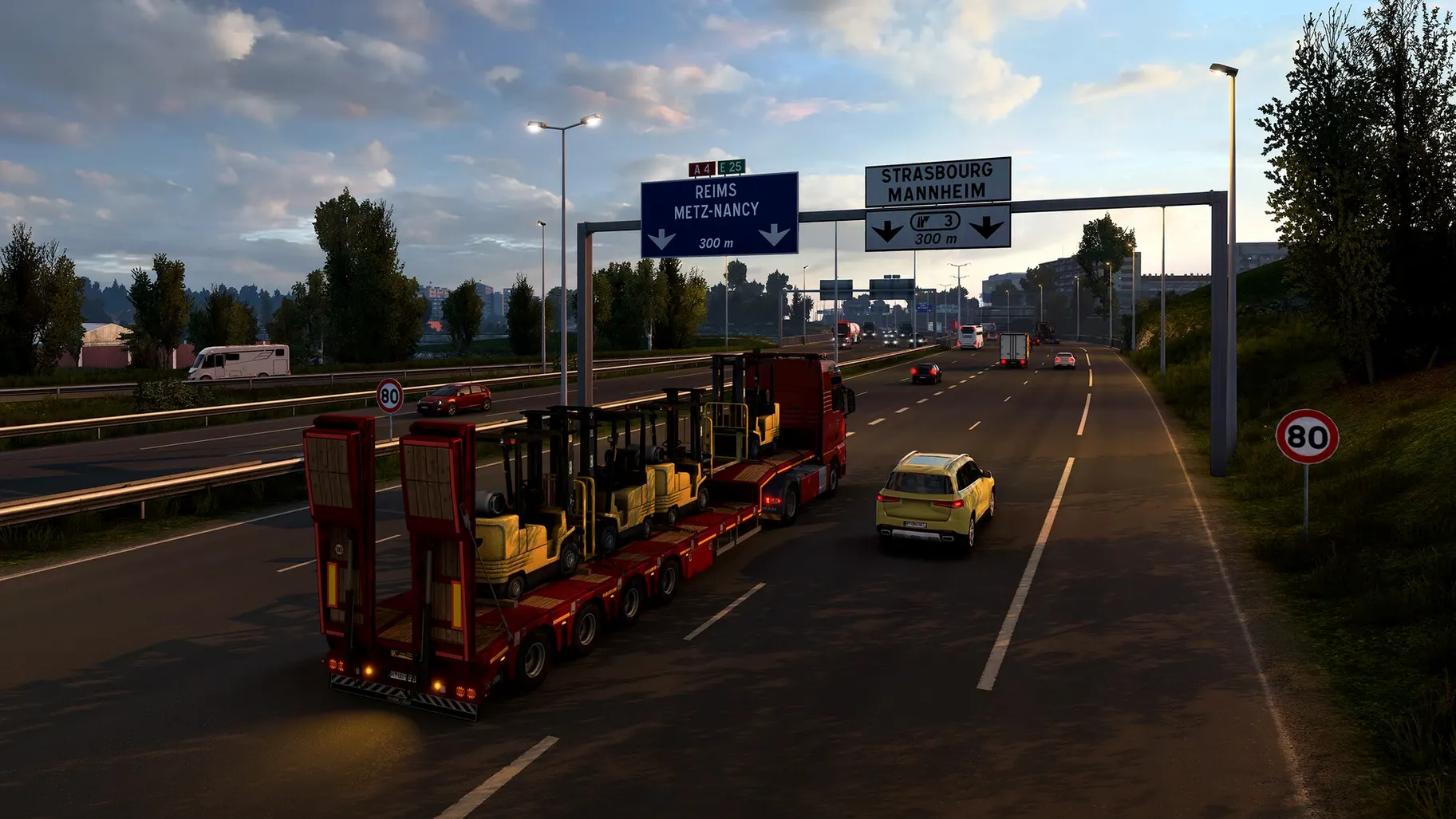
Euro Truck Simulator 2 is a freight-delivery simulation that puts you behind the wheel of an articulated lorry on a condensed map of Europe.
Players who value rhythm over reflexes
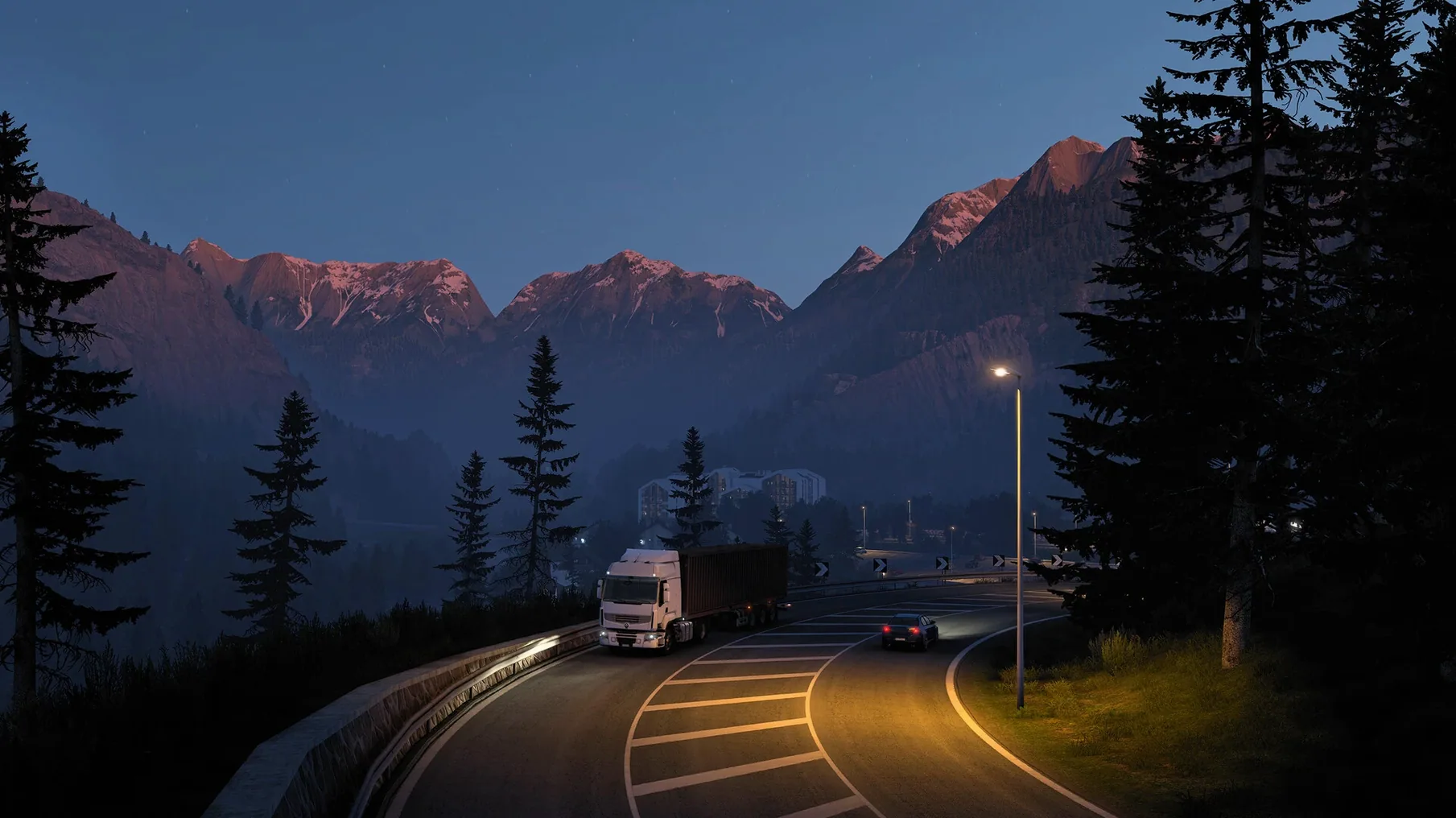
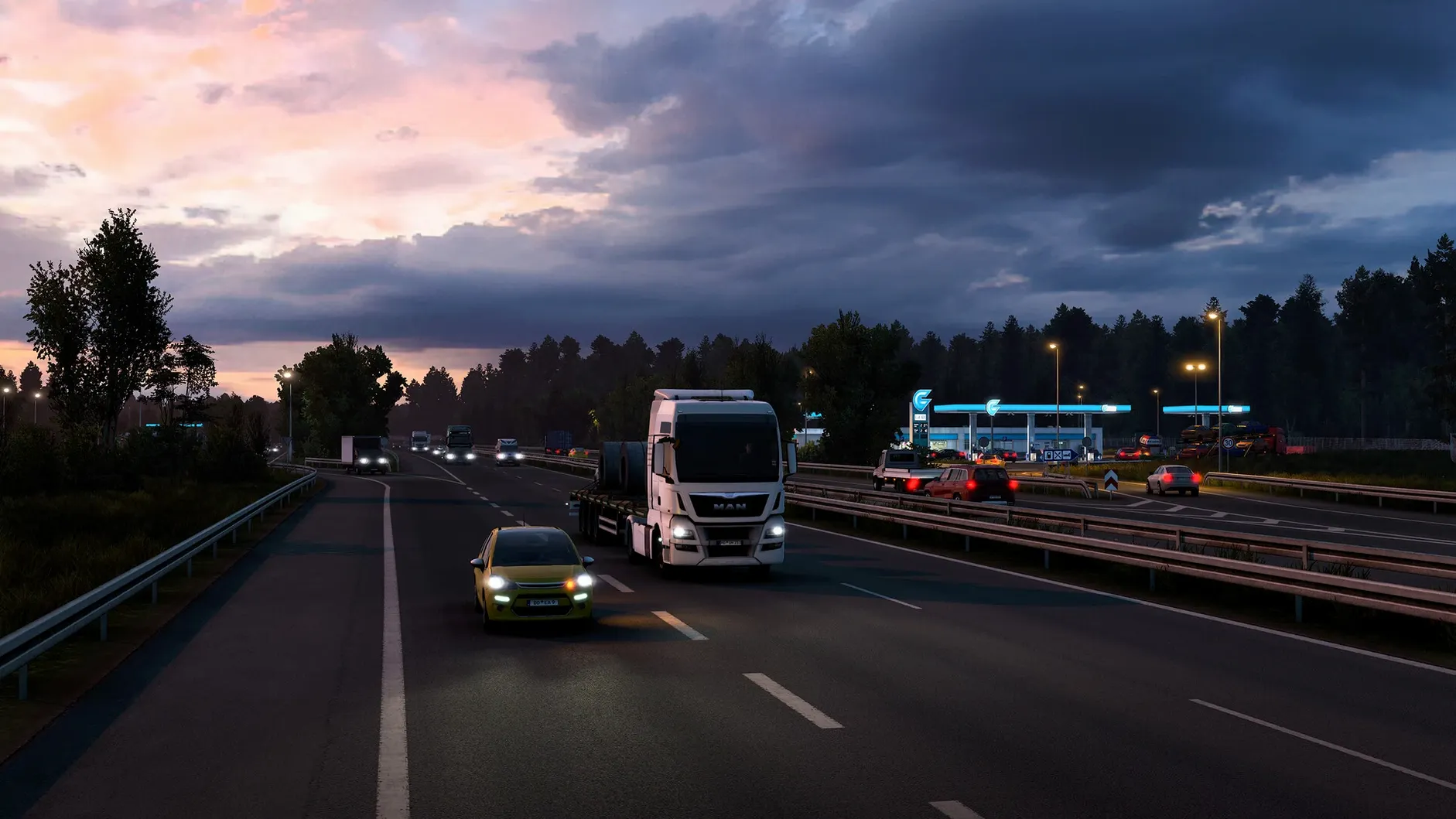
This is not a racing title. Speed limits are enforced, traffic rules matter, and the core loop asks you to reverse a trailer into a loading bay with millimetre precision. The satisfaction comes from a clean manoeuvre, not a quick lap time. SCS Software built the map around real road networks stretching for thousands of kilometres, so a single job might take a relaxed 40 minutes of motorway cruising. The voice track is music accompaniment only, leaving you with engine drone, indicator clicks and your own thoughts. That quiet, methodical pace attracts a specific kind of player: someone who finds a winding Alpine pass or a rain-slicked autobahn genuinely absorbing without a countdown clock.
Who might find the cabin too quiet
If you need a fail state sharper than a late-delivery penalty or a repair bill for a misjudged corner, the incentive structure can feel thin. The business management layer lets you buy garages and hire drivers, but it never becomes a tycoon spreadsheet. You spend most of your time watching tarmac roll under the hood. Players who want a narrative arc, character progression or direct competition will likely bounce off after a few deliveries. The game runs on 64-bit Intel Macs, and while the current version adds a reworked Livestock Trailer and the Volvo FH Series 6 100 Year Edition, the underlying simulation remains loyal to its 2012 origins: a patient, solitary experience that rewards consistency over spectacle.
Skip the Longest Haul Until You Know a Roundabout from a Repair Bill
Your first instinct might be to grab the longest, highest-paying job on the freight market and floor it toward the horizon. That approach ends with a jackknifed trailer on a roundabout in Lille, a repair bill that wipes out your profit, and a strong urge to uninstall. Slow down. Spend the first three or four in-game days on quick jobs — these give you a truck without a fuel or maintenance liability. Use them to learn how a 12-tonne rig behaves when braking downhill in the rain, because the physics does not forgive late reactions.
Pay attention to the route advisor’s distance markers long before the GPS voice would speak. The map might compress 400 kilometres of German autobahn into a 15-minute drive, but exit ramps still come up fast when you are sitting at 80 km/h in the right lane with a heavy load. Binding the camera look-left and look-right keys to easy mouse buttons or keyboard shortcuts saves you from side-swiping a Škoda during lane changes. Do this in the first hour, before muscle memory settles on bad habits.
Parking skill matters earlier than the game tells you. Automatic parking skips the hardest part of the simulation and deducts experience points you could be putting toward unlocking better-paying cargo types. Choose the manual parking option every time — even if you spend ten minutes sweating over a reverse-angle bay at a Trameri depot. The spatial reasoning you build there transfers to every other aspect of vehicle control, including navigating toll gates and squeezing through roadworks.
One overlooked early step: open the gameplay settings and disable the speed limiter for your first few quick jobs, not to speed recklessly, but to understand how the truck feels at 90 km/h versus 80 km/h on an empty motorway. Then switch it back on once you start hauling for your own company. The contrast teaches throttle discipline better than any tutorial screen.
Scroll the Dash Screen to Zoom Your GPS
Several quality-of-life features sit tucked away in menus or keybind screens where a new driver might never find them. The in-cabin GPS zoom is one — scroll the mouse wheel while hovering over the dashboard screen and you can pull the map out for a broader view of approaching junctions. On a MacBook trackpad without a physical wheel, the pinch gesture often does the same job, though sensitivity varies by macOS version.
The quick-save and quick-load keys are F5 and F9. Before attempting a blind reverse around a corner, tap F5. If the trailer ends up diagonal across two lanes and a fence, F9 resets the situation without a recovery fee or damage penalty. Experienced players use this as a practice tool, not a crutch, but it is invaluable while you learn the turning radius of a 6x2 chassis versus a 4x2.
Headlight modes go deeper than high and low beam. The F4 key opens a vehicle adjustments panel where you can toggle auxiliary lights, roof beacons and fog lamps independently. These are not cosmetic: roof beacons illuminate the edges of your trailer during a night-time reverse, and fog lamps help on unlit country roads in the UK and Scandinavia. The game models light throw physically, so a truck fitted with four extra spots makes a genuine difference on a rain-soaked rural delivery at 3 a.m.
The console command system, activated by pressing the tilde key, holds a handful of debug camera views and telemetry overlays. Typing warp 0.8 slows the simulation speed, which can help when you need to thread a wide trailer through a narrow Barcelona side street. A second command restores normal speed. No menus expose this, and the game never mentions it.
When you pick up a trailer, the cargo market screen shows a small icon for each destination’s depot type. Players who learn to recognise the Scania dealership icon versus the small, awkward EuroAcres farm entrance can avoid jobs that demand a reverse park into a tight yard before their skills are ready. The information is there; the tutorial simply never highlights it.
Three Mac Truckers and Only One Lets You Coast Through the Sierra
On macOS, the truck simulation space is narrow enough that direct comparisons are limited, but three titles sit in the same conversation.
American Truck Simulator is the obvious sibling, also from SCS Software. It runs on the same engine and shares most interface conventions. The map is smaller, covering the western United States, but the road density is higher per state. Cab-over trucks are absent — everything is a long-nose conventional, which changes the pivot point and the way you judge corners. Some players find the wider American lanes and larger depot yards more forgiving; others miss the claustrophobic challenge of a German side street. Both handle weather, traffic and fatigue identically. If you already own Euro Truck Simulator 2, the decision to add American Truck Simulator comes down to whether you prefer desert highways over Alpine passes. The engine underneath is the same, and both run on Intel Macs with comparable resource demands.
Construction Simulator 2015 shifts the focus from long-haul driving to short, precise machine operation within contained sites. You dig foundations, pour concrete, and move pallets. The truck driving it includes is functional, not detailed — gearboxes are simplified, trailer physics are forgiving, and the map does not extend beyond a few city blocks. It scratches a similar methodical itch, but the vehicle handling is a step down in fidelity. Someone who enjoys the reversing challenge in Euro Truck Simulator 2 will find the truck sections of Construction Simulator thin, while the crane and excavator work fills a different need entirely.
Farming Simulator on macOS involves more logistics than its agricultural wrapping suggests. You drive tractors, trucks and harvesters across large fields, managing crop yields, storage silos and transport runs to sell points. The truck physics are looser — steering is lighter and trailer jackknifing recovers more easily. Where Euro Truck Simulator 2 isolates the driving as the whole point, Farming Simulator wraps it in a broader economic loop of planting cycles and equipment upgrades. Players who find the pure freight focus of Euro Truck Simulator 2 too narrow sometimes prefer the variety of tasks in Farming Simulator, but they sacrifice the depth of the road network and the fidelity of the cab interiors for that breadth.
18 Seconds to the Cab on an Intel Mac with an SSD
On an Intel Mac, the game loads a fresh profile in roughly 18 to 25 seconds from an SSD, depending on map expansion count. Frame rates sit comfortably above 30 fps at 1080p with medium settings on integrated graphics from the 2018–2020 era. Scaling to 1440p on a dedicated GPU pushes that toward 50–60 fps in rural areas, though dense city centres — especially the rebuilt Austrian and German cities — can dip into the low 40s when traffic density is set high and rain is active. The engine is single-thread heavy, so a CPU with strong per-core performance matters more than core count.
Stability under version 1.61.1.1s has been uneventful across several consecutive long-haul sessions. No mid-job crashes occurred during testing on a Mac with macOS Tahoe. The only reproducible quirk involves waking the Mac from sleep while the game is paused: occasionally the audio engine loses its output device mapping, requiring a trip to the sound options panel to reselect the correct output. A restart is not necessary.
RAM usage hovers around 2.8–3.4 GB on a machine with 8 GB total, leaving headroom for background apps. The game does not leak memory in a way that degrades performance over multi-hour stretches — a session lasting six hours with multiple ferry crossings, garage purchases and driver hiring showed no creeping memory increase beyond the initial allocation. Disk space is another matter: with map expansions installed, the folder can exceed 12 GB, and the base game alone occupies roughly 6 GB after the drag-to-Applications installation.
A €400,000 Loan on Day One Means Payments Before Your First Diesel Receipt
The most common early error is treating the in-game loan system as free money. Borrowing €400,000 on the first day looks like a fast track to a fleet of trucks, but the daily repayments begin immediately and they do not pause when you damage cargo or take a wrong exit. A new player who finances three trucks and two garages before learning to reverse often finds the bank balance draining faster than the hired drivers can earn. Start with one garage, no loan, and only expand when the first hired driver has paid for their own truck out of revenue. The game simulates compound pressure quietly, and a negative balance locks you out of fast travel and fuel until you take another quick job to stabilise things.
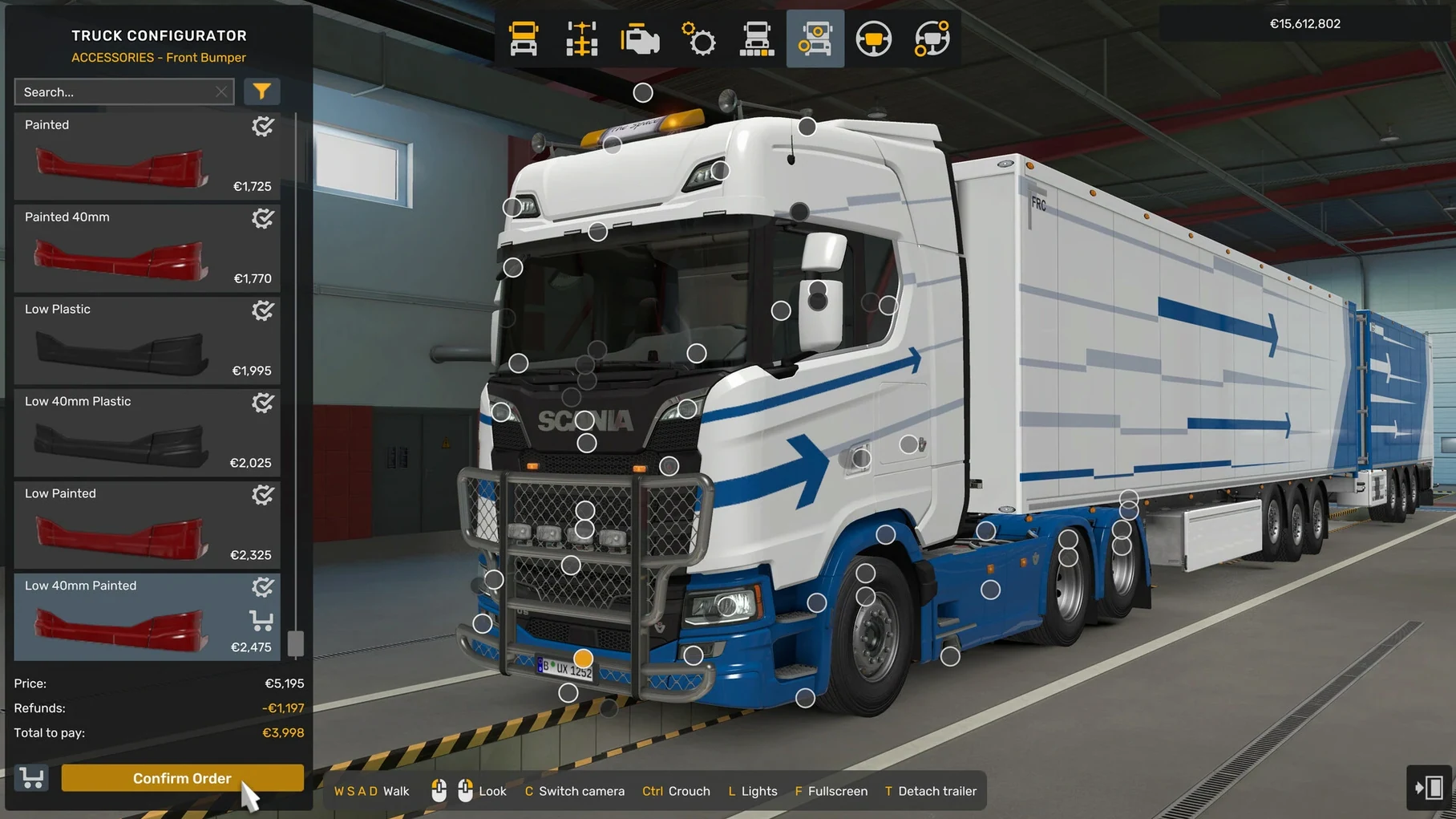
Another early mistake is ignoring the truck configuration menu’s chassis-length option. A 6x4 chassis with a long wheelbase looks impressive and handles heavy cargo better on hills, but it turns like a ferry and catches kerbs on tight urban corners. Beginners who spec a long chassis for their first owned truck spend their first ten deliveries mounting pavements in Amsterdam and scraping barriers at toll plazas. Start with a 4x2 and move up when the tightest depots no longer intimidate you.
Fatigue management catches people out. The game warns you with a dozing-off visual effect and a yawn sound cue, but new players often push for another 50 kilometres to reach the delivery point and end up in a guardrail because the screen blacks out for a second at highway speed. The rest stops are spaced realistically on motorways, which means sometimes the nearest one is 30 kilometres behind you when the first warning hits. Learn to check the route advisor for rest-stop icons before accepting a long job and plan a stop that aligns with your remaining driving hours.
Finally, many beginners overlook that garage placement matters for driver productivity. A garage in a peripheral city like Aberdeen or Palermo generates fewer return jobs for your AI drivers than one in a central hub such as Frankfurt or Lyon. The difference is not explained in the game, but drivers assigned to poorly connected cities produce 15–25 % less revenue per in-game week simply because they deadhead more often. The freight market simulation runs in the background, and geography is part of the logic.
Proximity Exploration — Automatically reveals a small area around the vehicle while driving.
Volvo FH Series 6 100 Year Edition — New truck model added.
Improved Material System — Applied to selected trucks.
Livestock Trailer — Complete visual and functional rework.
- Architecture: 64-bit Intel
Sign in · Create an account to add a field note.
No field notes yet. A measurement, a version, a machine — they appear after moderation.