
Games
Little Witch in the Woods 7.3.3.0
GamesUpdated

| Requirement | On file |
|---|---|
| macOS | See the sheet |
| CPU | Apple Silicon, Intel 64-bit |
| Download | 657 MB |
| Tested on | macOS Tahoe, Mac mini 2024 M4 |
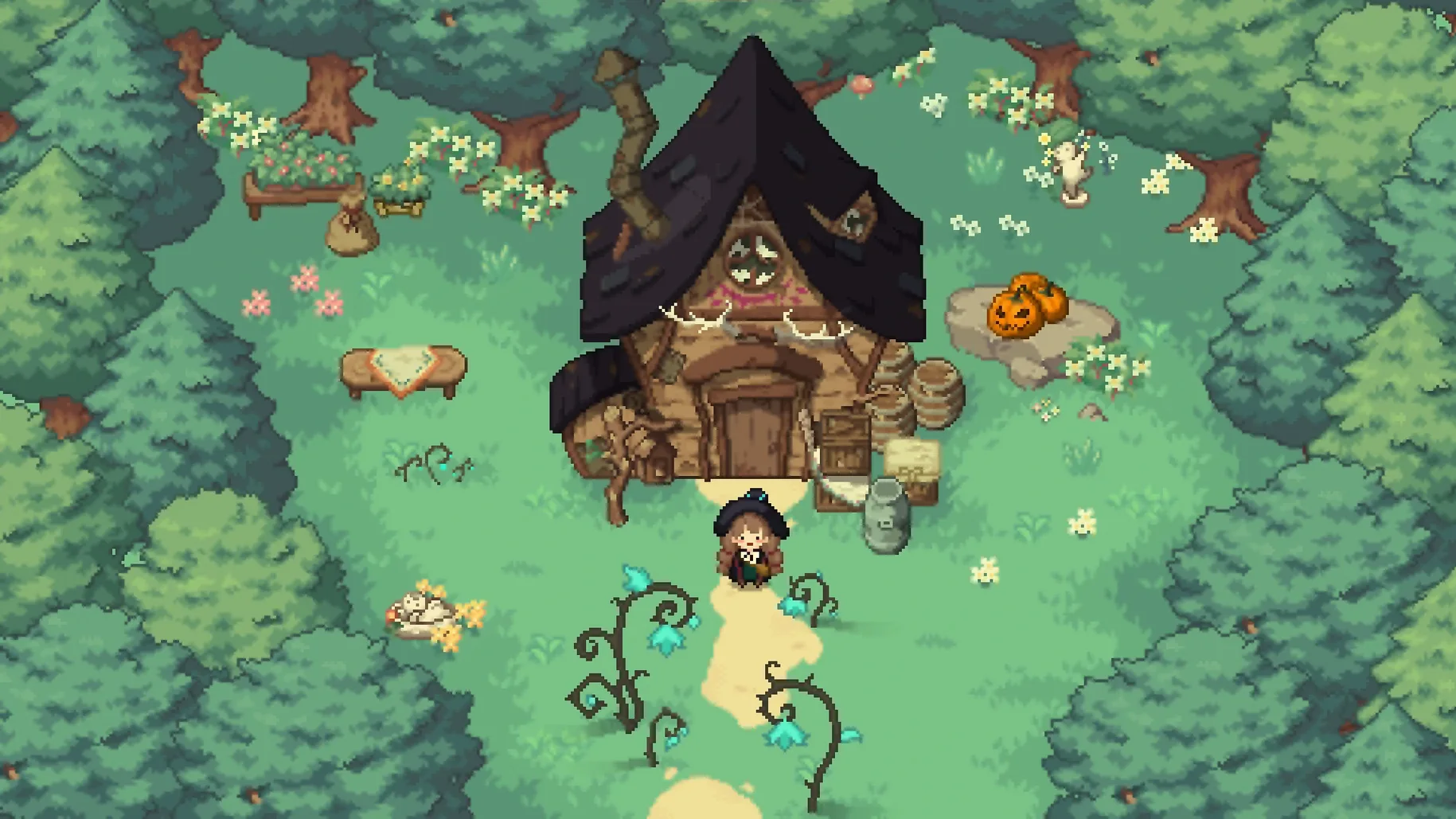
Ellie wakes in her cramped room inside an old Witch House. The morning light shows a to-do list pinned to the wall: collect three moonlace blossoms, brew a calming draught for the baker, and figure out why the bridge to the eastern woods has collapsed. You click on the door and step outside. The village is quiet. A grey cat sits near the well, and clicking on it opens a short conversation — cats here talk, and they often point you toward side tasks or hidden spots.
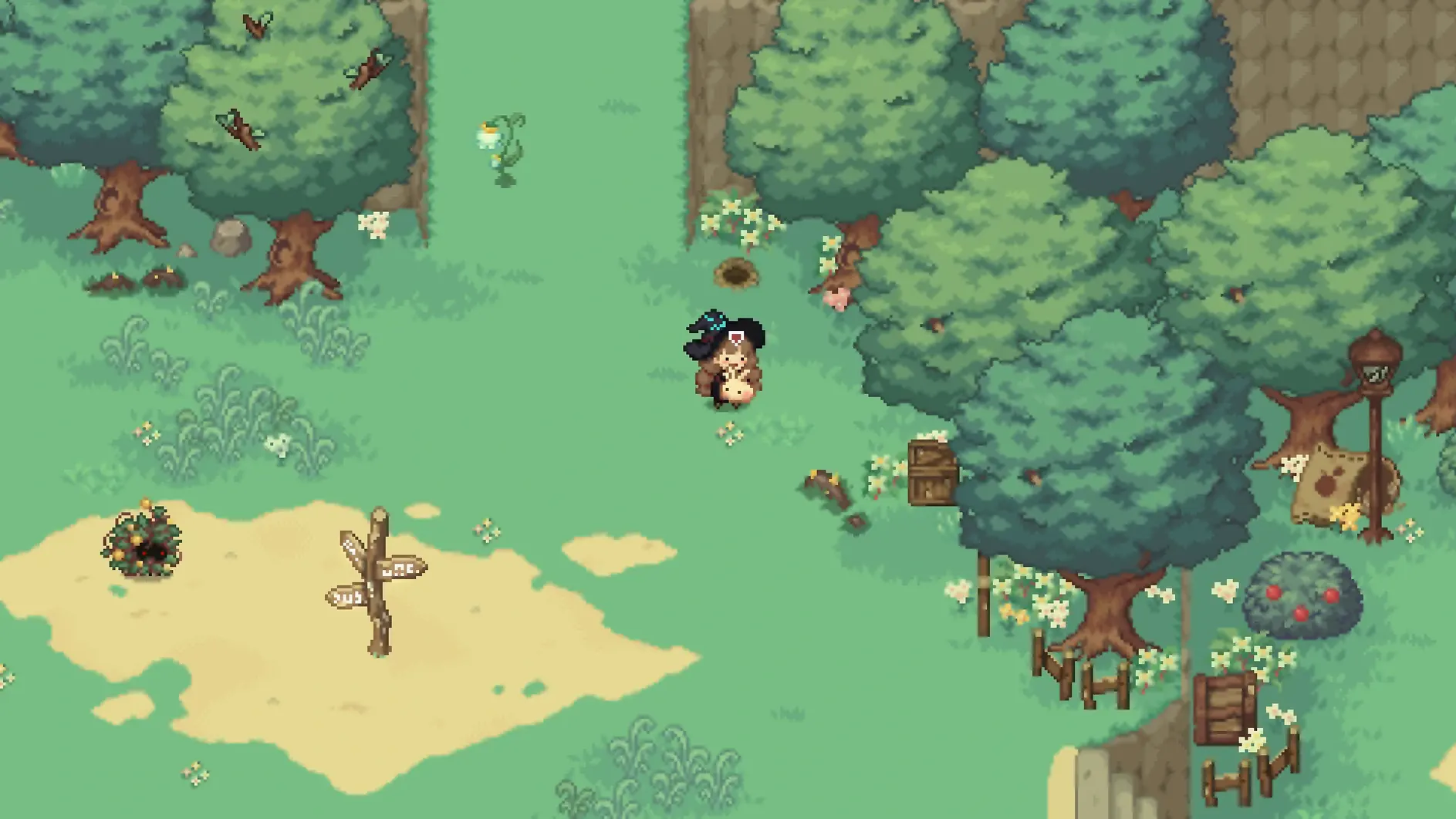
Minute to minute, the loop is methodical. You walk along dirt paths into different biomes, tapping the interact key on bushes, rocks and water edges. Foraging finds you herbs and berries. Fishing uses a short timing minigame — cast near a ripple, wait for the tug, then tap to reel. Every new creature or plant you discover gets a page in your witch’s book, which fills with Ellie’s hand-drawn notes about habitat and uses. The book isn't just flavour; checking it is how you learn which ingredient cures a villager’s headache or which mushroom opens a locked path.
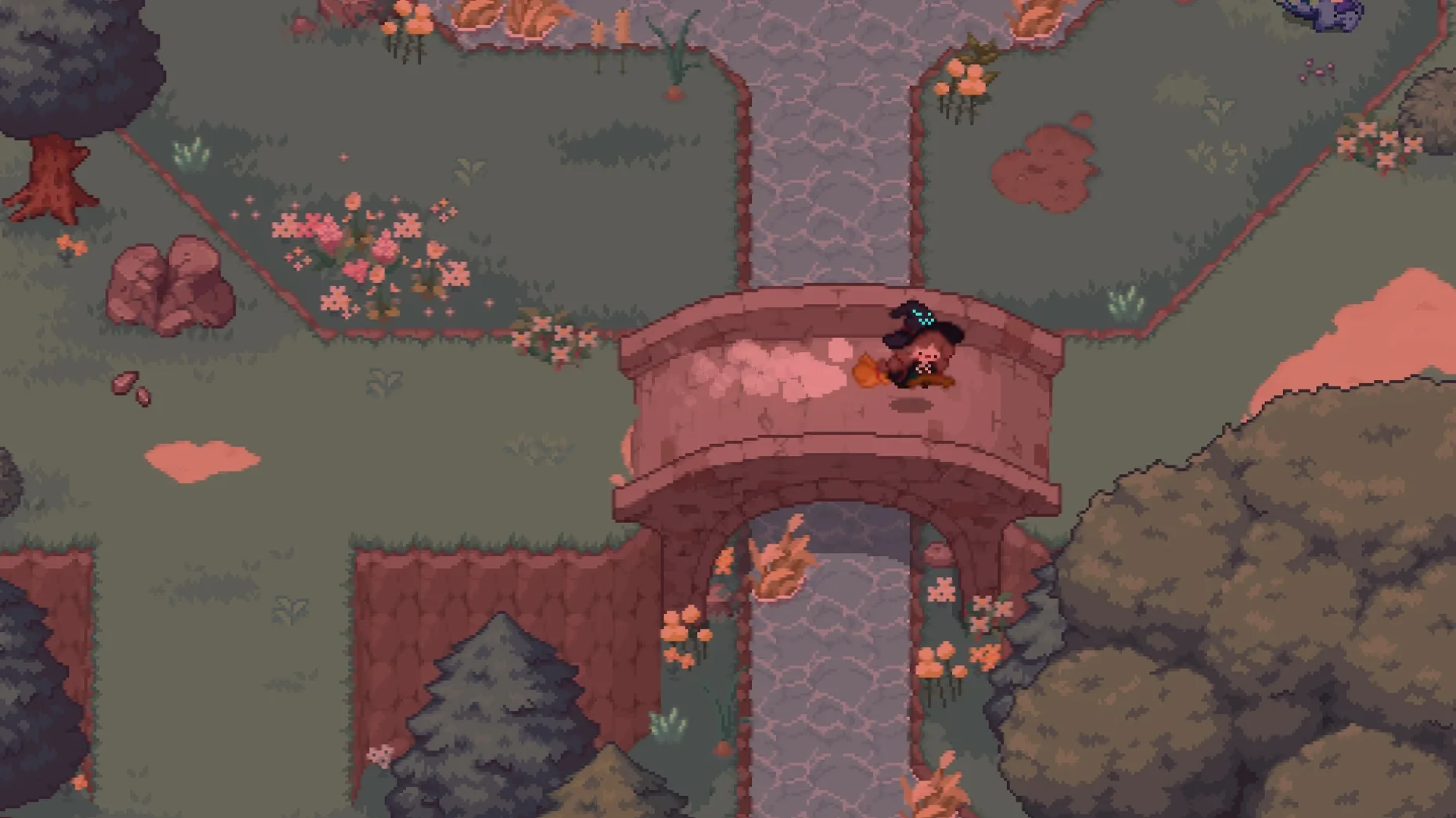
Between errands, the game rewards poking at odd corners. A waterfall hides a cave with a rare moss. A crumbling wall in the old square is actually a shortcut to the mill. The map is compact but layered, so a ten-minute session might net you three ingredients, one cat conversation and a new notebook entry. There is no combat pressure. Progress comes from brewing the right potion for the right person, which slowly repairs the Witch House and improves the village.
A Quiet Second Home, Not a Race
Players who treat a game as a quiet second home rather than a challenge to beat will feel the strongest pull here. The game doesn't hurry Ellie and it doesn't hurry you. Collecting and cataloguing sit at the centre — if you are the kind of Mac user who keeps a real notebook for Stardew Valley crop rotations or labels every chest in an RPG inventory, the witch's book mechanic will click immediately. The pleasure is in the small gains: a new creature entry, a potion that unlocks a blocked path, a character who trusts you a little more than yesterday.
It also suits anyone who plays in short, irregular bursts. A fifteen-minute session can mean gathering three ingredients, brewing one potion, and chatting with a single villager. The map compresses its points of interest tightly enough that you rarely spend long stretches just walking. Players on Apple Silicon Macs benefit from solid idle thermals — the game barely spins up the fans on an M-series machine, so it works well for lap play or a quick break between tasks.
Comfort-game seekers and players drawn to witch-themed fiction will find the tone pitched exactly where they want it: cosy, low-conflict, built around care rather than conquest. The friendship system works like a slow drip of character writing — each new heart level with a villager opens a small scene, a fragment of backstory, or a side errand that adds texture to the village.
A Session from the Baker's Side
Imagine a player who has spent a few real-world days learning the rhythm of the village. They log in with a specific goal: the baker mentioned insomnia, and they suspect a moonlace draught will help. The recipe calls for moonlace blossoms (found near the old fountain at dusk), powdered sleepwort (tucked behind the mill's waterwheel), and a clean water phial. They leave the Witch House at sunset — timing matters, because moonlace only appears in low light. On the way, they detour past the well to speak with the grey cat, who offhandedly mentions a strange glow near the collapsed bridge. That tip leads to a hidden grotto with a rare luminescent mushroom, which in turn suggests a future potion for the carpenter's fogged spectacles. The player notes it mentally, gathers the moonlace, brews the draught back at the cauldron, and delivers it to the baker. The next morning, the baker's dialogue changes and a new recipe appears on her counter. One small potion has rippled outward into a new lead, a new item, and a slightly warmer village.
Beginner Mistakes Worth Knowing
New players often treat the witch's book as a passive log. It is not. The book is the game's instruction manual — creature behaviour, potion effects, ingredient locations, and seasonal availability all sit inside its pages. Skipping it leads to the first common mistake: brewing potions from memory or guesswork, then wondering why a villager refuses the result. Open the book, check the target's symptoms against the remedy list, and match ingredients deliberately.
A second trap is ignoring the cats. Because they sit off the main quest path and never demand attention, it is easy to walk past them for hours. Doing so locks away clues about hidden shortcuts and rare spawn points. Speak to every cat you see — their dialogue changes across time of day and story progress.
The third mistake involves fishing impatience. Ripples on the water are the only visual cue for a catchable spot, and tapping the key before the tug wastes the cast. Wait for the controller vibration or the audio cue, then a single tap sets the hook. Scattered around the map are fishing holes that look identical to empty water but hold unique alchemy ingredients found nowhere else. Mark them mentally when you stumble on one.
- Intel and Apple Silicon Macs
Sign in · Create an account to add a field note.
No field notes yet. A measurement, a version, a machine — they appear after moderation.