
Games
Sultans Game 2026.08.13
GamesUpdated
| Requirement | On file |
|---|---|
| macOS | See the sheet |
| CPU | Apple Silicon, Intel 64-bit |
| Download | 705 MB |
| Tested on | macOS Sequoia, Mac mini 2020 M1 |
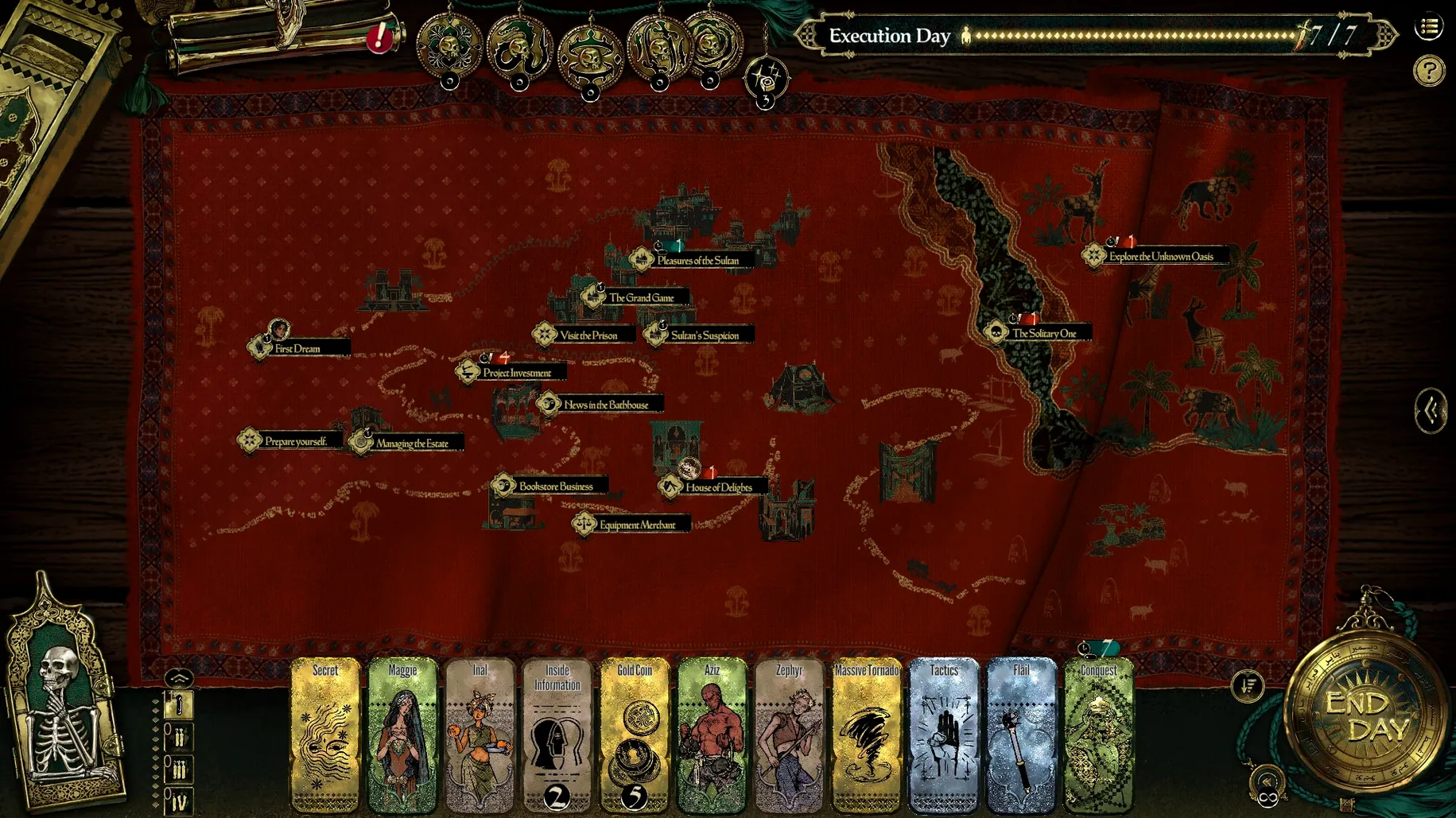
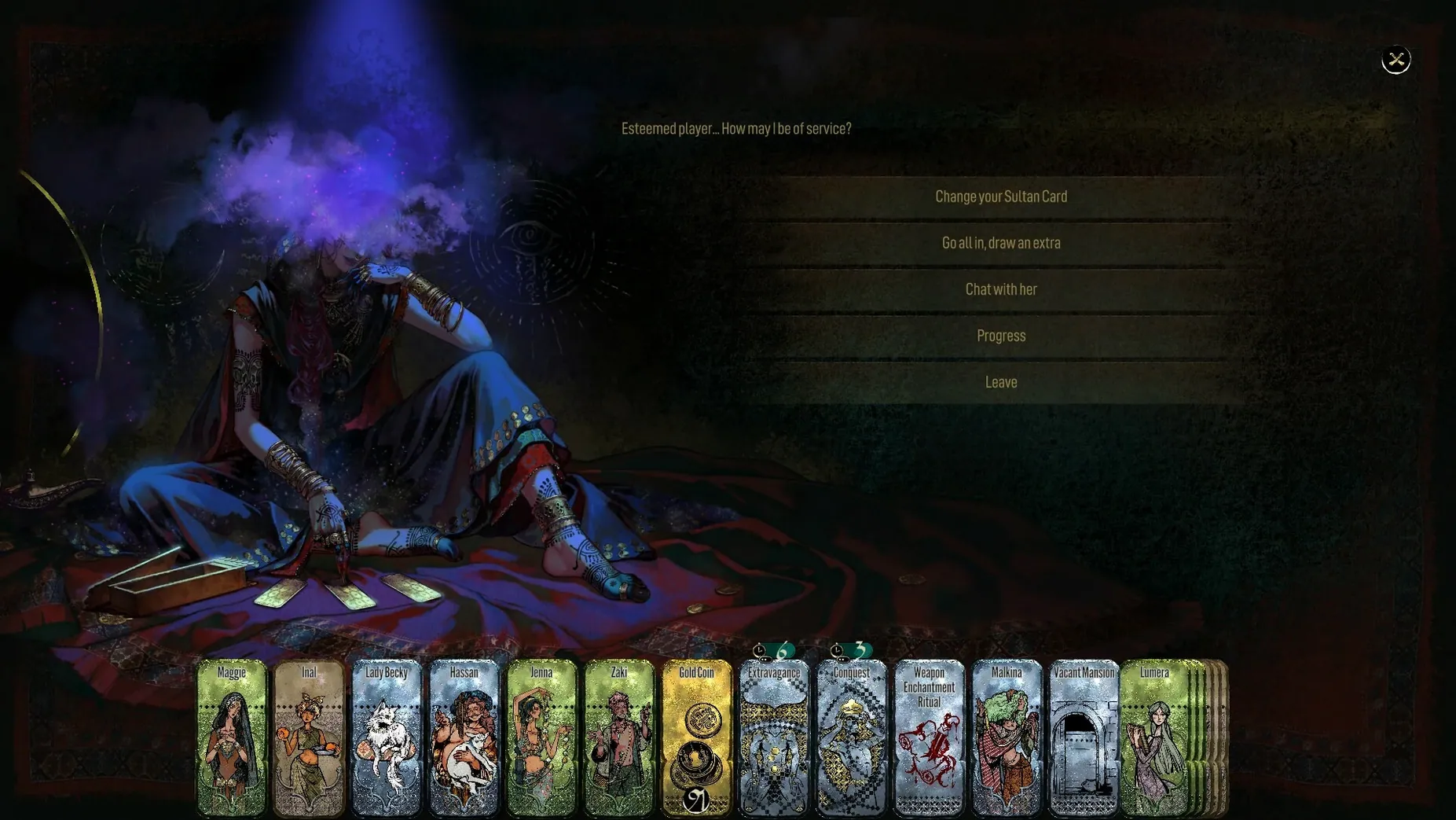
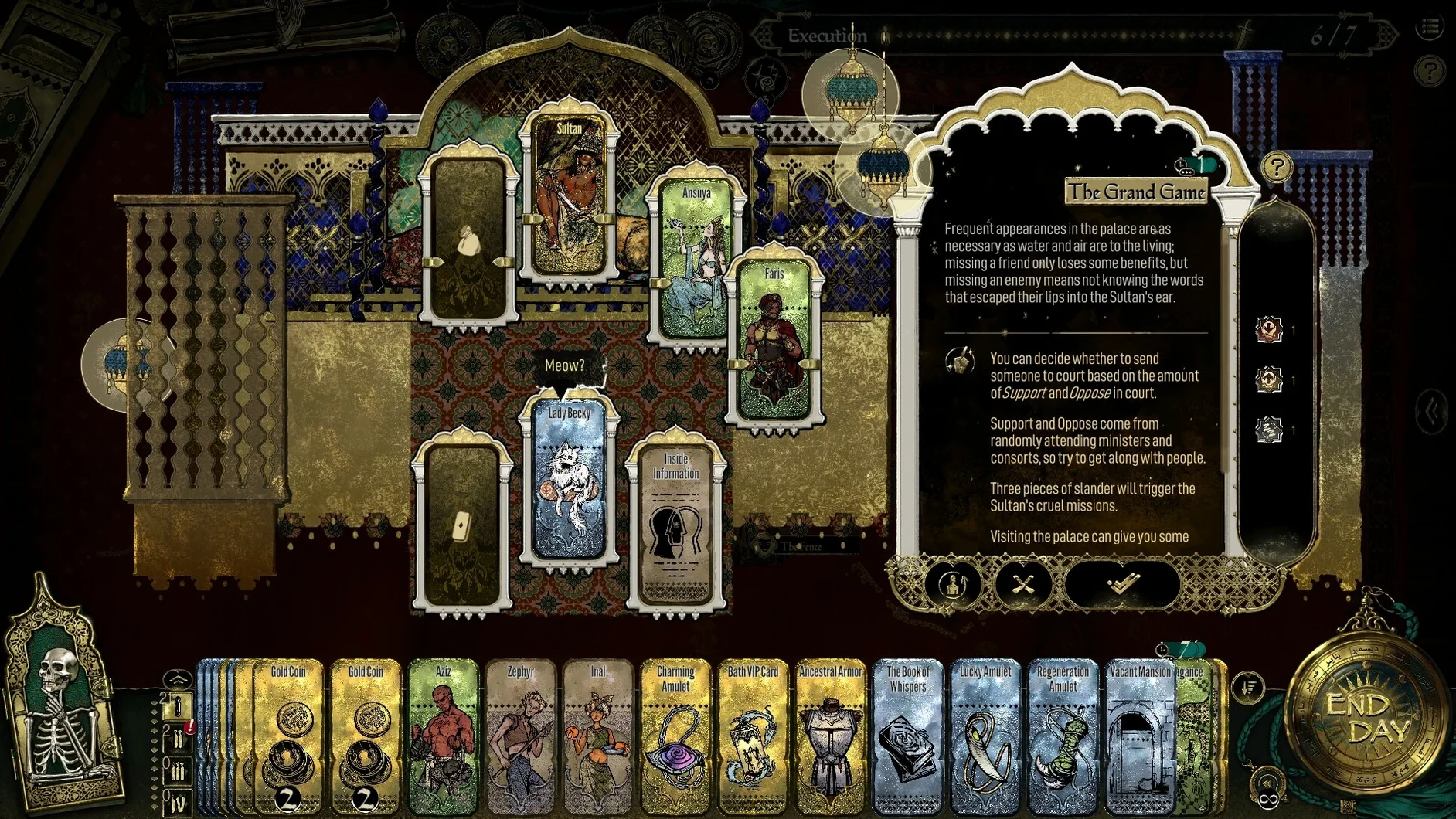
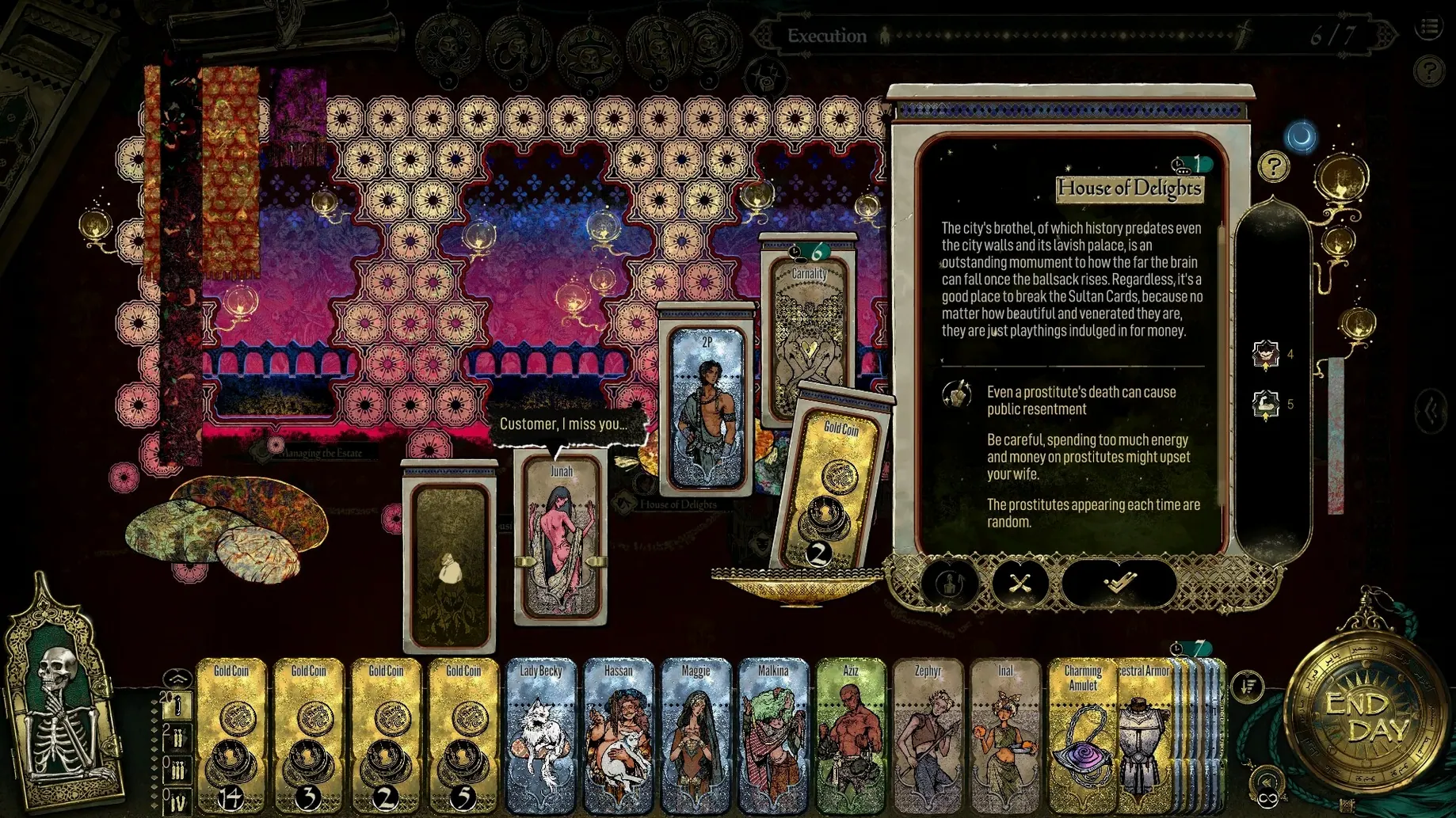
A drawn Flesh card means someone is about to lose a limb—or worse. The Sultan's Game is a card-based strategy RPG where a cruel ruler forces you into a lethal contest of resource and nerve.
Flesh — Cards that deal in physical harm, torture, or execution. Drawing one can dismantle your court or your body.
Luxury — Cards of opulence and excess. They let you collect wealth to buy influence, but indulgence has its own price.
Conquest — Military and territorial cards. Use them to gather equipment and project power, or risk overreach.
Blood — Cards of intrigue and sacrifice. They trade life for information, opening paths that other decks keep hidden.
Runs — Each play-through shuffles the Sultan's card order randomly. No two sessions follow the same sequence, which pushes you to adapt rather than memorise a single winning route.
Endings — Multiple conclusions branch from your choices. The narrative reacts to the resources you hoard and the alliances you break, drawn from a setting inspired by One Thousand and One Nights.
A Vizier’s Week: Running a Flesh Card
Here is a concrete seven-day turn plan for a drawn Flesh card with a torture demand. The goal is to satisfy the card without losing a key ally. The court currently holds a spymaster with +2 information gain, one indebted merchant, and a small equipment stockpile.
- Day 1 — Assess. Read the Flesh card’s exact wording. This one demands bodily harm to a court member or a prisoner. The spymaster is too valuable. The merchant can absorb a -1 loyalty hit but not a permanent injury. The dungeon has no prisoners. Action: spend an information action to search the city for a disposable target.
- Day 2 — Gather intel. The information action returns a lead on a disgraced guard hiding in the lower quarter. Assign the spymaster to confirm the target’s location. Cost: one action card, no resource drain.
- Day 3 — Secure equipment. The Flesh card requires an instrument of harm. Use a Conquest action to trade one equipment token for a set of restraints and a branded blade. The merchant supplies the token at no loyalty cost, owed a favour later.
- Day 4 — Deploy allies. Send two court guards (low-tier muscle) to capture the disgraced guard. The spymaster’s intel gives a +1 success modifier. The capture succeeds without alerting the city watch.
- Day 5 — Execute the card. Apply the Flesh demand to the prisoner. The card requirement is met. No court member loses health or loyalty. The Sultan’s approval gauge rises by one notch.
- Day 6 — Manage fallout. Word of the act spreads. A visiting diplomat expresses quiet distrust. Spend a Luxury action — gift a silk bundle from the merchant’s stock — to smooth relations. The diplomat stays neutral.
- Day 7 — Prepare next draw. Bank leftover information points. Rest the spymaster. Check equipment levels. The next card could be Blood, and the court needs every edge.
Mistakes That Sink New Viziers
Beginners tend to treat Sultan’s Game as a pure card battler, ignoring the narrative weight of each decision. The most common missteps cluster around resource pacing and ally management.
- Hoarding action cards. Unused cards do not carry over between weeks. Holding a strong Conquest action for a hypothetical threat means you lose the chance to build equipment early, leaving you defenceless when a Blood or Flesh card arrives.
- Treating all NPCs as permanent. Allies can die, flee, or betray you. Assigning a favourite character to a high-risk task without a backup plan often leads to a cascading collapse in later turns — especially if they were your only information source.
- Ignoring the Luxury track entirely. Some players see Luxury as optional flavour. In practice, wealth buys time and forgives diplomatic blunders. A court with zero Luxury actions banked will struggle to recover from a single failed Conquest roll.
- Memorising one “optimal” route. The random card order makes fixed strategies brittle. A player who always rushes equipment falls apart when the first three draws are Flesh, Flesh, Blood. Adaptability matters more than rote sequencing.
- Undervaluing information. Information actions reveal card modifiers, hidden NPC motives, and alternative completion paths. Skipping them to save time leaves you blind to options that could spare a life or a limb.
Everyday Changes in Recent Builds
Version 2026.08.13 carries a handful of refinements that alter the feel of day-to-day play. The developer has not published a formal changelog, but the shifts are visible in session flow and interface behaviour.
Card queue visibility. Earlier builds obscured the upcoming Sultan card until the draw moment. The current version shows a faint glimpse of the top card’s suit symbol one day before it activates, giving a narrow but meaningful planning window. This reduces the number of blind-resource dumps and rewards players who check the court calendar each turn.
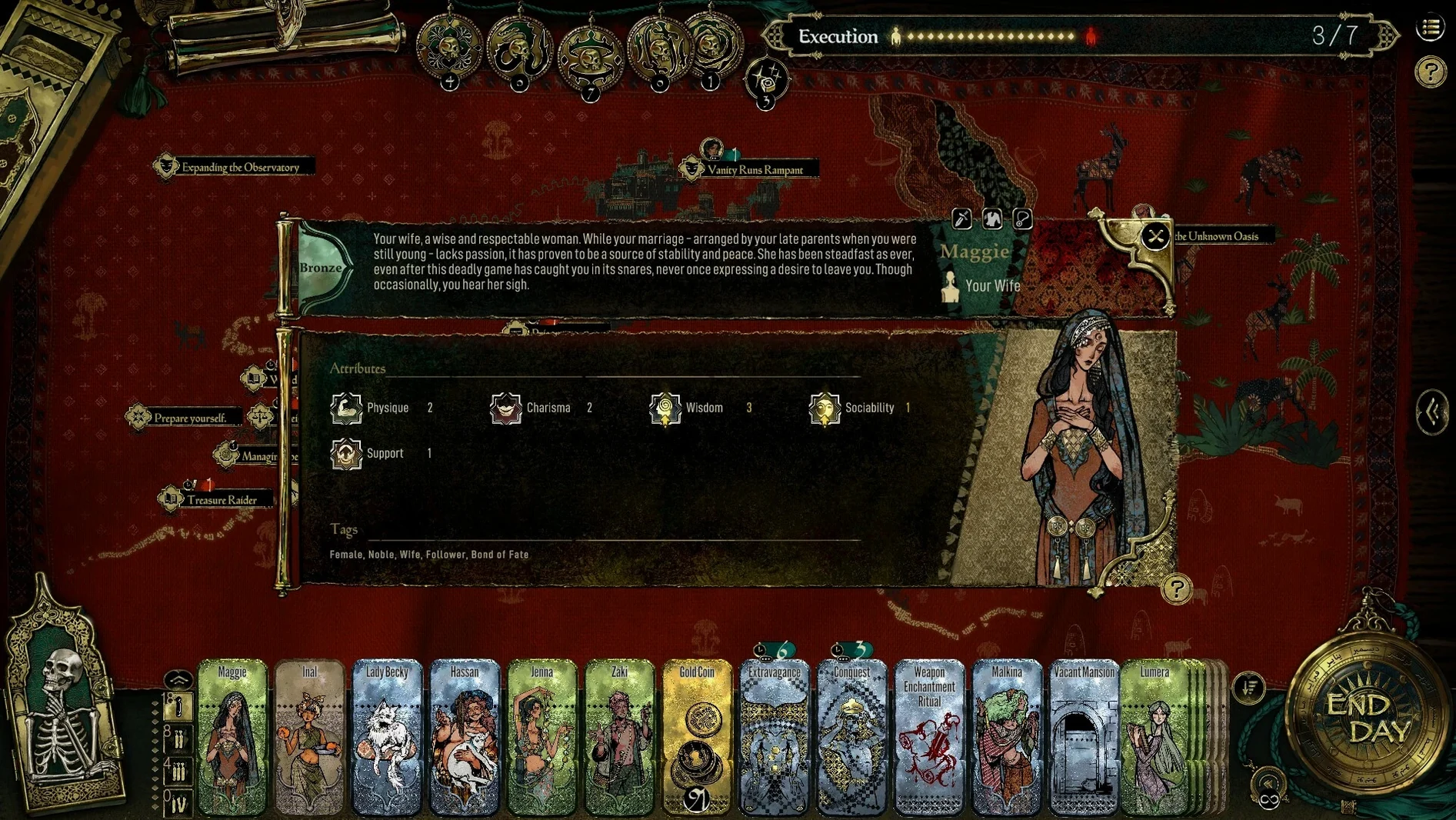
Ally loyalty tracking. A small UI addition now displays loyalty thresholds as a segmented bar beneath each ally portrait. Previously, loyalty was a hidden integer; players estimated it from dialogue tone. The bar does not reveal exact numbers, but it shows four stages — Devoted, Loyal, Wavering, and Treacherous — which makes the consequence of a harsh order more readable without stripping the tension.
Performance on Apple Silicon. The ARM build shows improved load times between scenes on M-series Macs. Transition stutters that plagued the 2025 launch version on M1 hardware are largely absent. The game also resumes from sleep reliably on macOS Sequoia, a fix that matters for players who pause mid-run and close the lid.
- macOS (tested on macOS Sequoia)
- Supports ARM (Apple Silicon) and 64-bit Intel architectures
- Tested on Mac mini 2020 M1
Questions on file
What languages does Sultan's Game support?
The interface is available in English, Traditional Chinese, Simplified Chinese, and Japanese. Voice content is listed as music only.
What card types are in the game?
The four card types are Flesh, Luxury, Conquest, and Blood, each governing a different resource and risk domain.
Sign in · Create an account to add a field note.
No field notes yet. A measurement, a version, a machine — they appear after moderation.