
Games
WorldBox - God Simulator 0.51.2
GamesUpdated
| Requirement | On file |
|---|---|
| macOS | See the sheet |
| CPU | Intel 64-bit |
| Download | 452 MB |
| Tested on | macOS Tahoe, Mac mini 2024 M4 |
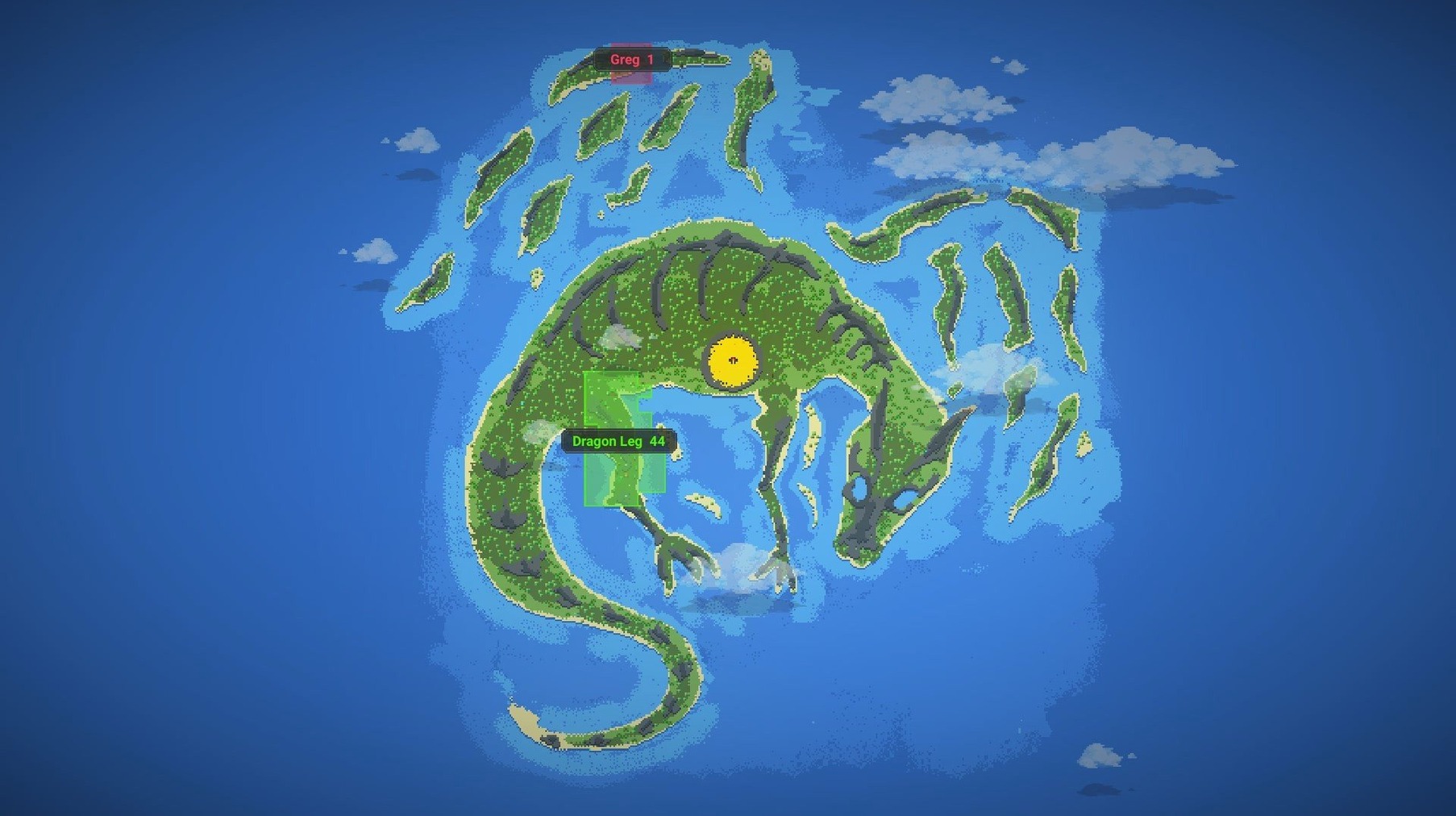
If you have ever left a simulation running just to see what breaks, WorldBox occupies a similar headspace. It is a sandbox god simulator from developer Maxim Karpenko, built around procedural worlds that you can shape with a set of powers that cost no mana and impose no resource limits. The question is less "can I do this" and more "what happens if I do".
| Detail | Spec |
|---|---|
| Current version | 0.51.2 fix |
| Release date shown | 2021-12-03 |
| Architecture | Intel Macs |
| Languages | 25, including Russian, English, German, Arabic, Hungarian, Vietnamese, Greek, Danish, Spanish, Italian, Simplified Chinese, Korean, Dutch, Norwegian, Polish, Portuguese, Romanian, Thai, Turkish, Ukrainian, Finnish, French, Czech, Swedish, and Traditional Chinese |
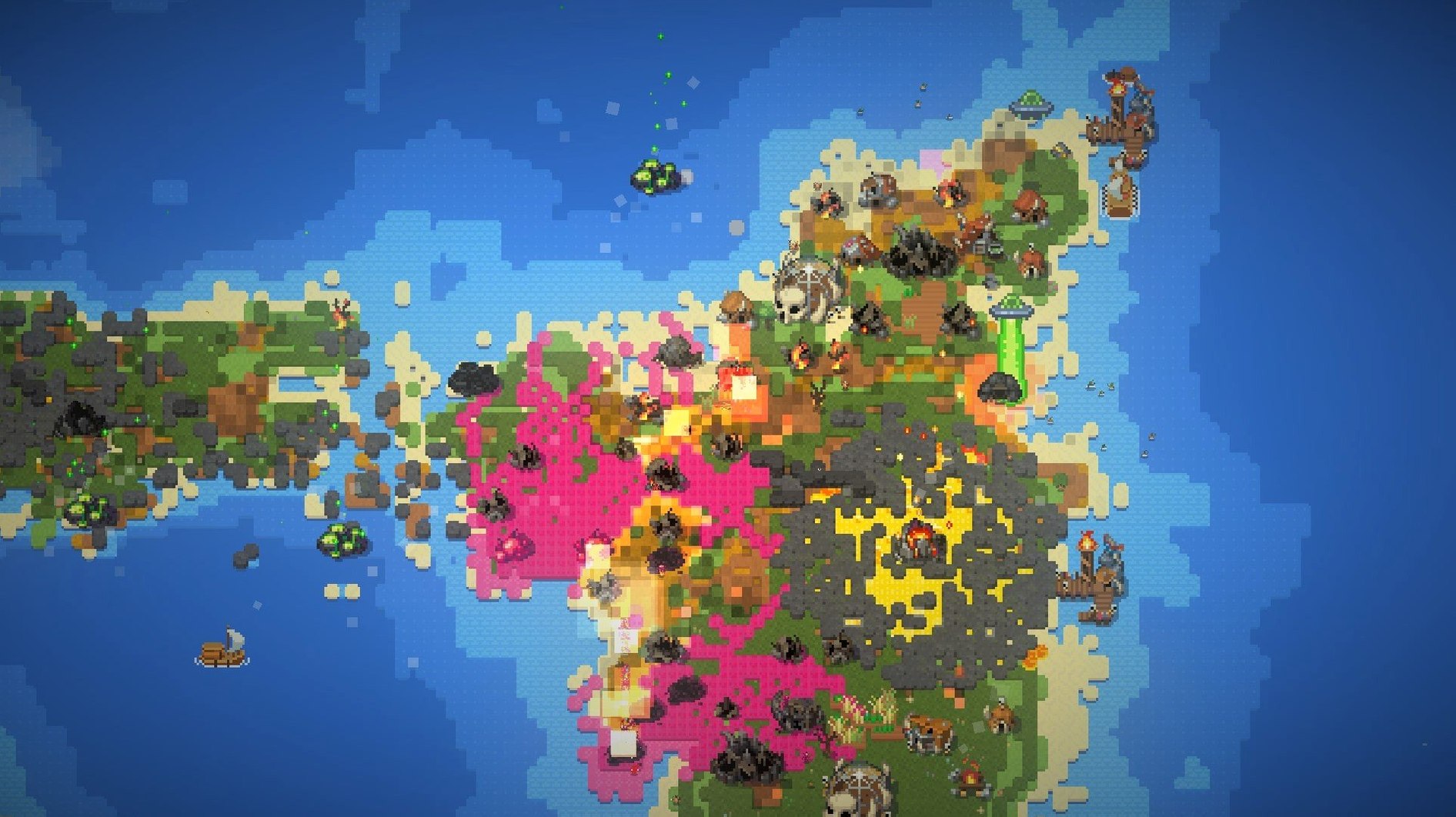
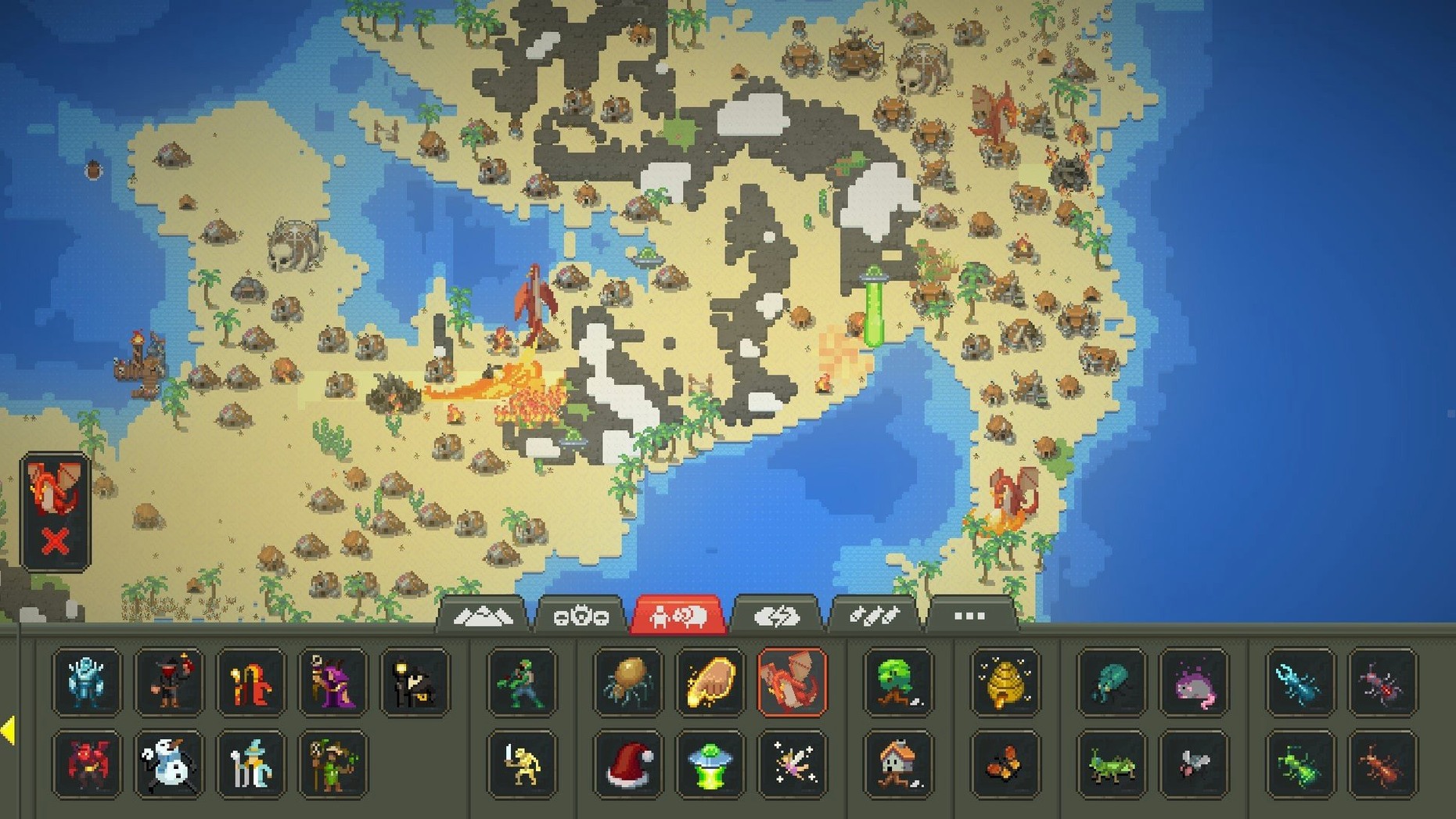
This is the kind of god game that appeals to a player who enjoys setting up systems and prodding them, rather than following a campaign. You generate kingdoms with unique flags and names, drop in races that each have their own abilities and traits, and watch as animals search for food and civilisations bump against each other. The controllable creature list leans into chaos: demons, skeletons, zombies, tumors, cold ones, dragons, UFOs, and a giant crab called Crabzilla all sit in the toolbox. A magnet tool lets you interact with the world directly. If you need a goal handed to you, or you dislike open-ended play where the fun comes from your own experiments, the lack of structured objectives will probably leave you cold. For everyone else, it is a low-friction way to spend an evening asking what happens when a dragon meets a tumour.
What Changes in Version 0.51.2 Fix
No formal changelog was supplied for this build, and the developer has not published patch notes that break down fixes at this granularity. What users report across community forums is a handful of behavioural corrections rather than new tools. Kingdoms that previously stalled after losing a coastline now resume colonisation once a land bridge appears — a small logic fix that reduces the number of worlds that go permanently static after geological edits. Creatures placed via the magnet tool snap to surfaces with fewer z-fighting artefacts on slopes, which makes precise creature placement less fiddly. The acid rain effect no longer lingers on tiles where the rain cloud has already moved on, so biome recovery after a targeted acid strike follows a tighter timeline.
None of these changes add powers or races. They tighten behaviours that, in earlier builds, could leave a simulation feeling stuck or visually messy. For a player who runs sessions in the background while doing other things, the colony logic fix is the one most likely to matter — fewer worlds need a manual nudge to get moving again.
Medium Landmass Worlds for Multi-Kingdom Chaos
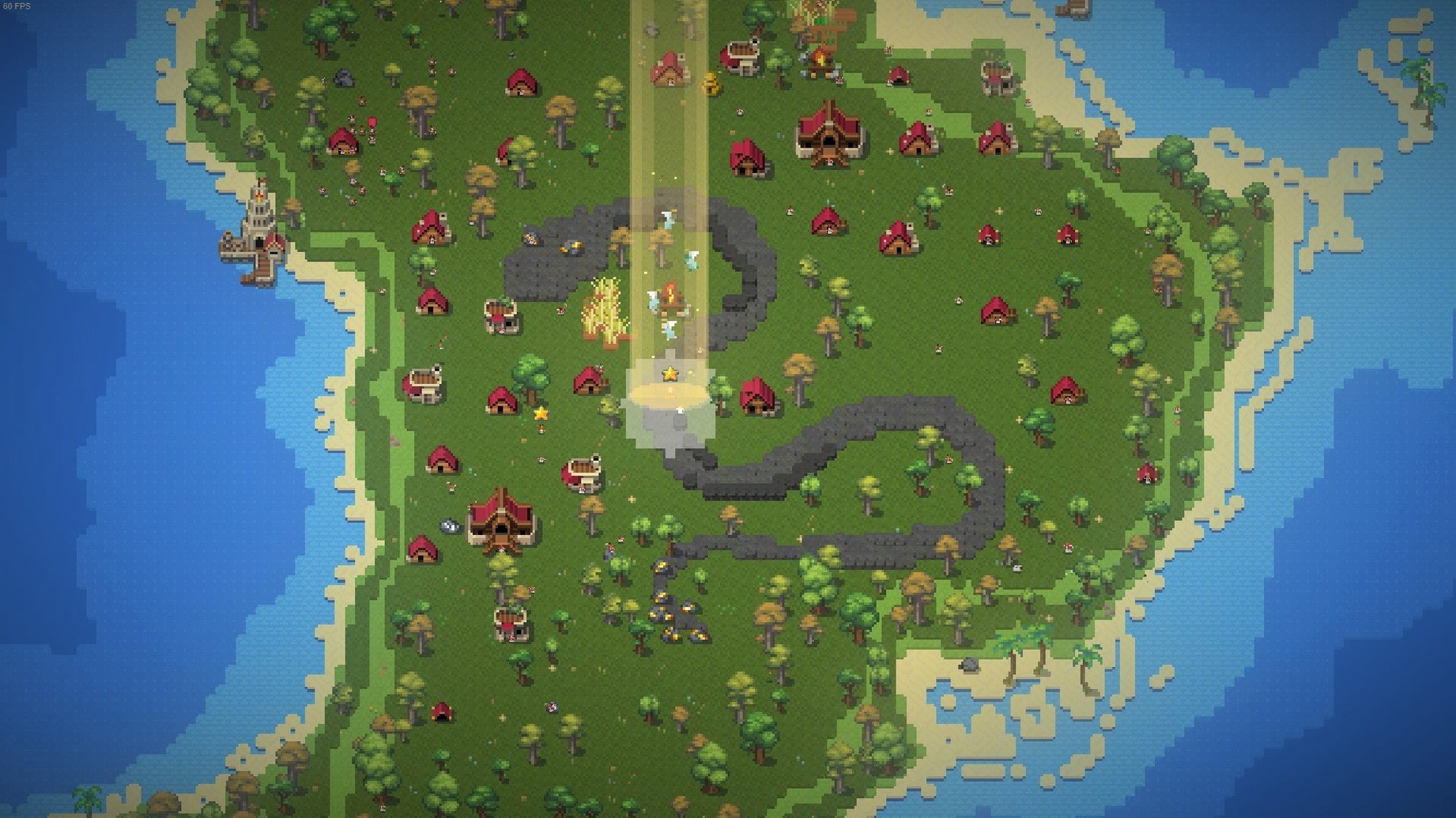
Loading worldbox - god simulator mac full version starts with the world generator. The slider offers sizes from a tiny island to a sprawling continent; picking a medium landmass gives enough room for multiple kingdoms without turning the first hour into empty scrolling. Once the terrain appears, the first action is usually painting a few patches of forest and shallow water near the centre, so animals have food and early settlers have a reason to cluster. Dropping a handful of humans on one coast and orcs on the opposite side sets up the first tension point. The simulation clock starts running the moment the first creature spawns, and within a minute villages begin forming near berry bushes.
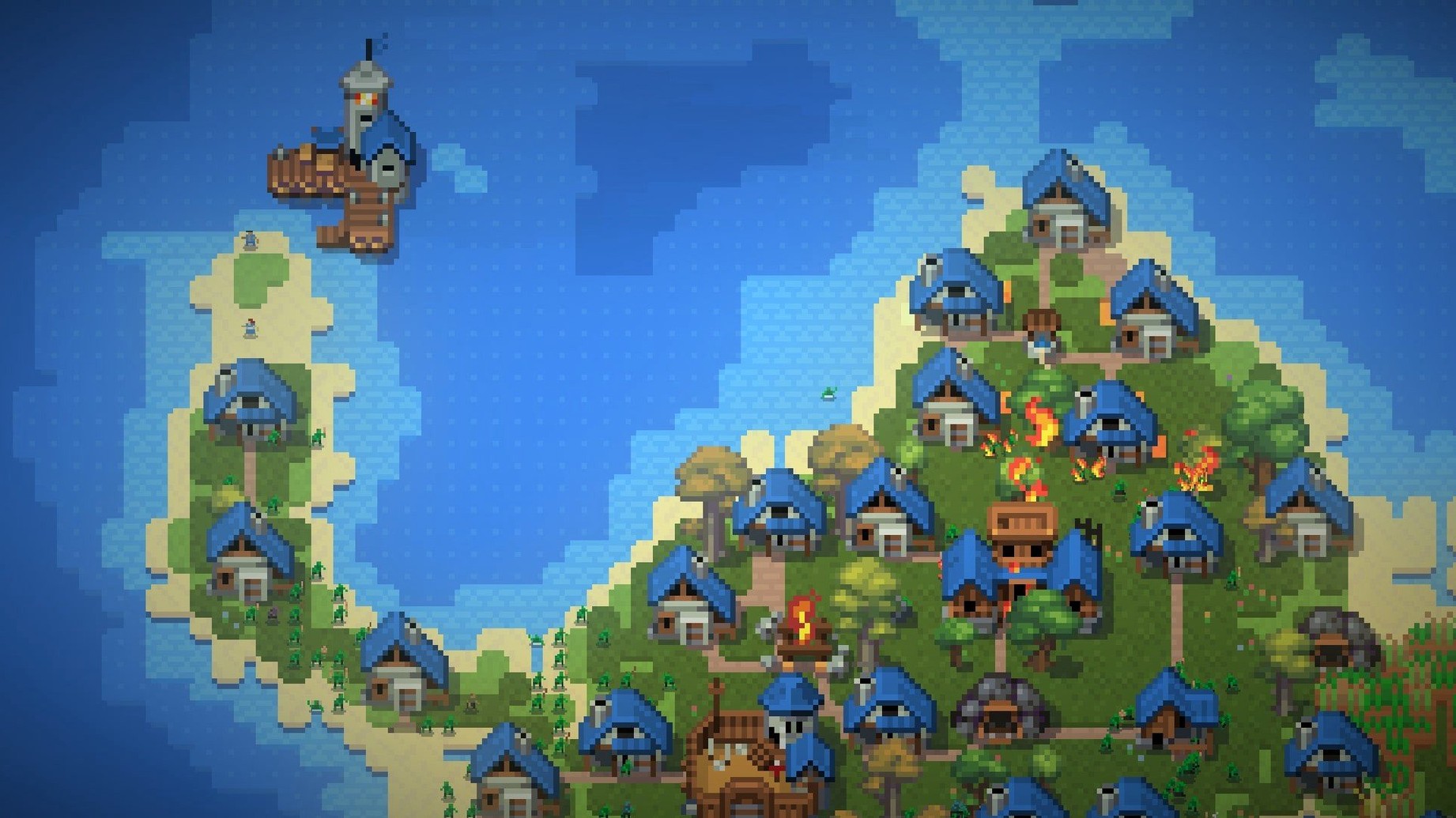
From here the session splits into observation and intervention. Watching the kingdoms name themselves and choose flag colours is the first payoff — each world generates its own identity. When the orc kingdom sends a colonist ship toward the human shore, the magnet tool can either let it land or nudge the vessel into deep water where a waiting cold one sits. That choice defines the next twenty minutes: a peaceful co-existence with trade routes, or a war that levels one capital. Destructive powers tend to stay sheathed until a civilisation grows stable enough that its collapse feels like a real loss. A single meteorite aimed at a capital dome while the king is inside changes the political map instantly, triggering rebellions in outlying cities that suddenly lack a ruler.
By the two-hour mark, the world usually has three or four developed kingdoms, at least one active rebellion, and a dragon circling a mountain range because someone placed it there forty minutes ago and forgot about it. The session ends either when the last city falls, or when the map gets saved for sharing and a fresh world begins.
Start with an Old World for Eroded Coasts and Deserts
The default configuration works, but three toggles dramatically change how a world feels in the first ten minutes.
- World age in the generator. Setting it to "old" produces eroded coastlines, larger deserts, and fewer dense forest blocks. Civilisations spread differently on old terrain — they cluster near remaining fertile strips, which makes early border conflicts more likely.
- Diplomacy toggles. Turning off "alliances" forces every kingdom to stand alone. Without allies to absorb pressure, small kingdoms collapse faster, and the map consolidates into two or three large powers within the first hour rather than a patchwork of truces.
- Creature cap. The default cap prevents population explosions that slow the simulation on older Intel Macs, but raising it by 20–30% allows larger armies and denser cities. This is the single biggest lever for how "busy" a world looks and how fast wars resolve.
Disabling "peaceful animals" is also worth trying early, though it changes the tone more than the structure. With it off, wolves actively hunt villagers rather than staying in their own food chains, which adds background attrition that weakens frontier settlements before they grow into proper towns.
- macOS (version not specified by developer)
- Intel processor
Questions on file
Does WorldBox use mana or resources for powers?
No, the game lets you use all god powers without any mana or resource constraints.
What creatures can I control in WorldBox?
Controllable creatures include demons, skeletons, zombies, tumors, cold ones, dragons, UFOs, and Crabzilla, among others.
Does the game generate kingdoms automatically?
Yes, it can generate kingdoms with unique flags and names using procedural generation.
Sign in · Create an account to add a field note.
No field notes yet. A measurement, a version, a machine — they appear after moderation.