Games
Nova Roma 0.7.2703
GamesUpdated
| Requirement | On file |
|---|---|
| macOS | See the sheet |
| CPU | Apple Silicon, Intel 64-bit |
| Download | 374 MB |
| Tested on | macOS Tahoe, Mac mini 2024 M4 |
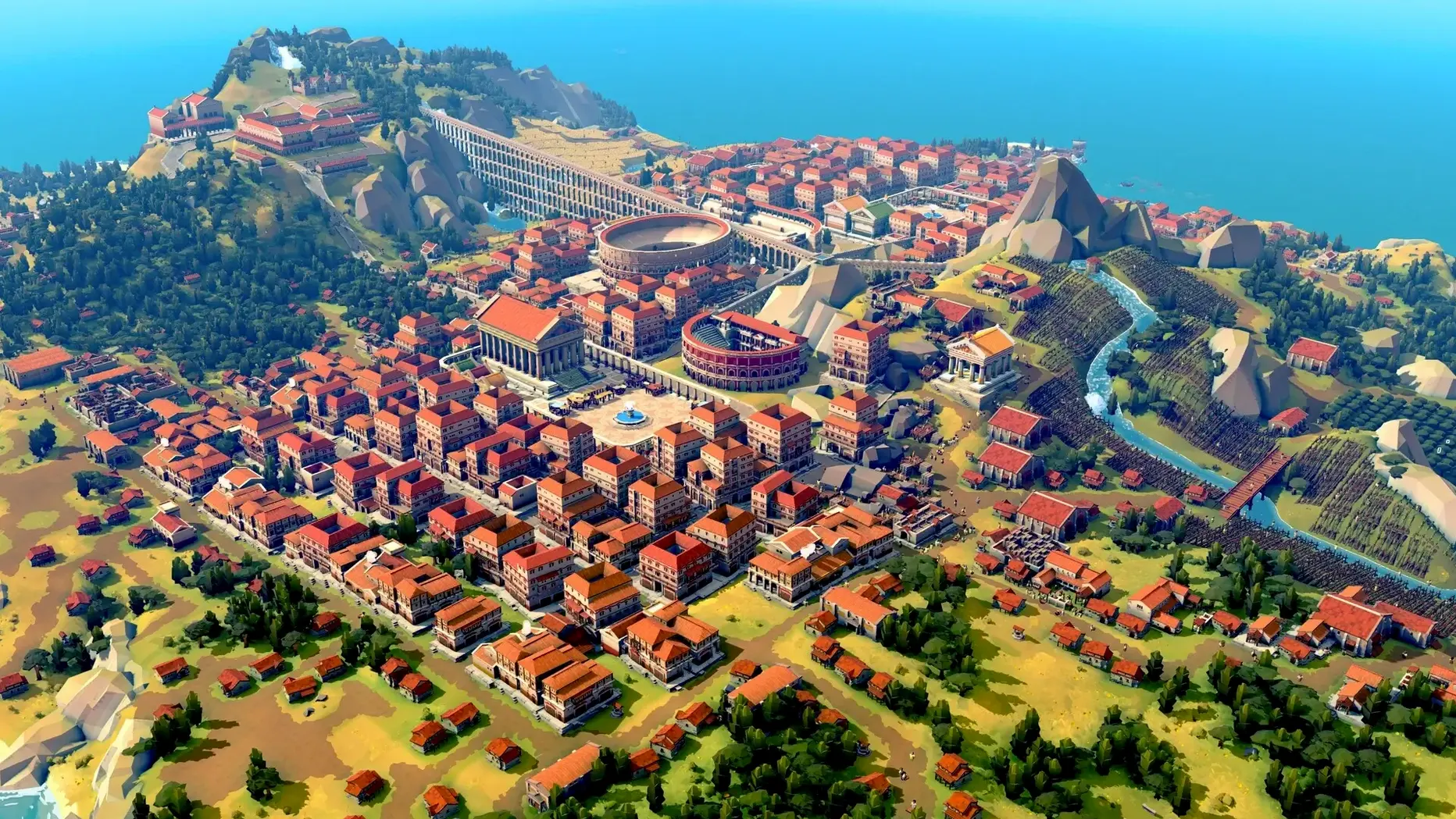
You lay out the first insula blocks on a bend of the river, then unpause the simulation and watch a baker carry a sack of grain three houses too far because your road layout has a dead end. That is the loop Nova Roma runs on.
Tracing wheat to bread across a growing village
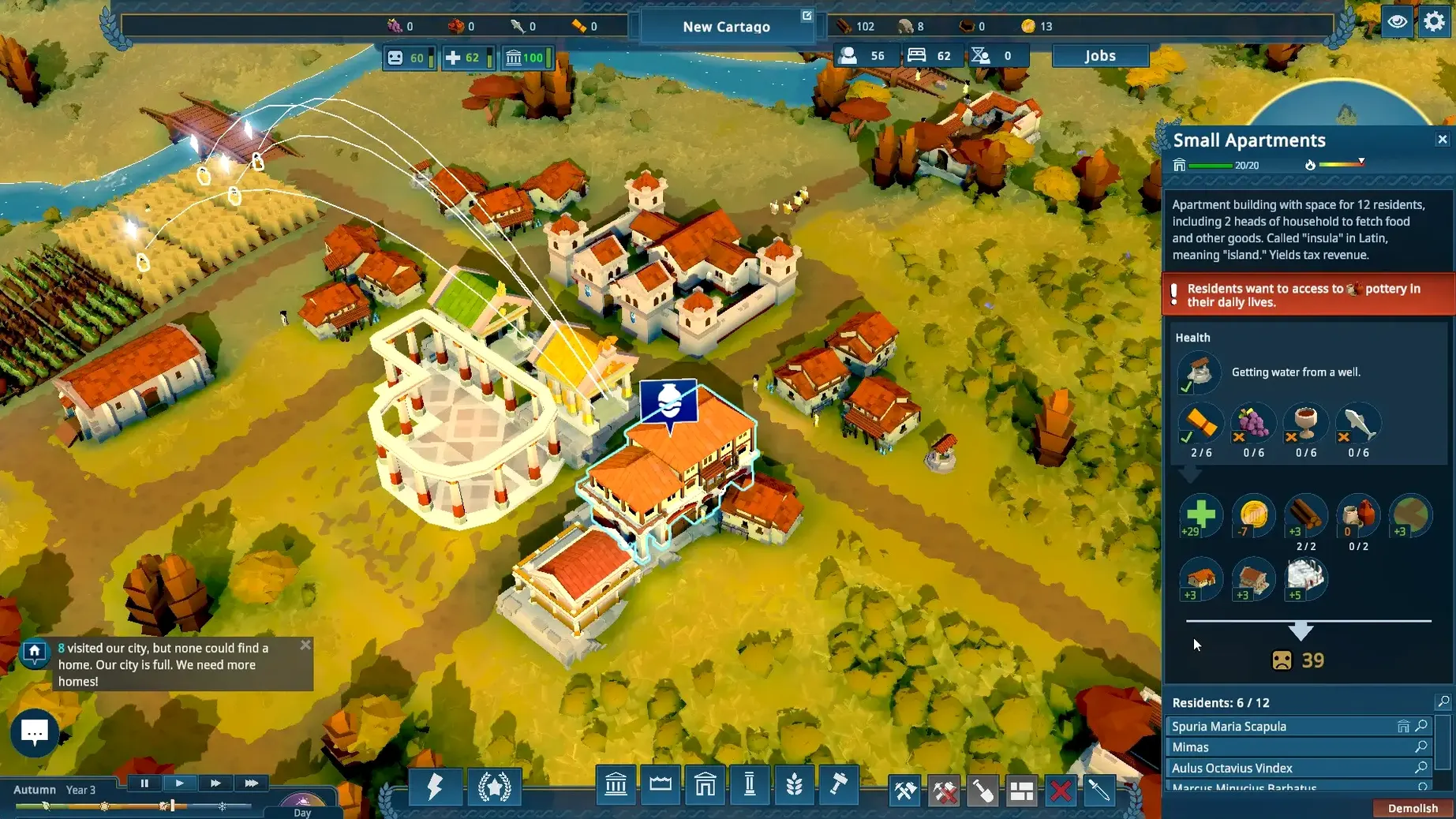
This is a logistics puzzle dressed in a toga. Players who like tracing supply chains — turning wheat into bread, clay into pottery — will find the core loop satisfying. The management layers stack up as the village grows: you train gladiators, craftsmen and actors, balance bread and wine rations, and keep an eye on divine favour. It runs natively on both Apple Silicon and Intel 64-bit Macs, and the interface is localised into sixteen languages including Russian, Korean and Brazilian Portuguese. The music sets a Mediterranean mood, but there is no voice acting.
Where legionary dreams meet a spreadsheet in a toga
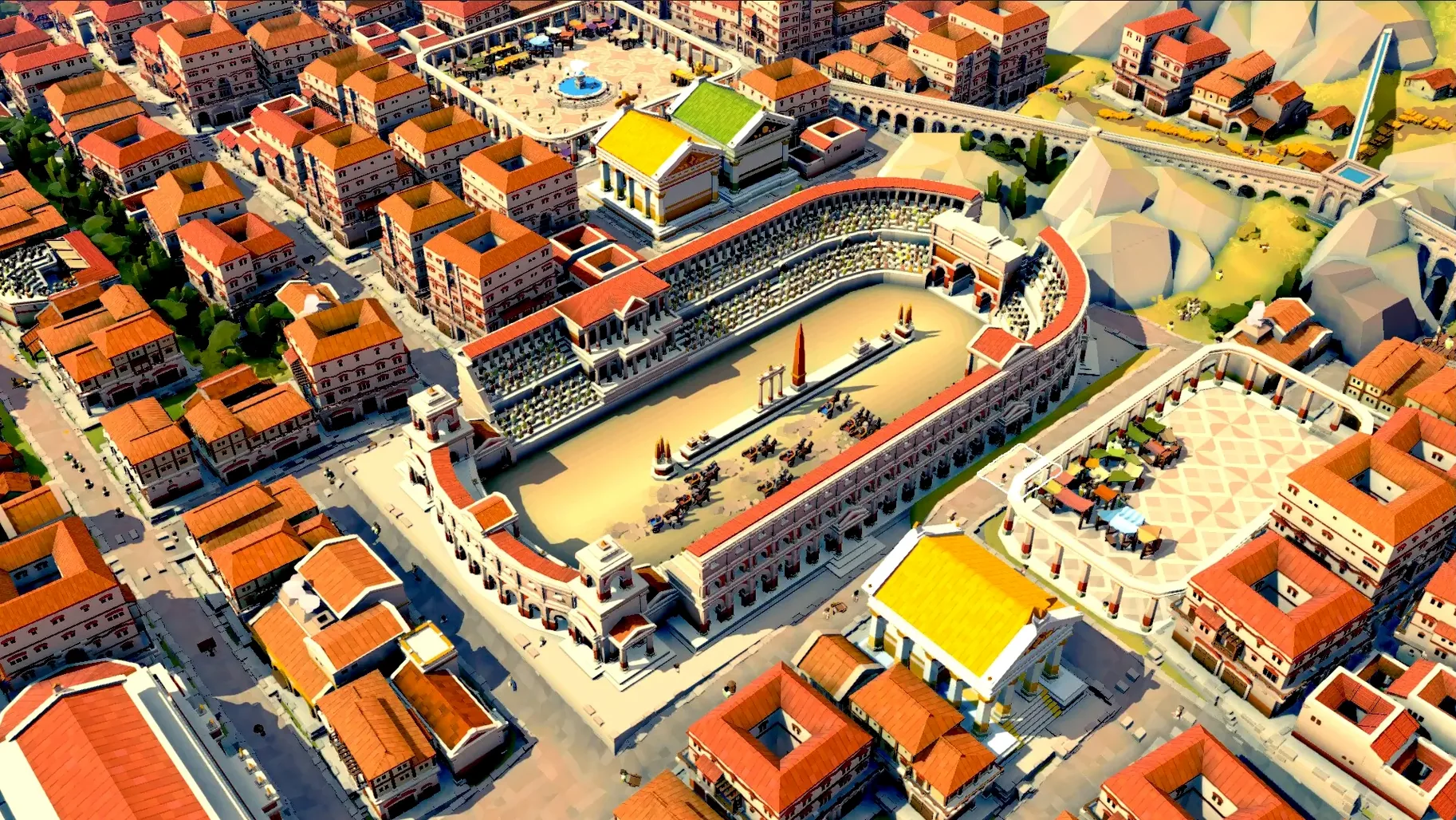
Nova Roma is not a conquest title. If you want legionary formations, real-time battles or a map-painting campaign, this is the wrong toga. The pace is deliberate, the feedback comes through citizen mood and production stats, and the scenario is a single settlement growing from a small village into a functioning Roman city. Version 0.7.2703 is still early in development, so systems can feel sparse compared to a finished city-builder. That said, the foundation is there for anyone who enjoys watching a plan come together over hours rather than minutes.
Nursing an aqueduct on a hilly three-hour puzzle
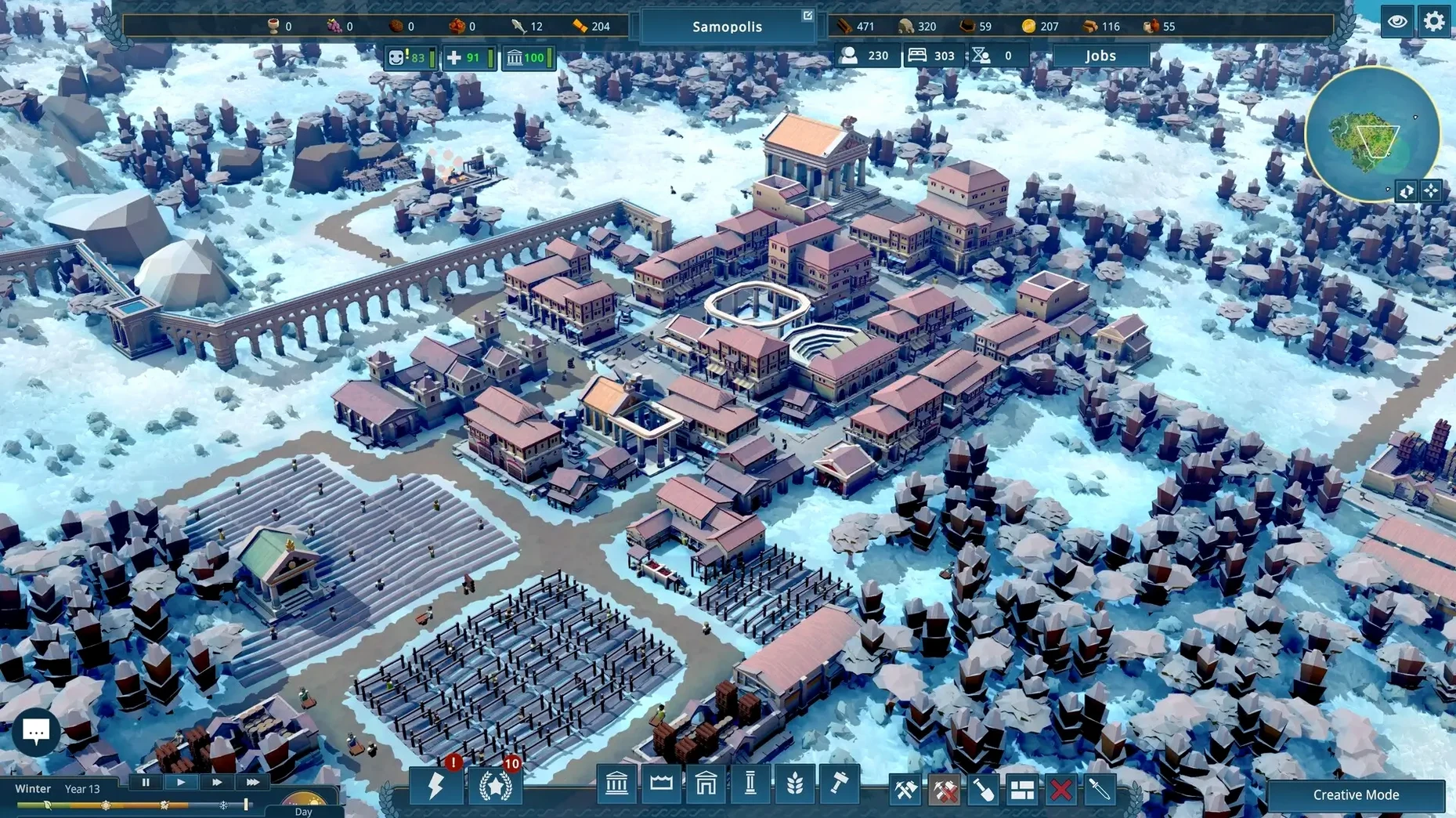
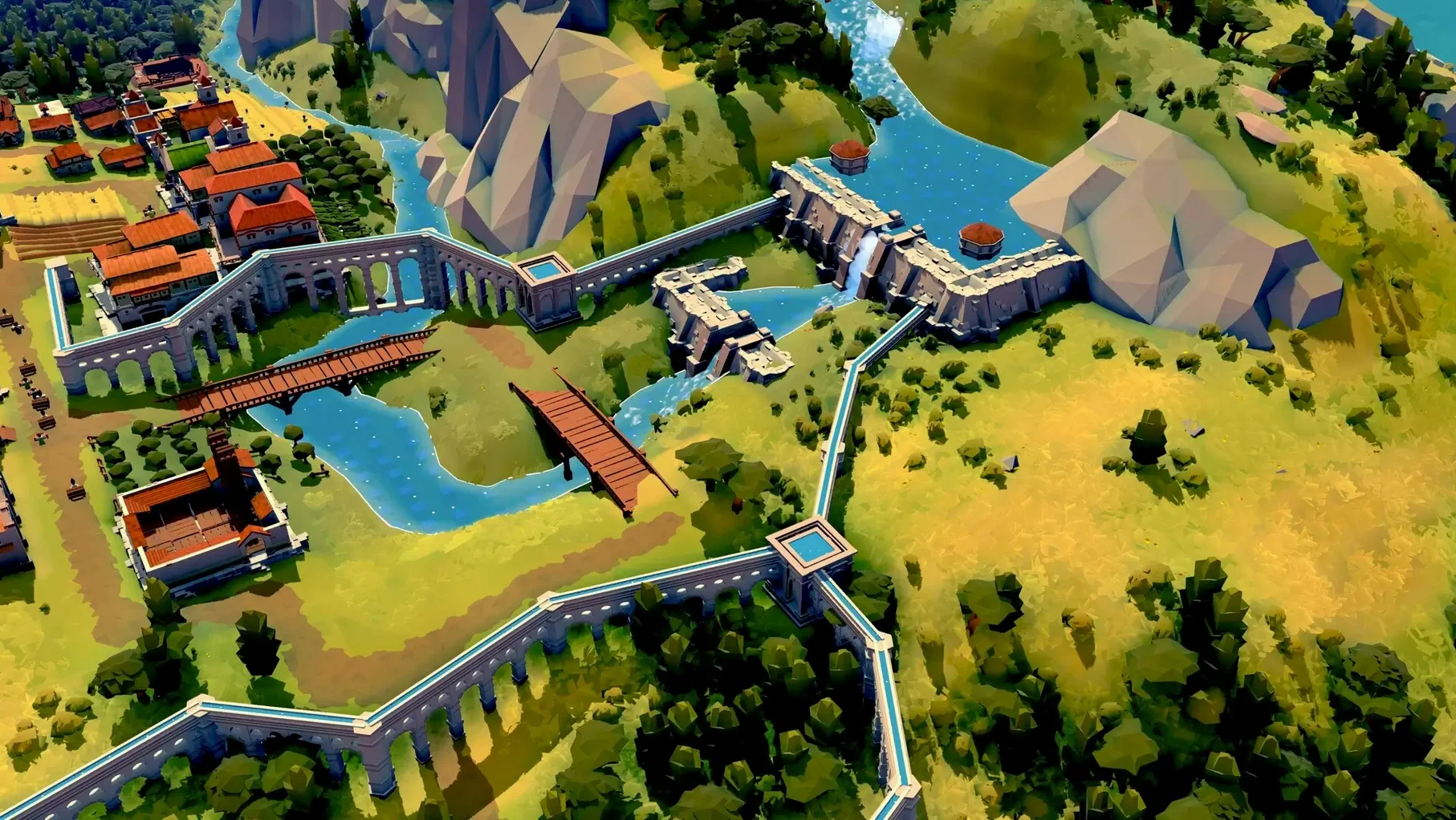
Suppose you are the kind of player who treats a city-builder as a long-form systems puzzle rather than a prettification exercise. You have been nursing a settlement on a hilly map for three hours. The aqueduct network is half-plastered, the granary reserve is thin, and Jupiter’s temple sits at level two while the forum demands a third upgrade you cannot yet afford. You open the save at 07:00 game-time, unpause, and within sixty seconds a drought event fires. The river level drops. Your wheat fields on the western terrace, which rely on a single irrigation channel fed from that river, begin to flash a dry-soil warning. The bakeries downstream will idle in two cycles if you do not act.
You open the law overlay and enact a temporary water-rationing edict, which cuts consumption in the baths and fountains but annoys the patrician quarter. Citizen mood dips three points. You compensate by raising the bread ration by one unit, burning through the granary stock a little faster. Then you rotate the camera, tracing the aqueduct path tile by tile, and spot a junction where height pressure drops because you built a reservoir one level too low last session. You queue a demolition, drag a new reservoir segment two tiles uphill, and assign a work gang to the job. The drought passes six cycles later. The patricians stop grumbling. You lost no population, but you burned through half your stored clay fixing the mistake. That is Nova Roma in its natural rhythm — a cascade of small decisions that compound into a story about a city and its limits.
Tracking every bushel from field to bakery insula
Three profiles tend to sink deepest into Nova Roma. The first is the supply-chain obsessive, the player who gets restless unless every wheat bushel is tracked from field to mill to bakery to insula. The game rewards that instinct through its linked production chains: clay and timber feed the construction sector, grapes and water feed the wine supply, and the gladiator school consumes both food surplus and citizen leisure time. The second profile is the terrain tinkerer. Because the simulation accounts for landscape and hydrodynamics, a player who enjoys sculpting canals, dams and aqueducts across uneven topography will find more depth here than in a flat-grid city-builder. The third profile is the hands-off governor — the player who sets laws, adjusts tax rates, and watches the simulation respond over long stretches, intervening only when the mood indicators shift. If you enjoy poking at a system to see how it breaks and then patching it with a decree, Nova Roma fits.
Conversely, the game gives less to players who want tight narrative direction or a short, guided campaign. There is no mission tree, no character dialogue, and the victory condition is a functioning city, not a final cinematic. The build tested was version 0.7.2703, and while the systems are already interlocking, the scaffolding is visible in places — some technology nodes are placeholders, and the divine-favour mechanic occasionally feels binary. Players comfortable with early-access development cycles will see a promising skeleton; those expecting a polished final product may prefer to wait.
Why perfect rectangles punish your warehouse carts
First-time governors tend to make the same three mistakes. The first is grid obsession. Players arriving from orthogonal-grid city-builders often lay out perfect rectangles of roads and then wonder why warehouse carts take looping detours. Nova Roma’s pathfinding punishes thoughtless road layouts; a diagonal cut-through can halve delivery time for a granary worker. The second mistake is ignoring elevation in water infrastructure. Aqueducts and irrigation channels need a continuous height gradient from source to destination. A single flat segment or a reservoir placed below the intake level breaks the entire downstream chain, and the game’s early tutorial does not linger on the hydrodynamic model. The third mistake is treating the gods as an optional extra. Neglected temples lower divine favour, which in turn triggers negative events — poor harvests, citizen unrest, structural fires — that compound faster than new players expect. A small shrine to Jupiter early in a session pays back more than a third bakery.
A subtler error is over-prioritising gladiator training before the food supply is stable. A ludus consumes bread, wine and idle population, and an early gladiator school can drain a fragile granary in minutes. The same caution applies to actor troupes, which boost culture but pull workers away from construction and farming. Build the entertainments after the bakeries, not before.
A session from pause to pause
Here is how a typical ninety-minute session unfolds. You open a save from the previous evening. The city has roughly 240 citizens, a functioning aqueduct feeding two districts, and a temple to Minerva at level two. Your immediate task is to unlock pottery production so you can upgrade insulae to medium density.
- Minutes 0–7. You scan the resource overlays. Clay deposits sit on the far side of the river, with no bridge. Grain stocks are at 62%, wine at 41%. You unpause and set a bridge foundation across the narrowest point of the river, assigning four labourers.
- Minutes 8–22. While the bridge builds, you adjust the tax rate down by two percentage points to offset the mood penalty from an overpopulated insula block. You also place a small shrine to Ceres near the wheat fields — a preventative measure against the harvest-failure event you saw in a previous session. The bridge completes at minute 19. You immediately queue a clay pit and a potter’s workshop on the far bank, then lay a dirt road connecting them to the bridge.
- Minutes 23–45. A thunderstorm event triggers. Lightning strikes a warehouse in the artisan quarter. You pause, zoom to the fire, and assign a water-carrying crew from the nearest fountain. The building loses 40% durability but is saved. You spend the next fifteen minutes redesigning the firebreak — a two-tile gap between storage buildings — while the potter’s workshop comes online and begins producing its first amphorae.
- Minutes 46–70. With pottery flowing, you upgrade four insulae to medium density. Population ticks up to 280. The increased water demand reveals a flaw: your aqueduct branch to the eastern hill loses pressure at the final junction. You trace the height map, realise you need a secondary reservoir at elevation 14, and begin construction. Stone reserves are low, so you assign a new quarry crew, pulling workers from the actor troupe and temporarily lowering cultural output.
- Minutes 71–90. The reservoir finishes. Water pressure stabilises. Citizen mood rebounds to neutral. You save, add a note in the save label about the eastern reservoir fix, and close the session. Nothing dramatic occurred, but the city is measurably more resilient than ninety minutes ago — more clay, more pottery, better firebreaks, and a Ceres shrine that has already paid for itself in averted crop stress.
That rhythm — scan, diagnose, build, watch the consequence unfold — is the heart of the game. If you find yourself losing track of time while tracing an aqueduct pressure gradient, Nova Roma has you exactly where it wants you.
- macOS (runs on Apple Silicon and Intel 64-bit)
Questions on file
Does Nova Roma run on Apple Silicon Macs?
Yes, the macOS build has been tested on both Apple Silicon and Intel 64-bit architecture.
What languages does the interface support?
The game supports sixteen languages, including English, German, Japanese, Simplified Chinese, French, and Korean.
Is Nova Roma a combat or war game?
No, it is a city-building management game focused on supply chains, citizen needs, and divine favour rather than military conquest.
Sign in · Create an account to add a field note.
No field notes yet. A measurement, a version, a machine — they appear after moderation.