
Games
Palworld 1.0.5.102999
GamesUpdated






| Requirement | On file |
|---|---|
| macOS | See the sheet |
| CPU | Apple Silicon |
| Download | 31 GB |
| Tested on | macOS Tahoe, Mac mini 2024 M4 |
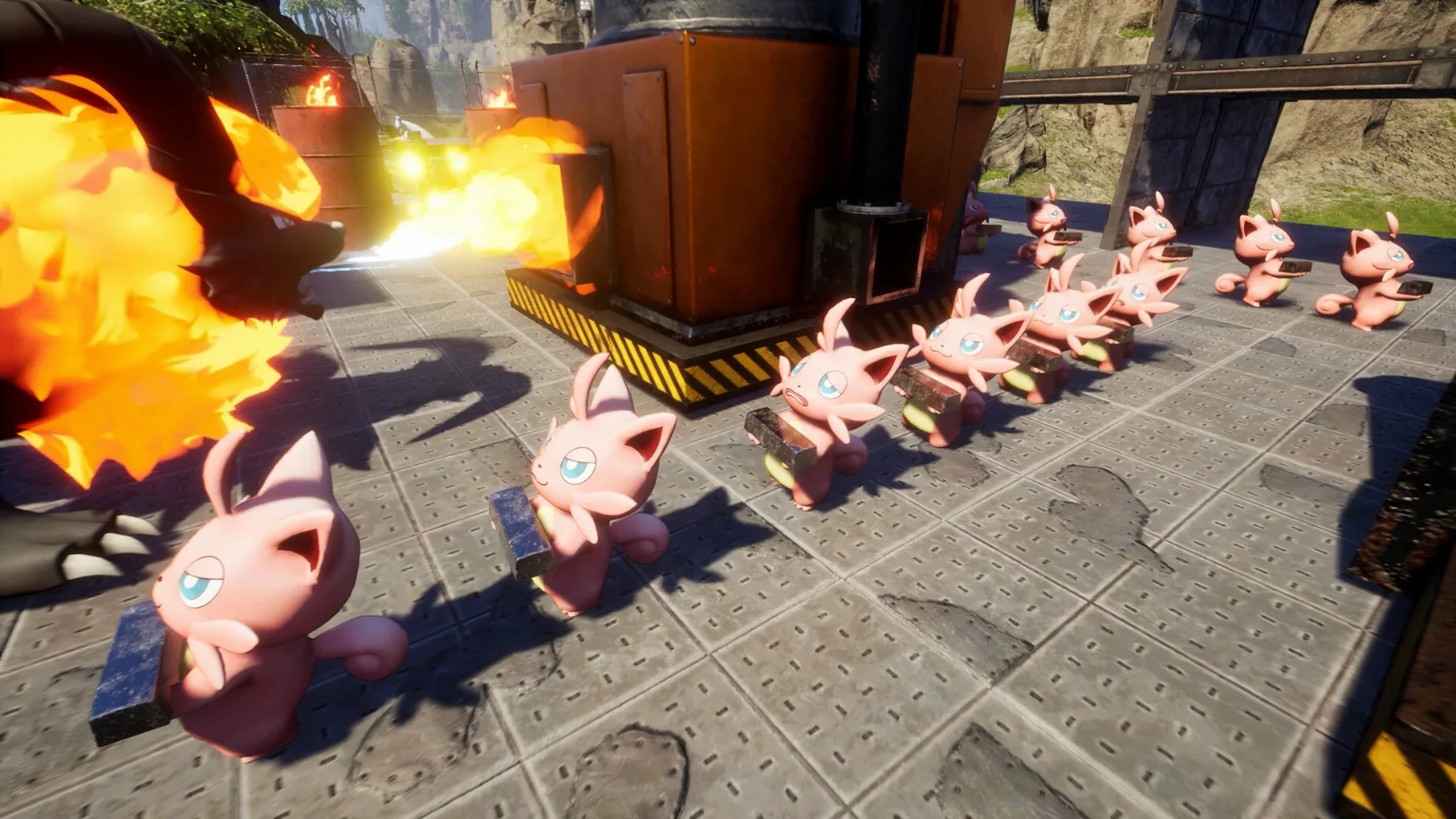
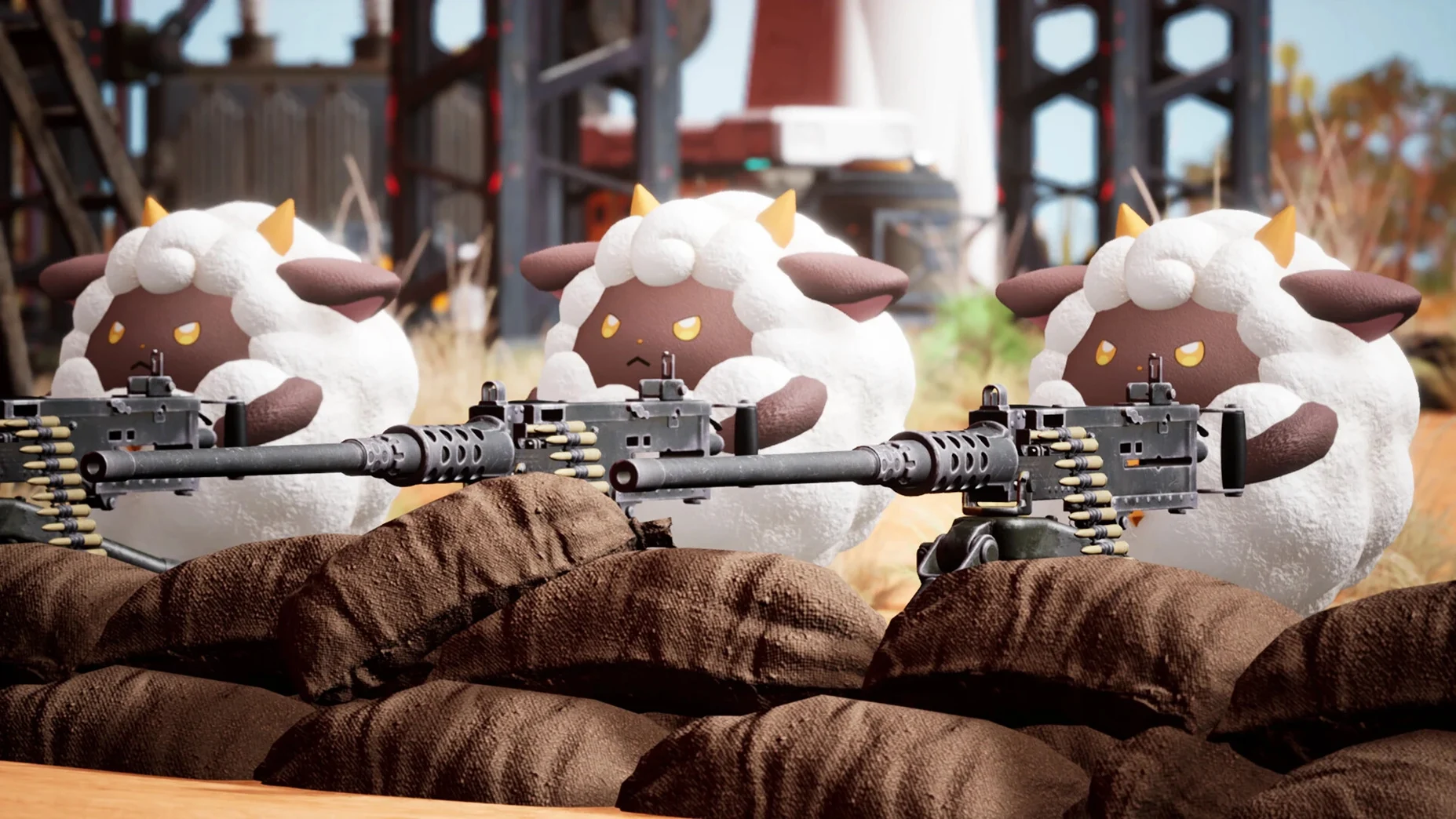
If you have played a creature-collecting game and wished the monsters did more than battle, Palworld answers that thought with conveyor belts and assault rifles. It shares DNA with the genre everyone knows, then bolts on base-building and industrial automation driven by the creatures you catch.
- Scout the map for Pals, weaken them in real-time combat, and throw a sphere to capture them. Each Pal comes with a set of work skills that determine what it can do at your base.
- Assign Pals to production tasks: watering crops, hauling materials, generating electricity, or mining ore veins while you are away exploring. Over time a camp turns into a self-running factory.
- Breed Pals at a ranch to combine traits and pass down passive skills. Offspring inherit stats from parents, so you chase specific combinations for combat or labour efficiency.
- Ride larger Pals as mounts across land, water, and air. Movement speed and stamina differ per species, which makes mount choice a practical decision when crossing biomes or fleeing a fight.
- Enter instanced dungeons scattered across the map for higher-level Pals, rare resources, and boss encounters. Light is limited underground and the environment itself drains your character's vitals.
- Manage hunger, temperature, and base raids alongside exploration. Food spoils over time, cold regions demand heat sources, and hostile factions attack your structures if you neglect defences.
Co-op play ties the loop together: friends can join your world to share base duties, trade Pals, or tackle dungeons as a group. The survival layer adds friction that keeps the automation payoff meaningful rather than cosmetic.
Grapple Gun Pal-Lifting and Other Hidden Interactions
Palworld's tutorial pop-ups cover the broad mechanics and then stop. A handful of interactions sit just outside the obvious UI paths, and they change how a session flows once you know them.
- Lift a Pal with the grapple gun and carry it mid-air. This serves two purposes: you can reposition a Pal stuck on base geometry, or you can drop a flying mount from altitude to skip the stamina cost of climbing. The Pal takes no fall damage.
- Assign a Pal to a station by picking it up and throwing it at the workstation. The monitoring stand gives you a list-based assignment, but the physical throw is faster when you are standing next to the bench and the Pal is wandering three metres away.
- Roll cancels the landing stun from a high drop. If you dismount a flying Pal too early, a quick dodge roll on touchdown keeps your character moving instead of locking you into the recovery animation.
- Holding the interact button on a storage container opens a radial transfer menu. You can dump all matching inventory categories in two inputs rather than dragging stacks one by one. It works on fridges, toolboxes, and feed baskets.
- Pals keep working while you are in the map screen. Opening the map pauses your character's hunger drain but does not freeze base logic. A long planning session mid-flight means the mining Pals back home finish a node while you study the terrain.
- Campfires warm eggs. Placing an incubator next to a heat source speeds up the timer for eggs that want a hot biome. You do not need to build the incubator in the matching climate zone; a nearby campfire or heater applies the same modifier.
None of these appear in the keybindings menu, and the game never surfaces them after the first hour. They sit in the gap between what the UI tells you and what the simulation actually permits.
Waking at Sixty Percent Hunger on a Straw Bed
Morning at the base. The character wakes on a straw bed inside a wooden shack, hunger at sixty percent. The first move is a lap around the production line.
- Check the feed basket near the ranch. The wheat farm produced 200 units overnight, and the cooking pot burned through half of it making baked berries. Top up the basket from storage so the working Pals do not idle with empty stomachs.
- Walk the assembly line: the logging site spit out 80 wood, the stone pit sits at 120. A Tombat with the mining foreman trait is still swinging at an ore node. Its partner, a transport Helzephyr, ferries chunks to the nearest chest. No intervention needed here.
- Open the Palbox and scan the base roster. One Lamball has the "slacker" trait and sat at the edge of camp yesterday instead of hauling. Pull it from the active list, swap in a freshly hatched Anubis with artisan and work slave. The Anubis materialises and walks straight to the weapon bench without being asked.
- Grab a stack of spheres, a crossbow, and 30 arrows from the armoury chest. Mount a Nitewing from the party and head north-east toward a mountain biome marked on the map. The flight takes two minutes; stamina depletes at the halfway point, so land on a cliff ledge and let the bar refill while scanning for Pals below.
- Spot a level 28 Warsect in a clearing. Dismount, drop a palbox as a temporary fast-travel point, and engage. Whittle its health with crossbow bolts while the party's Foxparks applies fire damage. At twenty percent health, switch to a hyper sphere and capture it on the second throw. The sphere shakes three times and locks.
- Nearby, a dungeon entrance glows on the cliff face. Enter with two combat Pals, a torch, and 15 baked berries. The interior is dark; the mini-map fogs out. Work through three rooms of syndicate thugs and a boss Relaxaurus. The boss drops ancient civilisation parts and a rare schematic. Hunger hits zero during the fight, so eat mid-combat from the inventory radial.
- Fast-travel back to base using the palbox network. Drop the loot into sorted chests, queue five spheres at the crafting bench, and assign the newly caught Warsect to the logging site. It carries the logging foreman trait and outpaces the previous Pal by a visible margin.
- End the session at the breeding ranch. Pair the Warsect with a Mossanda that knows grenadier panda. Drop a cake into the box, wait 15 minutes, and collect an egg that inherits both parents' active skills. Place the egg in the incubator, note the timer reads 45 minutes with the campfire trick, and log off.
The session lasted 90 minutes and touched every system the game offers without a loading screen or a menu-driven intermission. The base kept running through all of it.
Unannounced Fixes Smoothing the Launch-Day Loop
Version 1.0.5.102999 ships with a collection of fixes and small behavioural adjustments that accumulate into a noticeably smoother loop compared to the launch-day build. The developer has not published a formal changelog for this macOS build, but the differences emerge in daily play.
- Base pathfinding — Pals get stuck on roof edges and foundation seams less often. Large Pals still clip through walls occasionally, but the frequency dropped. A stuck Pal now teleports back to the Palbox after roughly 30 seconds of zero movement, where earlier builds left them stranded until a manual reset.
- Mount dismount logic — Pressing the dismount key while over water no longer drops the rider beneath the surface. The character now pops up to the water's top layer immediately, which makes ocean traversal with a swimming mount usable rather than punitive.
- Dungeon lighting — Torches and Pal-based light sources now cast shadows further inside caves. The difference is moderate but enough that you can spot ore deposits on dungeon walls without hugging them.
- Inventory sorting — The sort button in storage containers groups items by type first, then by stack count, instead of an alphabetical sort that scattered resources across the grid. This is a small interface change that speeds up the post-expedition dump routine considerably.
- Breeding timer consistency — Eggs no longer reset their incubation progress when the player leaves render distance. In earlier build states, flying more than roughly 200 metres from the incubator paused the timer or reverted it to zero. The timer now runs server-side regardless of player position.
Performance on Apple Silicon remains stable at 1080p with medium settings on the tested M4 Mac mini. Frame dips still occur when 15 or more Pals cluster around a single workstation, but the stutter is brief and does not affect input responsiveness.
Enjoying the Friction Between Crafting, Combat and Automation
The game pulls from survival crafting, creature collection, factory automation, and third-person action. A player who only likes one of those pieces may bounce off the rest. The people who stay are the ones who enjoy the friction between those systems.
Automation-oriented survival players find the deepest hook. Base-building here is not cosmetic — every structure feeds into a production chain that runs unattended. If you have spent hours optimising conveyor splits in games about factory floors, assigning Pals with matching work traits scratches the same itch. The breeding system adds a layer of worker optimisation that pure factory games lack.
Co-op groups of three or four settle into a natural division of labour. One player handles base design and resource logistics, a second focuses on breeding and Pal optimisation, and the third scouts for rare spawns and dungeon runs. The game does not enforce these roles, but the breadth of systems makes specialisation efficient. Dedicated server support means the base runs while nobody is online, which rewards groups that log in at different hours.
Creature-collection fans who want a darker tone appreciate that Pals are treated as resources as much as companions. The option to sell, butcher, or assign Pals to assembly lines sits alongside the bonding mechanics. It is the same genre loop with the training wheels removed, and that tonal shift keeps players who have outgrown the gentler entries in the monster-catching space.
Players on Apple Silicon Macs looking for a large survival title get a native ARM build that runs without Rosetta overhead. The game does not demand a high-end GPU; a base M4 handles medium settings at a steady frame rate. For Mac users tired of waiting for ports, that alone is a practical reason to invest time in a world this size.
- Tested on macOS Tahoe
- Apple Silicon Mac
Questions on file
Can you breed Pals in Palworld?
Yes, breeding is a core mechanic. You pair Pals at a breeding ranch to produce eggs that inherit traits and stats from the parents.
What survival elements does Palworld include?
The game includes food shortage, spoilage, temperature management, and hostile environments that can damage your character if ignored.
Can you ride Pals in Palworld?
Many Pals can be ridden as mounts across land, water, and air, with each species offering different speed and stamina characteristics.
Sign in · Create an account to add a field note.
No field notes yet. A measurement, a version, a machine — they appear after moderation.