Games
Old World 84658
GamesUpdated
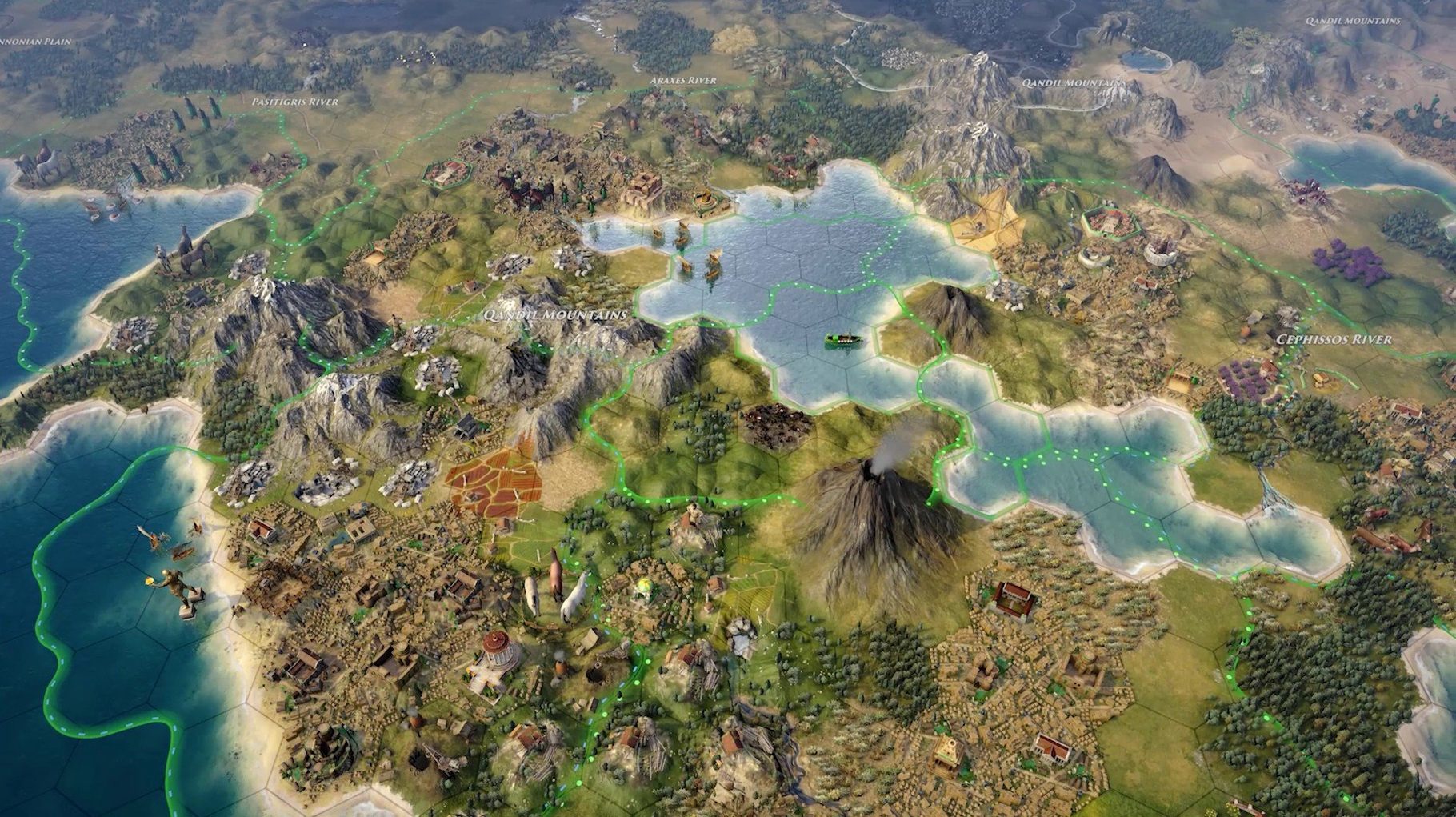
| Requirement | On file |
|---|---|
| macOS | See the sheet |
| CPU | Apple Silicon, Intel 64-bit |
| Download | 4 GB |
| Tested on | macOS Tahoe, Mac mini 2024 M4 |
More than 3,000 unique events sit in the pool, each pulling from history or mythology. A ruler might wrestle with a succession crisis, a religious schism, or a military revolt — and their traits, not yours, determine the options.
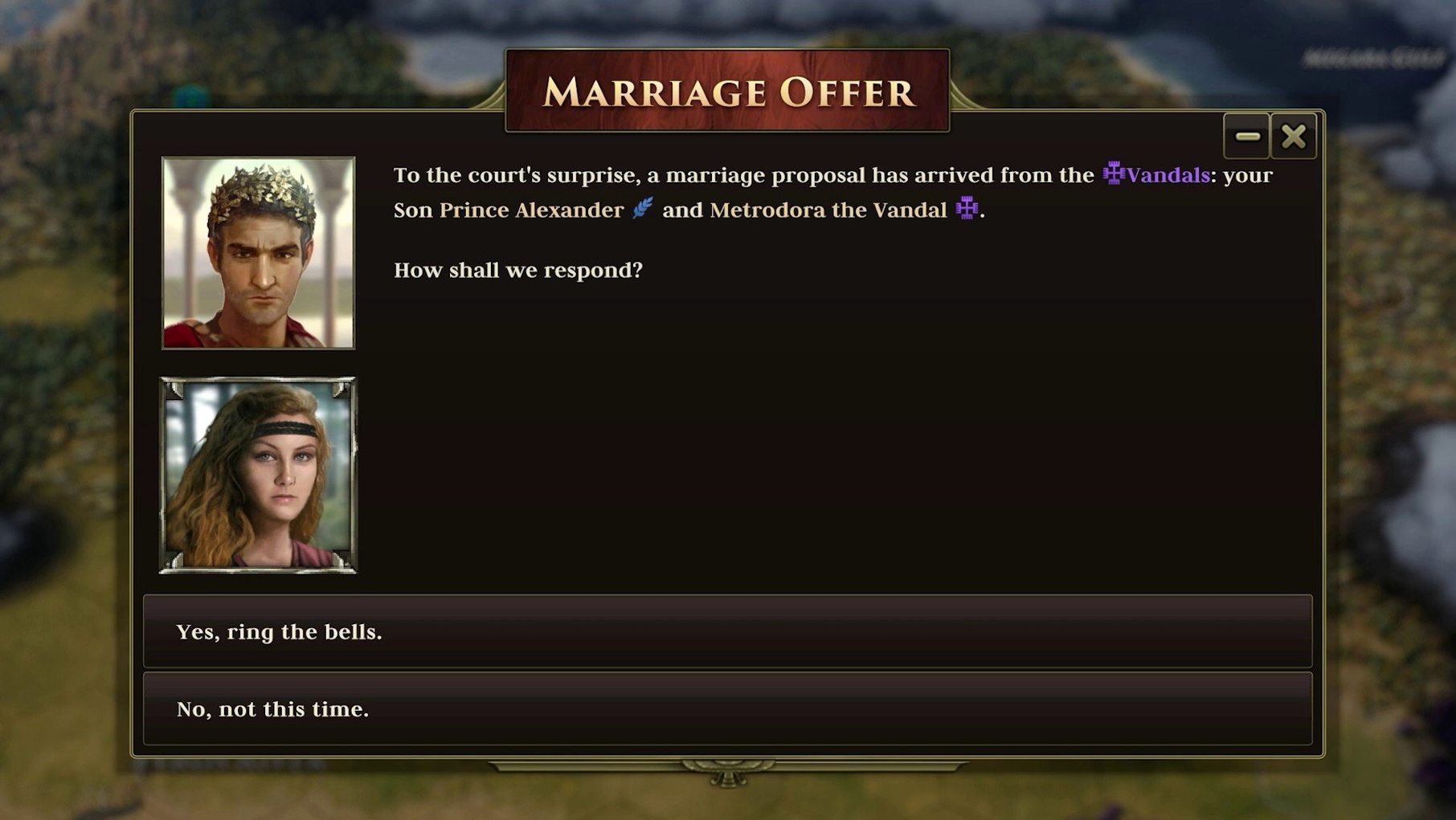
Marry off an heir to secure a border
The map is not the only board. Each of the seven kingdoms has four noble families, and your relations with them shape what you can build and who stays loyal. Characters age and die, so you are constantly training heirs and arranging marriages to keep your bloodline in power.
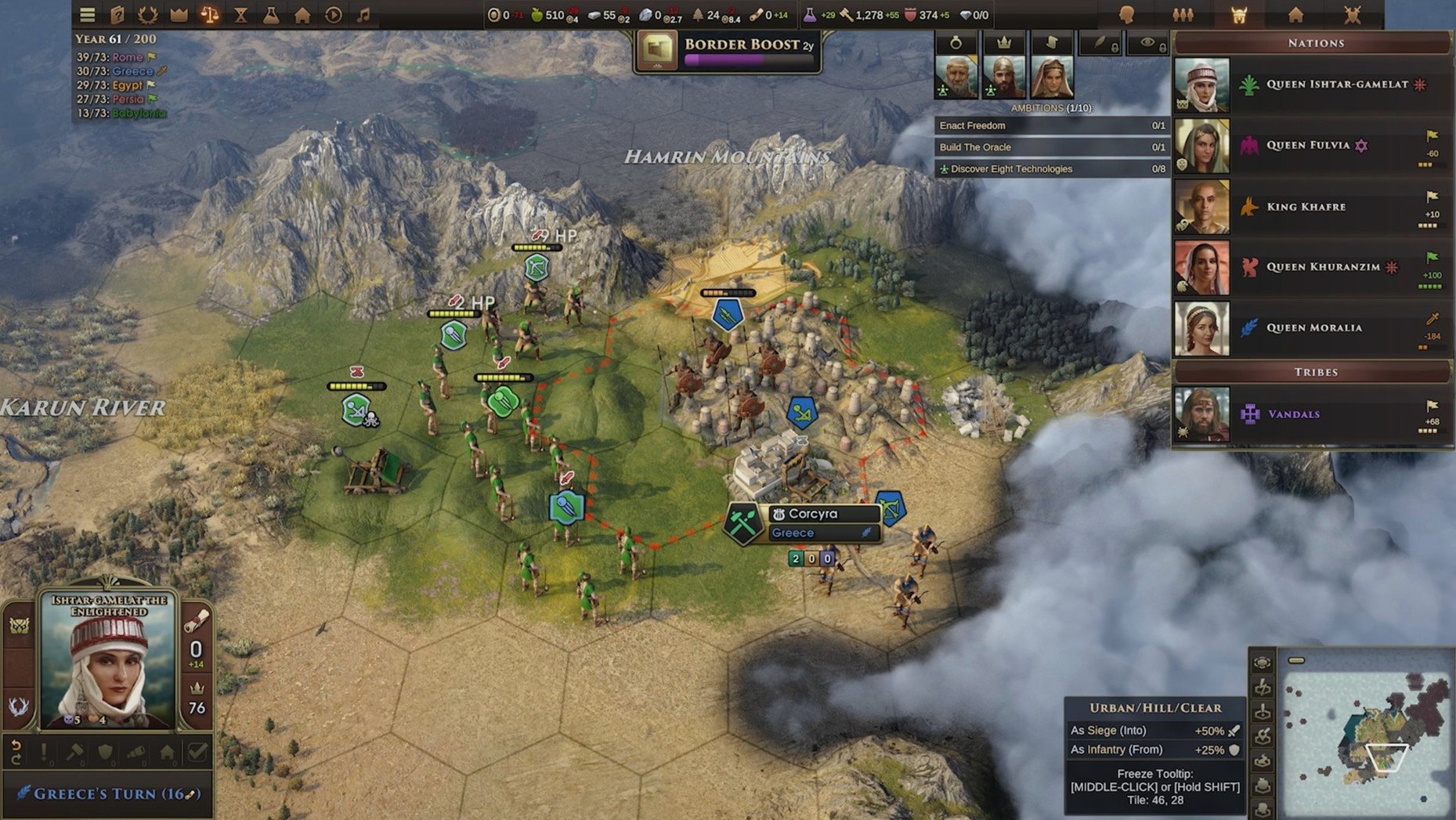
Push a Polybolos into position
Orders are finite, a resource that gates how much you can move, fight, or govern in a single year. This turns every turn into a puzzle of priorities rather than a click-to-do-everything march. Forts now cannot be placed next to each other, so defensive lines require actual thought about terrain and spacing.
Start a hotseat game with a friend
Multiplayer covers hotseat, asynchronous play, and cloud play, which suits a game where turns can involve long negotiation phases. The AI also fields fewer militia and obsolete units now, so opponents put up a sharper fight from the mid-game onward.
Polybolos +50% attack rewrites mid-game siege
Version 84658 landed with a handful of targeted balance adjustments that alter how a campaign develops around the mid-game. The Polybolos unit received a flat +50% attack boost, which shifts it from a situational siege tool into something you actively want to manufacture and field. Where earlier builds had you parking one near a city and forgetting about it, the current tuning rewards moving them with your main stack.
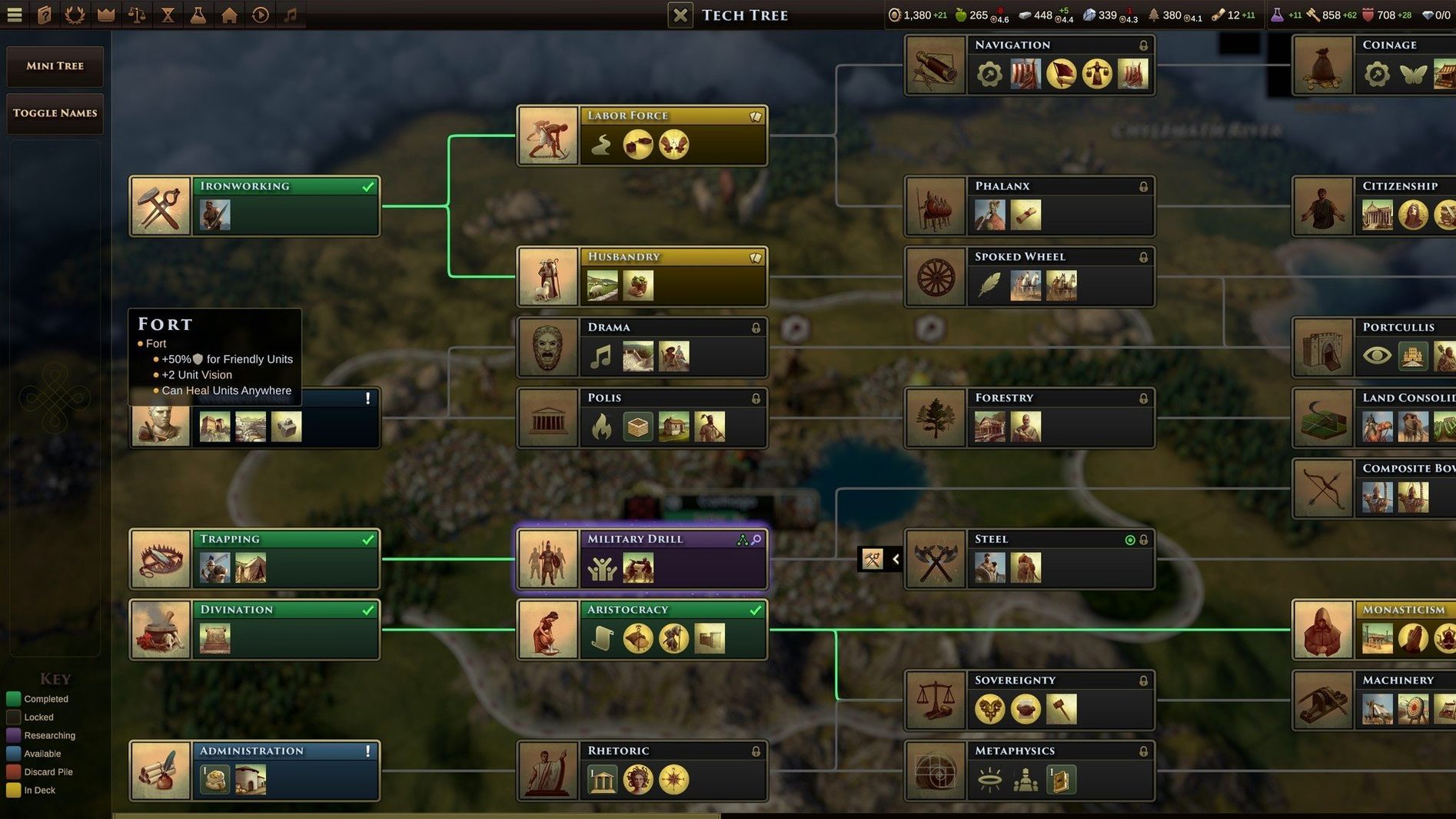
The Fort adjacency restriction is subtler. You can no longer plop Forts next to each other, so the old habit of creating a continuous wall of zone-of-control tiles is gone. Defensive lines now have gaps that must be covered by units or terrain, and forward Fort placement demands surveying the map two or three tiles out rather than just filling the nearest hex.
On the AI side, the build priorities shifted away from Militia, Conscripts, and obsolete unit types. Opposing armies now field more current-era troops, which means scouting an enemy border with a lone cavalry unit and spotting a stack of outdated spearmen happens less often. The result is a sharper difficulty curve through the middle turns, especially on randomly generated maps where the AI's production bonuses can snowball with better unit composition.
Treating Orders like a suggestion freezes your army
The most common one is treating Orders like a suggestion. New players burn them on scouting every fogged tile, moving workers every turn, and micro-managing unit stacks. Orders are the true currency — run out and your army stands still while a neighbour walks into your capital. A good rule of thumb is to keep at least two Orders banked at the end of every turn during peacetime, so you can react to an event or a sudden declaration of war.
Another trap is ignoring family opinion until it is too late. The four noble families in your kingdom each want attention, marriages and appointments. Let one drop into negative territory and they will refuse to produce units from their cities, or worse, trigger a civil war. Open the family panel every few turns and check the red icons — a quick betrothal or a council seat often costs less than mopping up rebels.
Marrying heirs purely for stats is a third error. A spouse with high Wisdom looks good on paper, but if they come from a family you have neglected for two generations, the opinion penalty can cancel out the stat gain. Treat marriage as a diplomatic tool first and a character-sheet optimisation second.
Right-click a portrait to jump the camera instantly
Right-clicking a unit portrait in the bottom panel selects and centres the camera on that unit. It works from any screen, so you can jump across the map without dragging the view or scrolling through the unit list. During a war on two fronts, this alone saves a dozen clicks per turn.
Holding Alt while hovering over any tile reveals the exact yield breakdown, including modifiers from improvements, governors, and family bonuses. The base map gives you a rough idea, but the Alt overlay shows precisely why a quarry on that hill produces four stone instead of three — useful when you are deciding between two city sites three tiles apart.
The event log is searchable. Type a character's name into the small filter box at the top of the log panel, and every event involving them appears. When an heir suddenly hates you and you cannot remember why, this traces the grudge back to the exact moment you snubbed their mother's family at a funeral.
In multiplayer, the asynchronous play mode supports setting a turn timer in hours rather than minutes. Cloud games can sit idle for a day while your opponent thinks, and the notification system pings you when the turn passes back. No-one talks about this, but it is the only way a 200-turn game survives two people with jobs.
Drop scroll speed 30% to calm dense forest panning
Open the Options menu before starting your first campaign. The default scroll speed is set high, and on a 4X map with dense forests it becomes twitchy. Dropping it by about 30% makes surveying terrain feel deliberate rather than frantic.
Turn on "Show yield icons" permanently. The game defaults to showing them only on hover, but having them visible at all times makes city placement decisions faster. You stop second-guessing whether that plains tile had two food or three.
Switch the event timer from "Normal" to "Slow" if you read the flavour text. More than 3,000 events are in the pool, many with branching choices that reference your current ruler's traits. On Normal speed, the pop-ups stack up during wartime and the instinct is to click through them. Slow pacing gives each one room to land, and the writing holds up — historical and mythological references are woven in without turning into a textbook.
Disable "Auto-cycle units" unless you enjoy the game yanking the camera away mid-thought. Manual cycling with the Tab key gives you control over the order in which you issue commands, which matters when Orders are tight and you need to prioritise the general's movement before deciding what the militia does.
- Polybolos — +50% attack strength.
- Forts — Cannot be adjacent to another Fort.
- AI unit building — Builds fewer Militia, Conscripts, and obsolete units.
- Mac — Crash debugging added.
- macOS details not specified by the developer.
- Runs on both Intel and Apple Silicon Macs.
Questions on file
Does Old World include randomly generated maps?
Yes, alongside hand-made maps and historical scenarios, the game generates random maps for replayability.
Sign in · Create an account to add a field note.
No field notes yet. A measurement, a version, a machine — they appear after moderation.