
Games
Oxygen Not Included 744825
GamesUpdated
| Requirement | On file |
|---|---|
| macOS | See the sheet |
| CPU | Apple Silicon, Intel 64-bit |
| Download | 1.4 GB |
| Tested on | macOS Tahoe, Mac mini 2024 M4 |
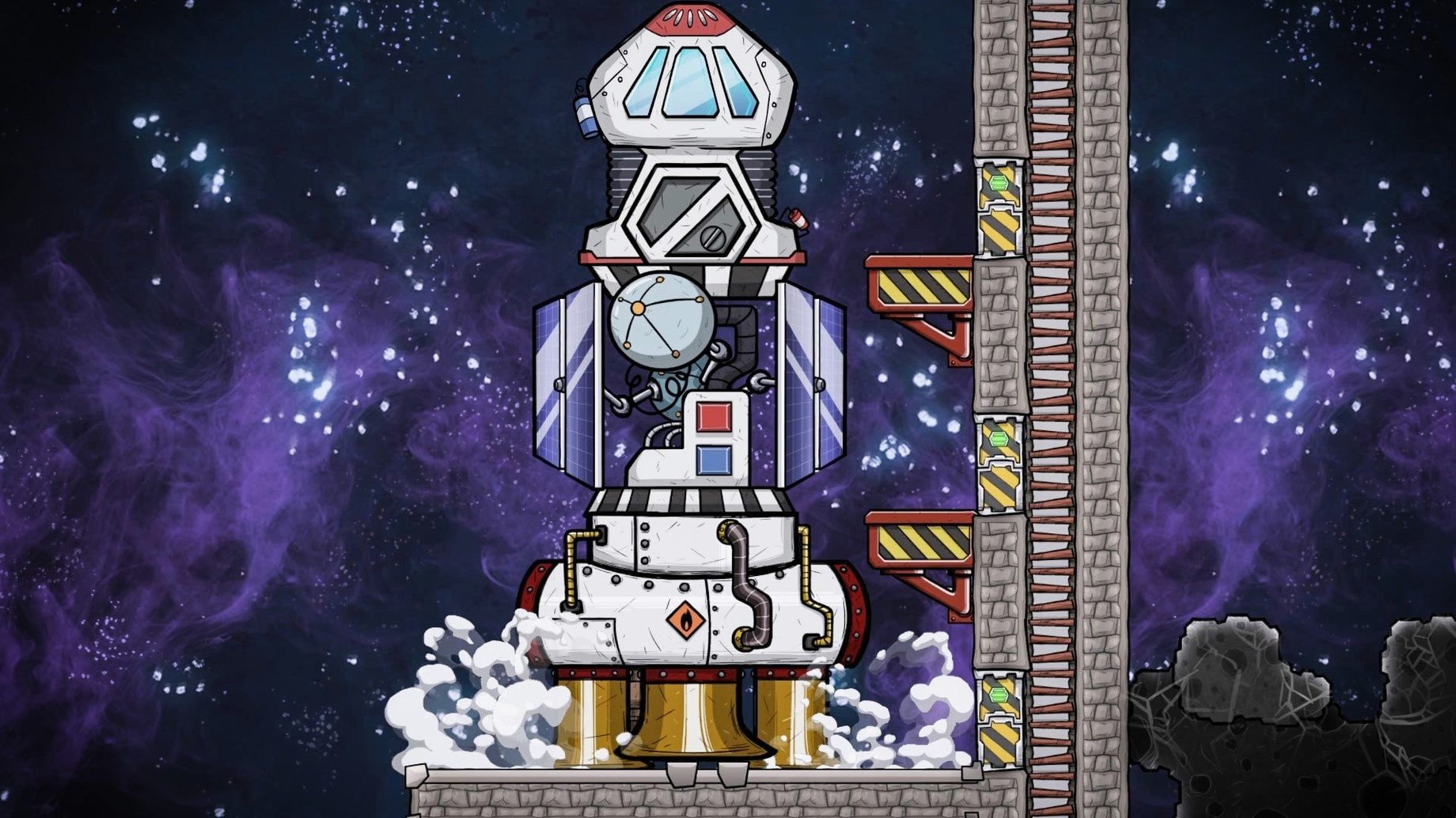
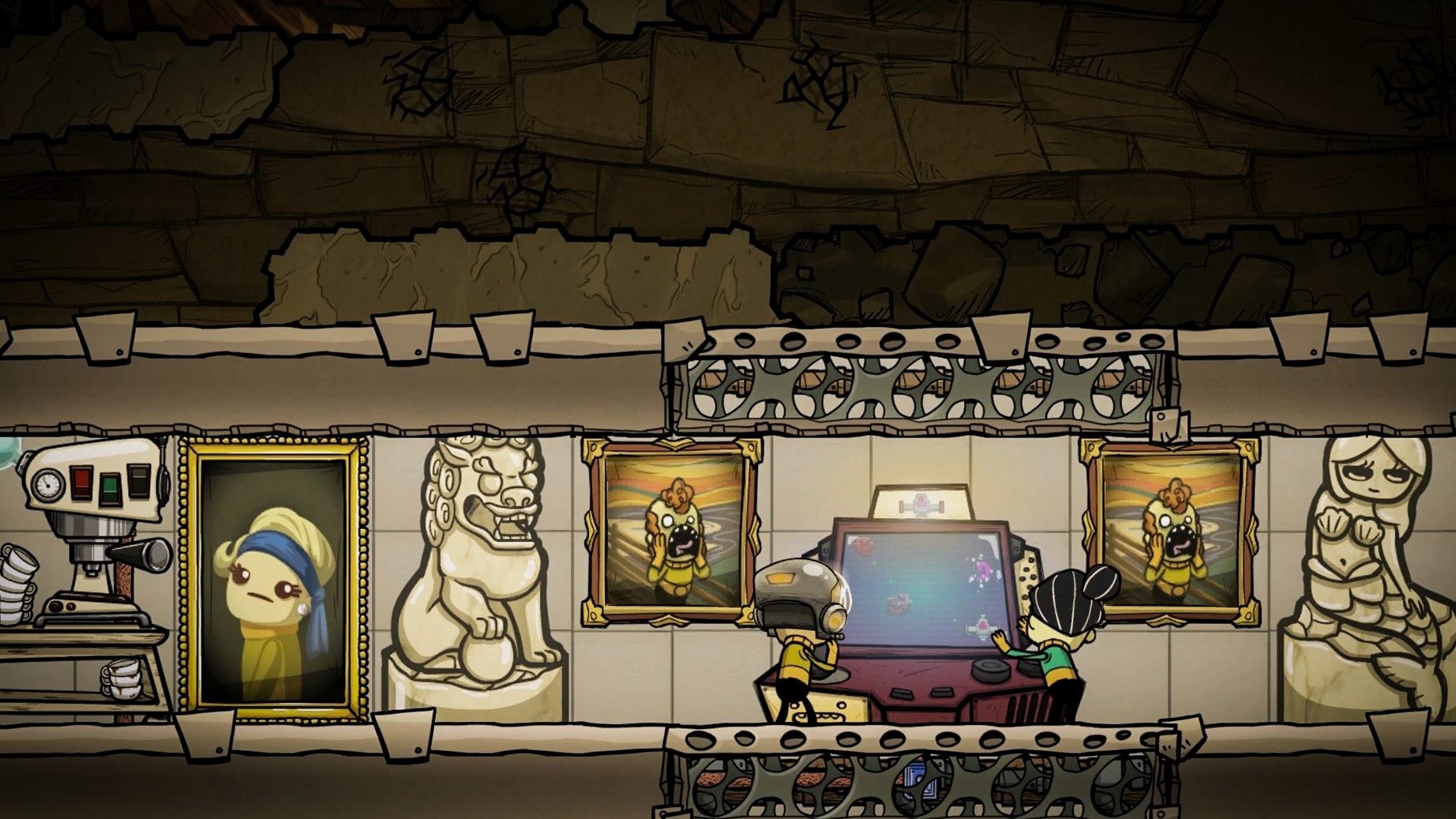
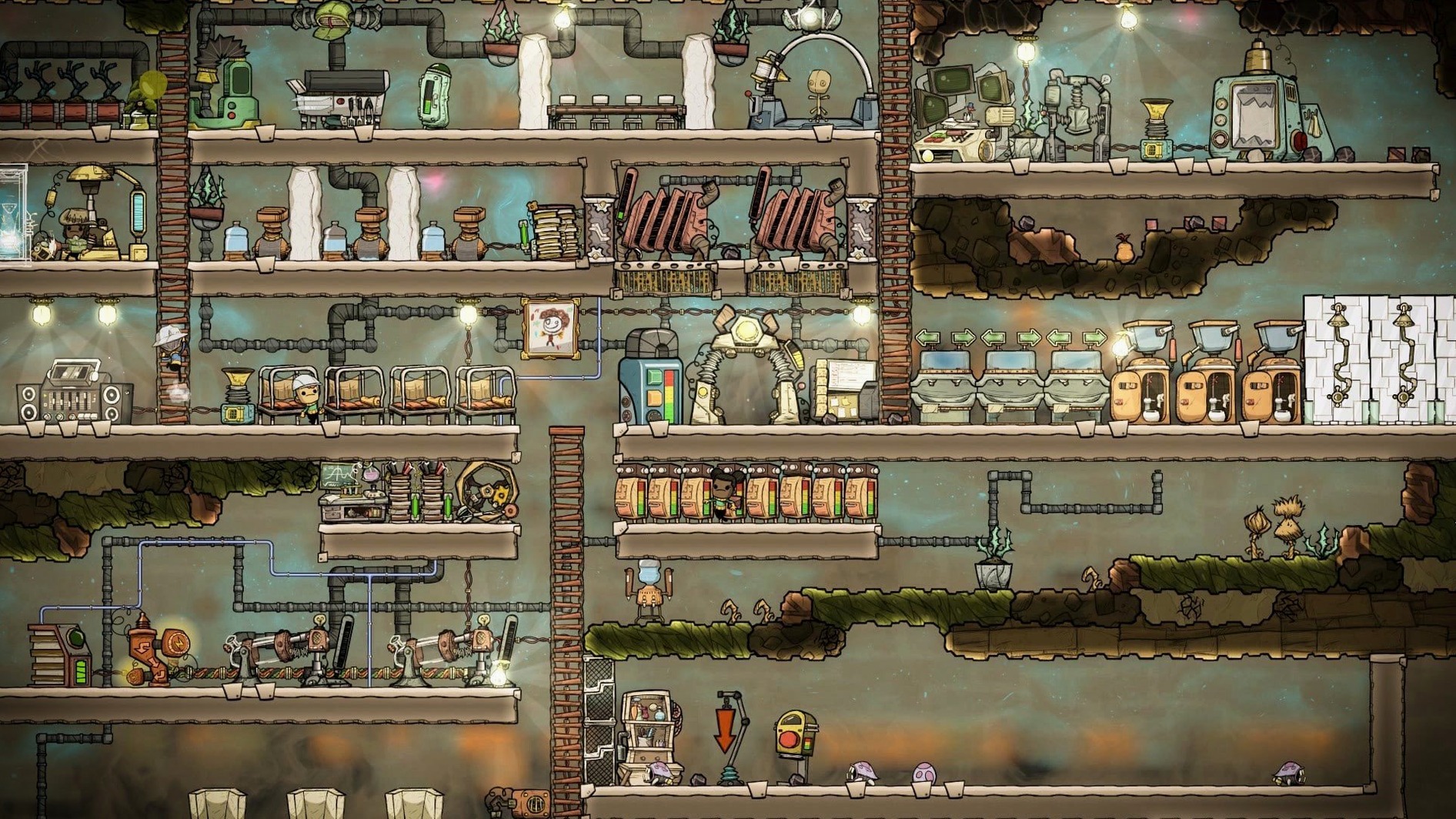
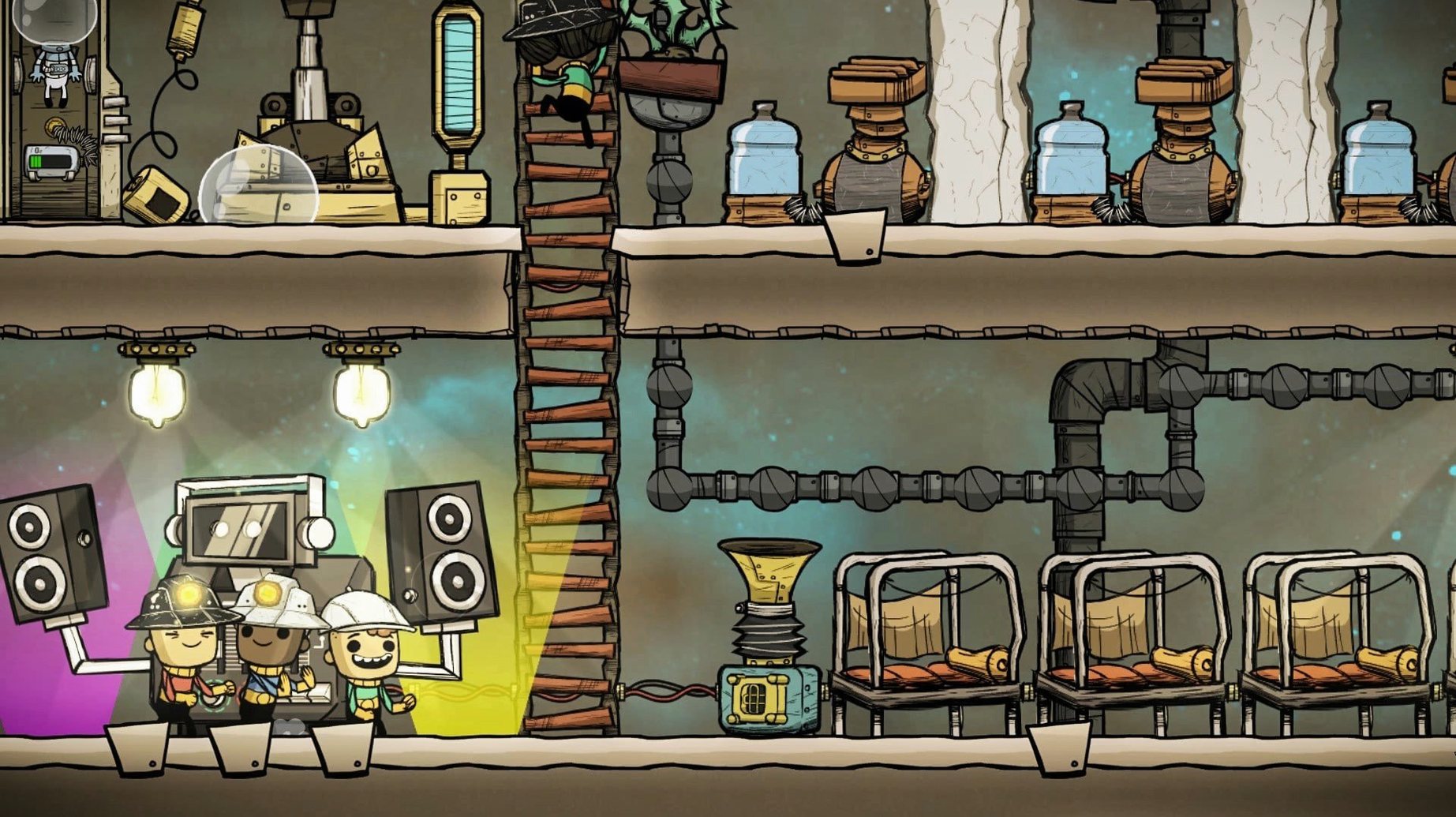
Oxygen Not Included attracts the kind of person who sketches plumbing layouts on a napkin. Here is what that person actually does inside a running colony.
Bladder & breath — You check the top-right overlays before anything else. Oxygen pressure, carbon dioxide pooling, and a duplicant with 95% bladder who is about to burst in the clean water tank.
Dig orders — You draw a ladder shaft into a chlorine ravine because the base needs mineral for insulation. Four duplicants drop what they are doing and scramble. One gets stuck, so you manually clear a tile to give her an exit route.
Food count — You mouse over the ration box. Twelve meal lice left, six mouths, no surplus. You mark wild bristle blossoms for harvest and forbid the fry cook from using the last sleet wheat grain.
Waste chain — Polluted dirt sits too close to the barracks. One duplicant develops slimelung overnight. You quarantine the cot, mop the spill, and place a deodorizer before the cycle ends, knowing a second infection will tip morale into protest territory.
Stress spike — A builder with the squeamish trait stands in murky water for two cycles. Her stress hits 60%, she binge-eats the surplus muckroot, and every task she touches takes 20% longer until you bump her downtime to three slots.
Beginners walk into the same three traps within the first twenty cycles, and each one escalates faster than it looks. The first is taking every duplicant the printing pod offers. Three extra mouths before cycle ten means the algae supply runs out before anyone has built an electrolyser. Oxygen pressure drops to unbreathable, stress spikes across the board, and the colony suffocates because the player was polite to a glowing box. The second trap is digging too wide too early. A vast cavern looks like progress, but it spreads the same oxygen across three times the volume, and the diffuser cannot keep up. Carbon dioxide sinks to the bottom and stays there, so half the base becomes a dead zone nobody will enter. The third trap is ignoring room bonuses. A barracks with twenty cots and no door gives nothing; the same twenty cots behind a pneumatic door with a decor plant grants a morale boost that offsets the stress from soggy feet. The overlay tab for rooms is buried in the top right, and a surprising number of first-time colonies collapse because nobody opened it.
Incapacitated Duplicants No Longer Teleport to the Void
Version 744825 landed on 2026-07-28 as a targeted hotfix, not a feature drop. The biggest day-to-day relief is the rescue fix. Before this build, an incapacitated duplicant carried to a med bed would sometimes teleport to the bottom-left corner of the world after resuscitation. A digger who collapsed three floors below the base would reappear trapped in abyssalite with no path home, and the alert would fire again two cycles later when she starved. That loop stopped with this update. Rescue operations now behave predictably: the duplicant wakes up in the bed you placed her in, and you can send her straight to a lavatory instead of a grave.
The Masterworks skill string correction is tiny but matters to anyone tracking morale gains from artwork quality. The tooltip now explicitly mentions Masterpiece quality where the old string was ambiguous. When you hover over a duplicant with the Masterworks skill and wonder whether a grand sculpture is worth the granite, the text tells you exactly what level the skill unlocks. No guesswork. The gasket deconstruction fix is just as narrow: deconstructing buildings with gaskets used to spawn the wrong element, which broke chlorine-room seals and natural gas containment. That element mismatch is gone, so tearing down an old pump inside a gas trap no longer risks venting the wrong gas into the main shaft.
Three performance fixes round out the release. A liquid rendering bug on older graphics cards produced flickering tiles when two liquids touched, most noticeable in petroleum-slicker cooling loops. That flicker is gone. The navgrid memory leak meant the game would slowly eat more RAM each time a duplicant pathfind recalculation triggered, which happens constantly in a busy colony. Late-game bases with twenty duplicants and a transit-tube network should now hold a steady memory footprint across longer sessions. Finally, Klei optimized the liquid texture array size and removed unused textures, so the graphics memory budget is a little leaner on both Apple Silicon and Intel machines. The day-to-day effect is subtle: fewer stutters when you pan across a mixed-liquid tank, and a couple of extra frames per second on integrated GPUs.
Shift-Click the Inventory to Jump the Camera to Any Stash
Shift-click a resource in the inventory panel to jump the camera straight to its storage tile. This works on solids, liquids, bottled gases, and even critter eggs. When a duplicant is starving and you cannot remember where you stashed the last five muckroot, shift-click on "Muckroot" in the resource list and the view pans to the exact ration box. No scrolling, no squinting at container labels.
The priority system has a submenu that many players never touch. Press the number keys 1 through 9 to set a priority level on any order, and hold P to open the priority overlay so you can see every pending task colour-coded. A duplicant with the "dig" priority cranked to double-up-arrow will ignore a life-saving mop order unless you explicitly bump the mop to yellow alert. The difference between "yellow alert" and priority 9 is that yellow alert overrides schedule blocks and forces a duplicant to abandon sleep. Use it sparingly, because the stress penalty stacks with every interrupted downtime slot.
The materials overlay is bound to F4 and reveals every raw mineral, refined metal, and organic solid in the asteroid at a glance. New colonies live and die by copper ore for wiring, and the overlay saves you from digging blind. A lesser-known trick: click the "consumables" tab in the top-right vitals panel to forbid duplicants from eating your sleet wheat grain or nosh beans raw. A fry cook will happily snack on the last five sleet wheat grains if you do not toggle them off, and suddenly the pepper bread you needed for a morale crunch cycle is impossible to cook.
Disable disinfect on storage bins unless you have a slimelung outbreak. The default setting burns chlorine at a rate that surprises most players, and chlorine is finite until you ranch squeaky pufts. Untick the checkbox on every bin that holds clean material, and leave it on for the one slime bin near the deodorizers. The time you save on a later oxygen not included download torrent from the catalogue is better spent setting this up once. Similarly, a newer player hunting for an oxygen not included mac download might not realise the game runs natively on Apple Silicon without Rosetta, which is a quiet advantage for colony sims that chug late-game CPU cycles. Those who grab an oxygen not included torrent often find the version that floats around is frequently several patches behind, so confirming the build number against the latest hotfix notes is worth the extra step. A proper oxygen not included download torrent for the latest build avoids the teleport bug entirely.
Tuning a Cooling Loop for Three Hours on a Single Steam Turbine
Systems thinkers who enjoy Factorio ratios or RimWorld heat maps will obsess over the gas and liquid pipe mechanics. These players treat a cooling loop like a puzzle and will spend three hours tuning a steam turbine setup to delete exactly the heat their metal refinery produces. The game rewards that obsession with stable colonies that run for 500 cycles without a single stress reaction.
Base-building purists who hate combat get a rare colony sim where no hostiles raid the walls. There are no killboxes, no drop-pod raids, no manhunter packs. The threats are internal: calorie deficit, oxygen collapse, heat death, a duplicant peeing in the water supply. The entire challenge is engineering, and the satisfaction curve mirrors a well-drawn blueprint rather than a battle won.
Players who enjoy managing individuals with distinct traits will find the duplicant system deeper than it first appears. A duplicant with the "flatulent" trait releases natural gas every few cycles, which can be piped into a generator or can choke the dining hall if you place the mess table in a dead-air pocket. A duplicant with "gourmet" demands better food and complains loudly when the colony runs on mush bars, but she also cooks faster and produces higher-quality meals. The interplay between traits, morale, and skill progression means no two colonies feel staffed the same way, even if you pick the same asteroid seed twice.
Each cycle loops through the same checks: gas, germs, kilojoules, morale. The colony survives when you spot the bottleneck before the duplicants do.
Hotfix — This release tidies several edge-case bugs.
- Rescue & resuscitation — Fixed incapacitated duplicants teleporting to the bottom-left corner of the world after being revived.
- Rendering — Fixed a liquid rendering bug that affected older graphics cards, and optimised liquid texture array size to reduce graphics memory usage.
- Text — Fixed the Masterworks skill string so it correctly references Masterpiece artwork quality.
- Construction — Fixed a gasket deconstruction issue that could spawn the wrong element.
- Performance — Optimised several textures to lower overall memory usage.
- macOS (Apple Silicon and Intel supported)
Questions on file
What happens when duplicant happiness drops too low?
Low happiness triggers stress reactions like binge-eating, destructive outbursts, or vomiting, and task performance degrades noticeably.
Does leaving the starting biome carry real risk?
Yes. Ravines contain slimelung, chlorine pockets, and extreme temperatures that can cripple an unprepared duplicant within a cycle.
How does waste trigger disease?
Polluted dirt and stagnant water breed germs; when duplicants walk through or inhale the off-gassing, sicknesses like slimelung spread through the colony.
Sign in · Create an account to add a field note.
No field notes yet. A measurement, a version, a machine — they appear after moderation.